
How do you choose the right rug size for a room?
By Goodesign AI · Updated 2026-10-16
Size up, not down: in a living room the rug should sit under at least the front legs of every seat in the group; under a bed it should extend 45–60 cm beyond each side; in a dining room chair legs must stay on the rug when pulled out. When in doubt, buy the larger size.
Rugs are the most common sizing failure in home design — almost everyone buys too small, and a small rug doesn't look like a modest choice; it looks like a mistake. Three rooms, three rules.
Living room: anchor the whole group
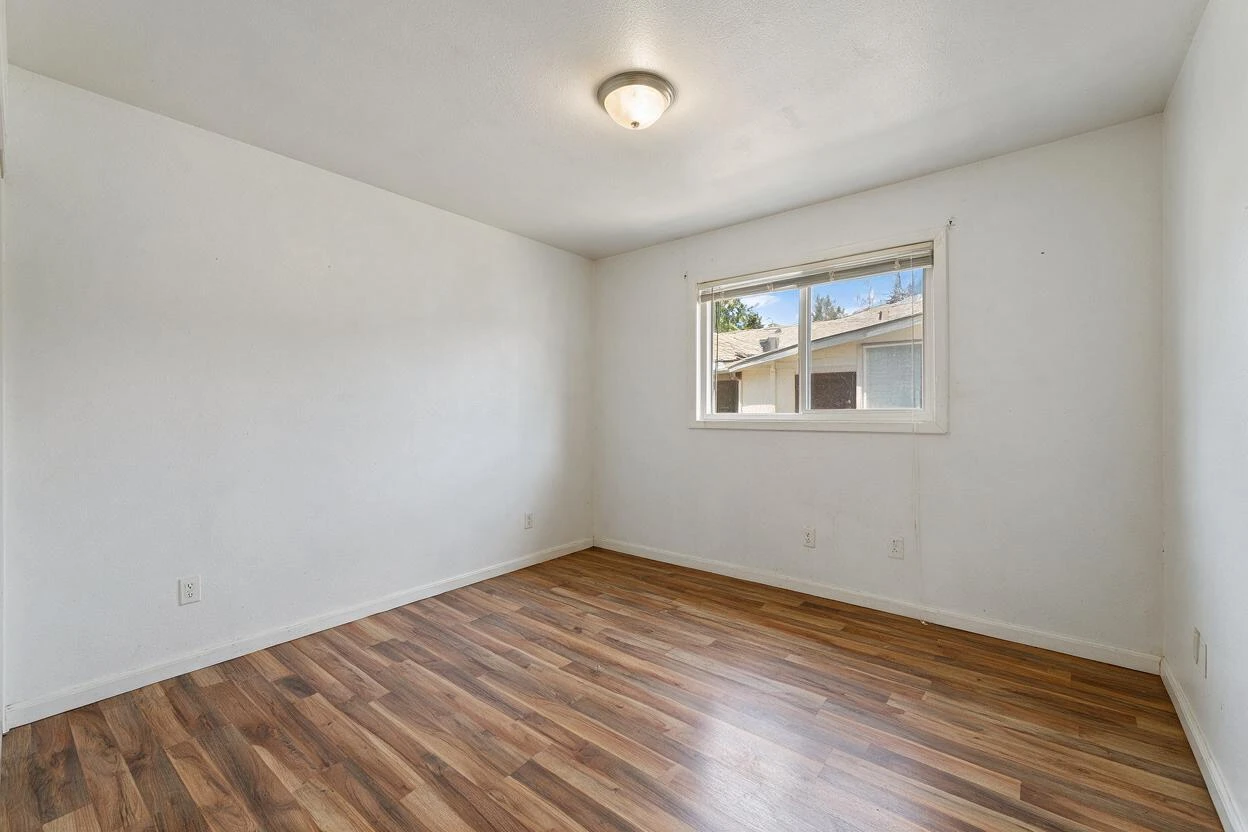
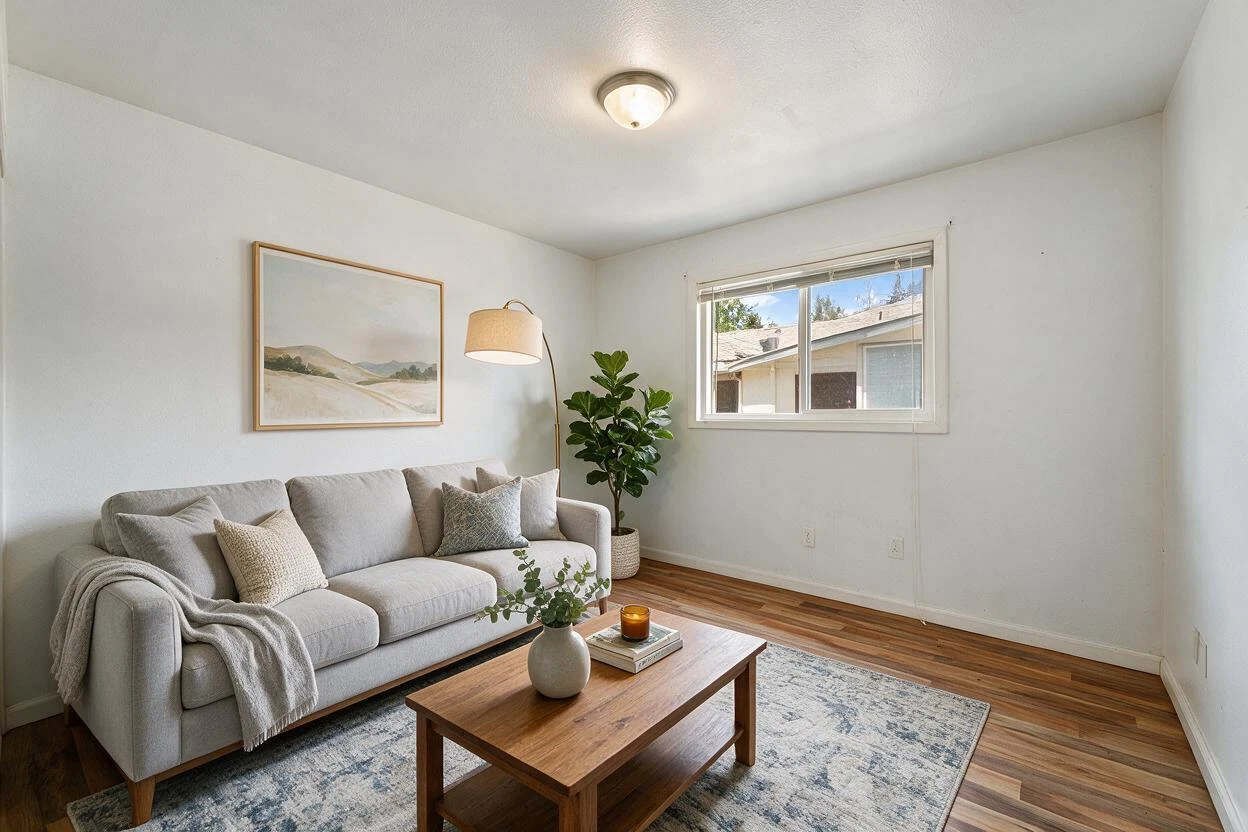
The rug should reach under the front legs of the sofa and every chair, unifying the seating circle into one zone. All-four-legs-on is the luxury version; front-legs-only is the standard; nothing-on is why the room reads choppy. A 160 × 230 cm rug suits a small seating group, but most living rooms want 200 × 300 cm — the size people hesitate at and rarely regret.
The sofa sets the width
Before any size chart, measure the sofa. The rule stylist Emily Henderson applies to nearly every room she designs: the rug should run at least 6 inches (15 cm) wider than the sofa on each side, and 8 inches (20 cm) is her stated ideal. That margin is the difference between a sofa sitting on a platform and a sofa parked half-off a dock. The same logic governs legs — all four on, or all four off, applied consistently to every piece in the group; what makes a seating area read chopped up isn't front-legs-only, it's mixing the conventions in one arrangement (How to Design a Living Room — Our Go-To Rules). For where the group itself should sit in the room, the living room placement rules take over from there.
Bedroom: extend past the bed
The rug should stretch 45–60 cm beyond each side and the foot of the bed, so bare feet land on it every morning. A runner on each side is the workable compromise in tight rooms; a rug narrower than the nightstands is not a compromise, it's a doormat.
Dining room: respect the chair pull
Chairs stay on the rug even when pulled out for someone to sit — which means the rug extends at least 60 cm beyond the table on all sides. A rug that fails this test turns every dinner into a teetering event.
The 8×10 vs 9×12 question, answered
Most rug shopping ends at two sizes, and the framing the rug retail trade keeps repeating is consistent enough to use as a rule of thumb (Atlanta Designer Rugs' 8×10 vs 9×12 guide):
| Nominal size | In inches | In centimeters | Typical fit | Leg rule |
|---|---|---|---|---|
| 5 × 8 | 60 × 96 | 152 × 244 | Compact seating group, or under a twin bed | Front legs of a loveseat, at best |
| 8 × 10 | 96 × 120 | 244 × 305 | Standard living room: sofa plus one or two chairs | Front legs on |
| 9 × 12 | 108 × 144 | 275 × 366 | Larger rooms, sectionals, all-legs-on layouts | All legs on |
| Runner | 30 × 96 (typical) | 76 × 244 | Hallways and bedside strips | — |
Two caveats. Nominal sizes drift — a "9 × 12" often measures a couple of inches short of its label once bound and finished, which is one more argument for the larger size. And an 8 × 10 is the default only because it's the default: in a room with a sectional, it is usually the too-small rug from the first paragraph. The honest way to settle it is to see both on your own floor — add the rug virtually and compare the border before ordering.
How much floor to leave around a rug
A rug needs a run of bare floor at its edges, or it reads as wall-to-wall carpet that shrank. The range rug retailers keep repeating is 12 to 18 inches (30–45 cm) between the rug's edge and the nearest wall — enough to frame the rug as a layer without shrinking it back into a doormat. Small rooms can run the tighter end of that range; large rooms can stretch past it without penalty. Dining rooms are the exception to the frame idea: the rug extends past the table, and whatever border remains is what the chair legs ride on. In open-plan rooms that border does double duty as the boundary between zones — more on that in how to zone an open-plan space.
Two universals
First, tape the footprint on the floor before ordering: an outline of painter's tape beats any size chart. Second, leave a border of bare floor around the rug's edge — 30–45 cm of visible flooring keeps the rug reading as a layer, not wall-to-wall carpet.
You can skip the tape test: upload a room photo, preview different rug sizes in place, and see the border proportions on your own floor before buying — free.
FAQ
Does a rug make a room look bigger?
A large rug makes a room read as bigger, because the eye treats the rug's edge as a boundary — cover the full seating area and the whole room inherits that scale. A small rug does the opposite: it draws a frame around a fraction of the floor and everything outside it reads as leftovers.
Should sofa legs go on the rug?
Front legs on is the standard, all four on is the upgrade, and all four off works only if the rug still extends well past the seating on every side. What fails is mixing — half the group on and half off chops the seating area into islands.
How big is a 9×12 rug in centimeters?
Nominally 275 × 366 cm — about 108 × 144 inches. Check the actual dimensions before ordering, because finished rugs often run a few centimeters short of the nominal size.
Can a rug be too big?
Practically, no — the top-end failure mode is a rug that meets the walls on one or two sides, which erases the frame and reads as fitted carpet. If the choice is between two sizes and the larger one still leaves a visible border of floor, the larger one wins.
Compare
Related questions
Related tool
