
Why does lighting make or break a room photo?
By Goodesign AI · Updated 2026-10-16
Cameras record brightness, not atmosphere: a dim room reads small, cold, and dated, while the same space shot bright reads larger and cared-for. Shoot in daylight with every lamp on — and rescue unavoidably dark frames with enhancement instead of reshooting.
A room photo is really a photo of the light in the room. Two identical spaces can photograph as charming or cramped depending only on how the light was handled — which is why lighting decisions come before any camera choice.
Brightness changes perceived size
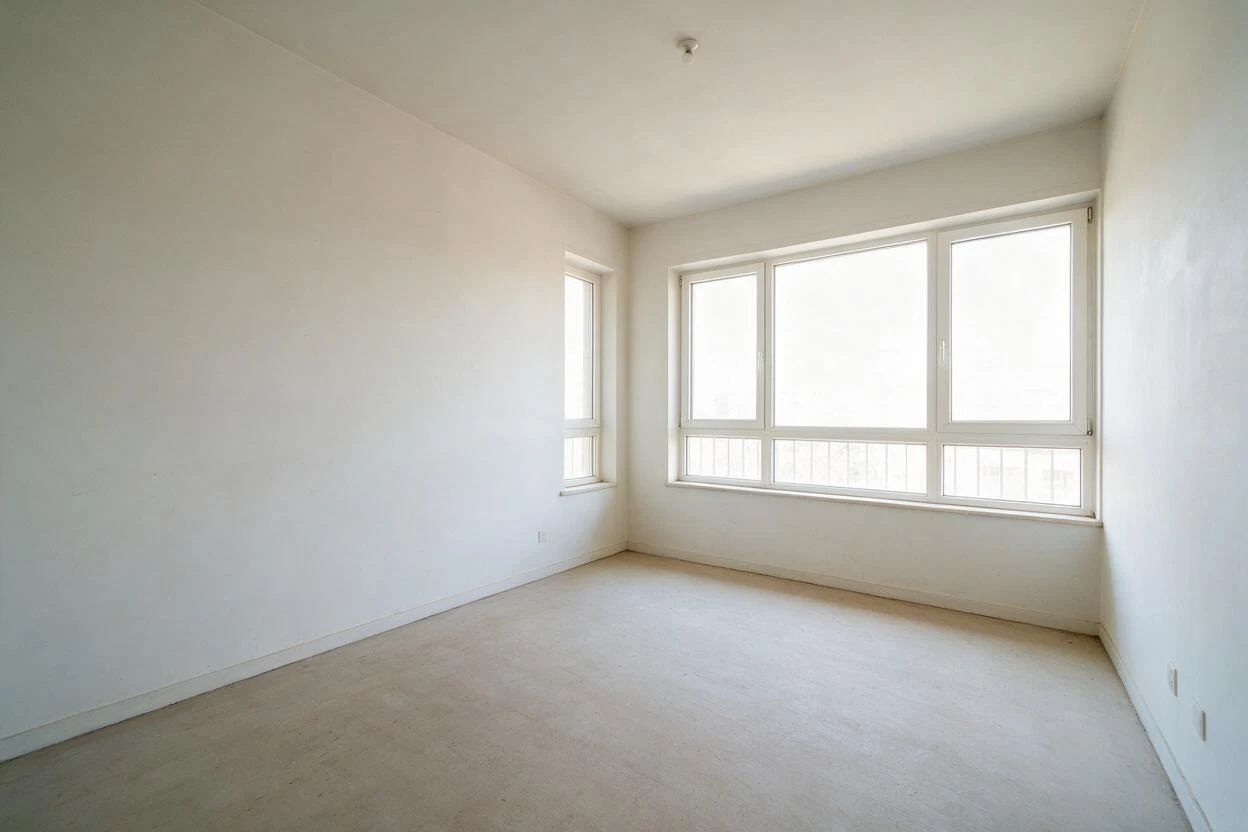
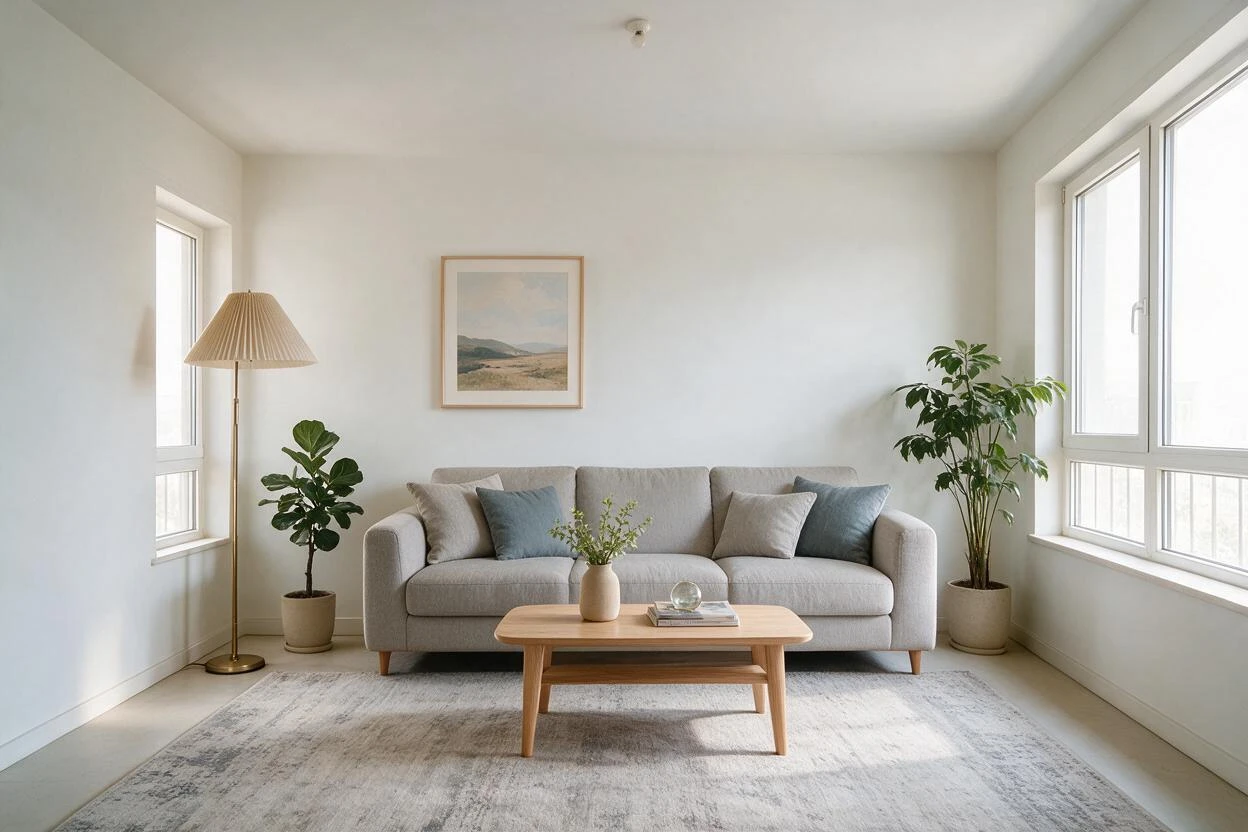
Dim frames hide floor and wall edges, and since people judge a space by its boundaries, hidden boundaries read as small rooms. Bright frames expose the corners and the floor plane — the two cues that make a space feel generous. Shooting a touch bright is the oldest listing trick because it works.
Color temperature sets the mood
Bulbs range from cool blue-white to warm amber, and mixing them in one frame looks accidental — half the space blue, half orange. Match bulbs across the room (warm white around 2700K flatters interiors) before shooting anything.
The mixed-bulb failure has a second, sneakier version: daylight bulbs fighting window light. A room lit by one 5000K LED and one south-facing window produces a color split no white-balance slider can fix globally, because half the room genuinely is cooler than the other half. Match the bulbs to each other, then let the window win or lose on its own terms — a slightly cool window is weather, not a defect.
Windows are the friend and the traitor
Daylight is the most flattering source there is, but cameras handle a bright window beside a darker interior badly: expose for the room and the view burns to pure white. Shoot with the window behind you or to the side, add lamps near the glass to balance, and let HDR mode merge the range.
A five-minute lighting pass before every shot
Do this in order and most rooms photograph themselves. One: every lamp on, including the ones you never use — then match or swap mismatched bulbs. Two: blinds fully up, curtains tied back, glass cleaned; a smudged window eats a third of the available daylight. Three: pick the hour — mid-morning to midday for east rooms, mid-afternoon for west rooms, and never the hour when direct sun stripes the floor. Four: shoot from the side of the window, never facing straight into it. Five: review at full brightness on your phone, because a dim frame looks fine on a dim screen. How you hold the phone finishes the job, but light comes first — no grip fixes a cave.
Fix it in post when a reshoot isn't possible
Occupied or remote properties don't always allow a second trip at golden hour. A dark or flat frame can often be rescued by image enhancement, which rebalances brightness and color; exteriors shot at flat noon get the reverse treatment from a day-to-dusk conversion that relights the whole scene digitally.
Light edits are the legal green zone
If disclosure rules make you cautious about editing, lighting is where you can work freely. California's AB 723, effective January 1, 2026, lists the exempt adjustments explicitly — lighting, exposure, white balance, and color correction require no disclosure — and San Diego MLS's member guidance on the law sums up the whole category as making it look better, not different. Brightening a cave-dark listing photo, cooling a yellow cast, pulling shadow detail out of a corner: all presentation, all permitted, no label needed.
The line sits where light edits become scene edits — a relit exterior becomes a different time of day, which is a conversion with its own disclosure question, and inventing a sunbeam that implies a window that doesn't exist crosses from lighting into fabrication. Interior correction stays safely on the bright side of that line.
For the frame where the window and the room refuse to coexist at all, that's a range problem, not a brightness problem — how HDR handles it is the dedicated fix. And when the room has no usable light source to begin with, no amount of camera work conjures one; fix the room's light plan before the listing photography, not after.
Judge your own frames the blunt way: upload a photo, enhance it, and compare — if the enhanced version looks like a different house, the original lighting was the problem.
FAQ
How do you photograph a dark room?
Turn on every lamp, open every blind, and shoot in daylight with the window behind you or to the side. Steady the camera so it can use a longer exposure at low ISO. If a reshoot isn't possible, AI enhancement rebalances brightness and color in a rescue pass — the one category of edit that every new disclosure rule explicitly permits.
Why do my listing photos look yellow?
Indoor bulbs. Tungsten and warm LEDs sit around 2700K, and a camera balancing for daylight renders the whole room amber. Shoot in daylight with lamps supplementing rather than dominating, or fix the white balance in post — a color correction, not a disclosure event.
What time of day is best for interior listing photos?
When indirect daylight fills the room without striping it: mid-morning through midday suits most rooms, and west-facing rooms peak in the afternoon. Avoid the hour when direct sun throws hard patches on the floor — cameras handle the contrast far worse than eyes do.
Is brightening a listing photo allowed on the MLS?
Yes. Lighting, exposure, white balance, and color correction are named as exempt, no-disclosure edits under California's AB 723, and MLSs treat them as standard finishing. What requires disclosure is changing what the property is — added elements, removed elements, altered surfaces — not making a dim room visible.
Compare
Related questions
Related tool
