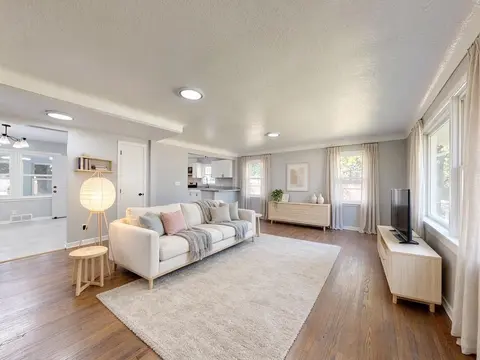
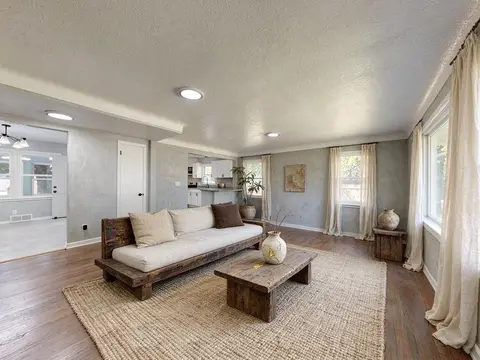
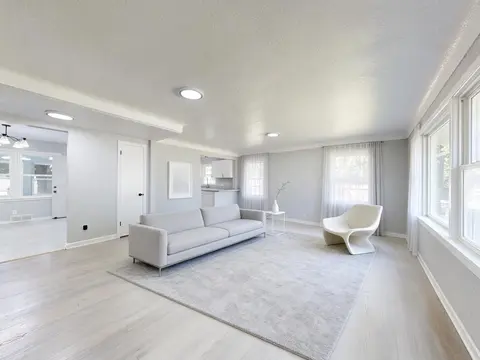
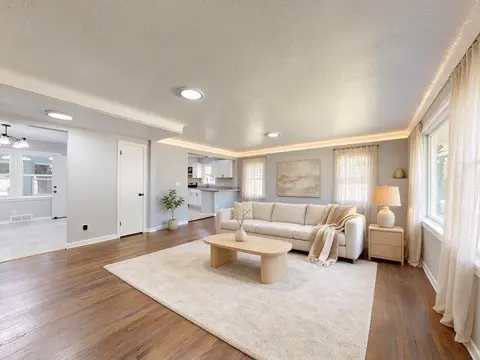
Japandi interior style
Japanese serenity meets Scandinavian warmth — calm, crafted, unhurried.
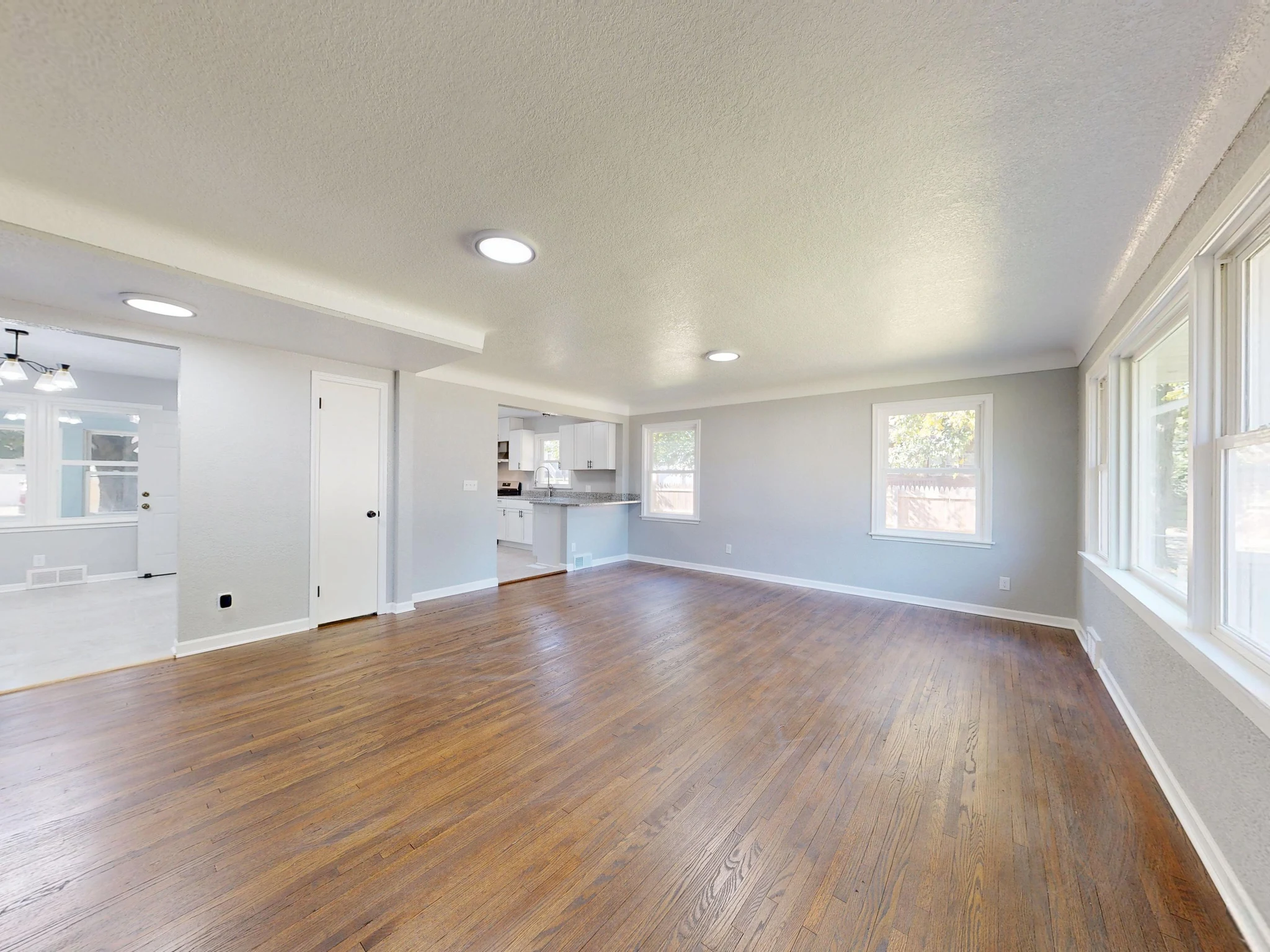
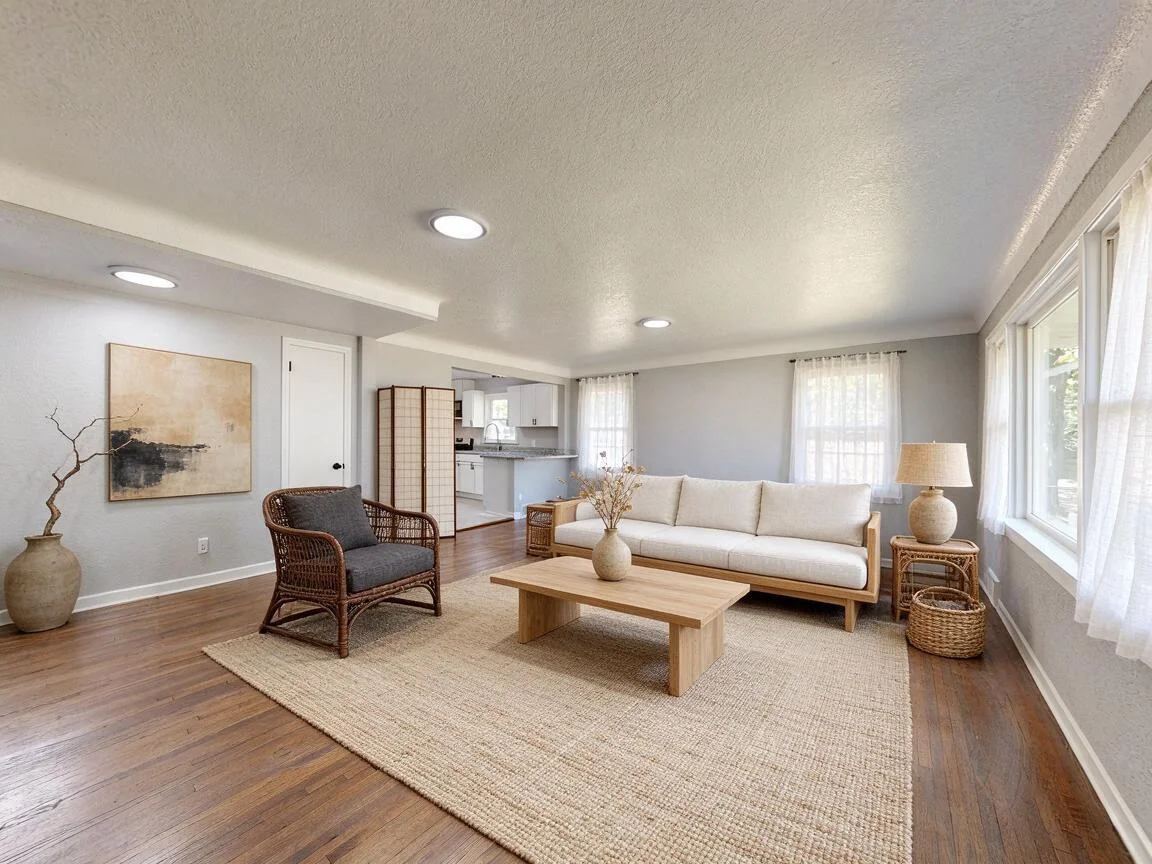
See it on your own walls
Japandi is the meeting of Japanese Wabi-sabi and Scandinavian hygge: a warm minimalist interior built on natural materials, low furniture and generous negative space. Every object earns its place, yet nothing feels cold — the Japanese side brings restraint and handcraft, the Nordic side brings softness and light.
Materials and texture
Japandi rooms live on grain and weave: pale oak and walnut, rattan and paper cord, linen and raw canvas, handmade ceramics with visible thumb marks. Surfaces are matte and tactile — you remember a Japandi room by touch, not by shine.
Color and light
The palette stays within earth tones: ecru, oatmeal, warm greige, moss and charcoal accents. Light is soft and diffuse — paper pendants, sheer linen curtains, no stark whites. Contrast comes from near-black details used the way ink is used in calligraphy: sparingly, on purpose.
Furniture and layout
Furniture sits low and horizontal: platform sofas, squat coffee tables, floor cushions. Storage is built in and silent, so the eye travels across clean planes. Curves are gentle; ornament is structural — a joint, a weave, a branch in a vase.
How to get the look
- Start with a light wood floor and keep walls in warm off-white or greige
- Choose one low sofa in linen, arms wide, cushions loose and few
- Add a single crafted piece — a paper lantern, a ceramics trio, an ikebana-style branch
- Hide clutter completely; Japandi tolerates zero visual noise
- Close with one dark accent (charcoal cushion, black frame) to anchor the room
Japandi vs Scandinavian
Light wood and simplicity appear in both, but Scandinavian rooms lean cozy and social — textiles, candles and soft patterns — while Japandi turns the volume down: deeper earth notes, lower furniture and more open space. If hygge invites you to stay, Japandi invites you to breathe.
Signature palette
#E8E1D5
#C9B99B
#8A7B68
#4A4A42
#22221F
Frequently asked questions
What is Japandi style?
A hybrid interior style combining Japanese Wabi-sabi restraint with Scandinavian hygge warmth — natural materials, low furniture, muted earth tones and uncluttered space.
Is Japandi expensive to achieve?
Not necessarily. Japandi rewards fewer, better pieces rather than many new ones; linen, rattan and second-hand solid wood read as authentic precisely because they are not glossy.
Can AI preview Japandi in my room?
Yes. Upload one photo and you will see an AI-generated Japandi concept for your room. Results typically keep your walls, windows and layout recognizable; treat the image as inspiration, not a construction plan.