
How many photos should a real estate listing have?
By Goodesign AI · Updated 2026-10-16
Somewhere between 20 and 35 for a typical single-family home — enough to cover every main room from its best angle plus the extras, few enough that no frame is filler. Condos live happily with 12–20. Beyond 40, adding photos starts costing attention instead of earning it.
Listing galleries obey a simple economy: every photo spends a fixed amount of buyer attention, and only some photos earn it back. The right count is the break-even point, not the maximum.
The arithmetic of coverage
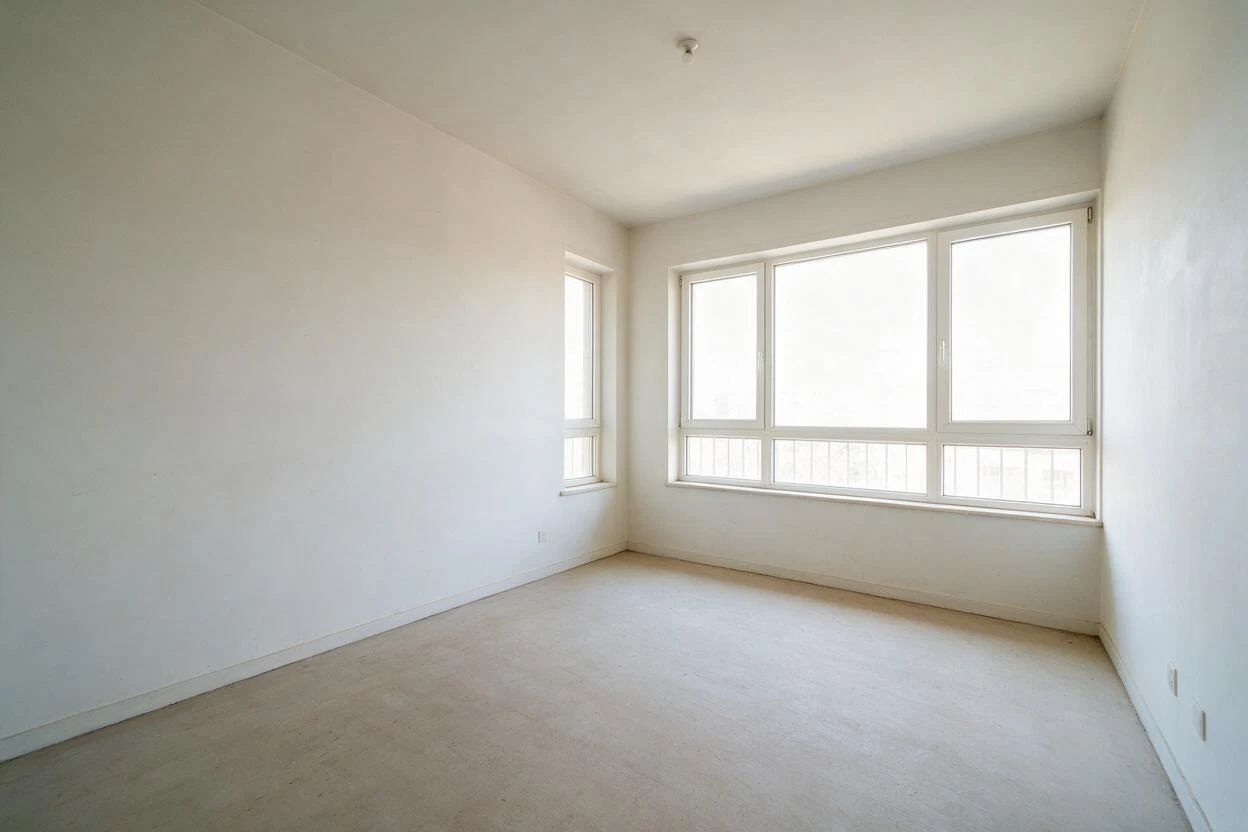
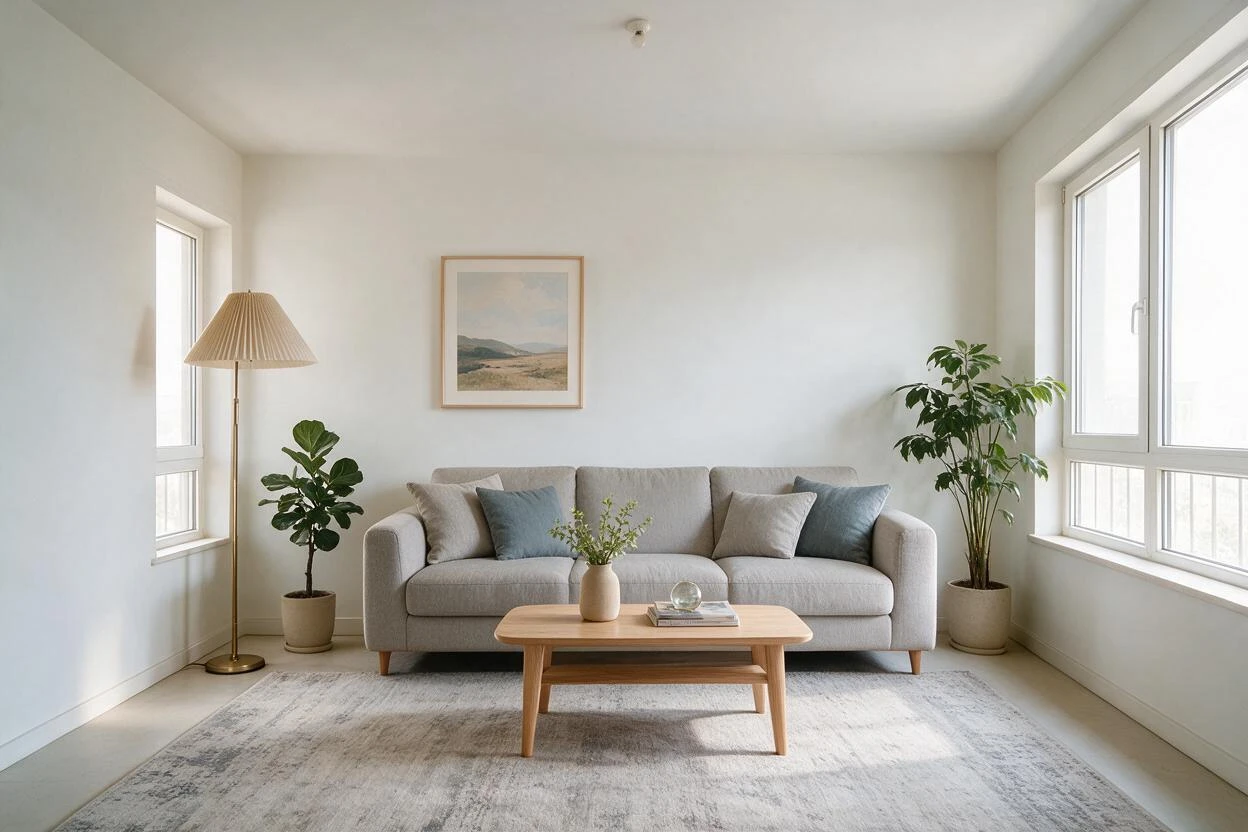
A typical house needs: one hero, two to three living area, two to three kitchen, one or two dining, two per bedroom, one per bathroom, plus exterior and any extras — yard, deck, garage, neighborhood amenity. Add a floor plan or two. That lands most single-family homes at 20–35 frames. Fewer than 15 and buyers start assuming rooms are being hidden; the gap where the fourth bedroom photo should be fills in with suspicion.
Run the same arithmetic per square footage and you land in the same range: roughly one photo per 100 square feet covers a 2,500-square-foot home at about 25 frames. The heuristic is a planning shortcut, not a rule — a 3,000-square-foot house with one open-plan floor needs fewer than a 2,000-square-foot house with four chopped-up bedrooms.
The diminishing returns are steep
The first 15 photos carry nearly all the persuasion: hero, main rooms, primary suite. Frames 16–30 confirm and complete. Past 35–40, average photo quality falls (the closets and hallway shots arrive) and click-through per photo falls with it — listings with sprawling galleries show measurably lower completion rates, and the last frames are seen by almost nobody.
This isn't a stylistic quirk. Photos are the decision layer of the whole listing: NAR's 2025 Profile of Home Buyers and Sellers found 81% of buyers rank photos as the most important listing information, ahead of price, description, and every other field. Buyers spend seconds per thumbnail and drop out of galleries as they go. A bloated gallery doesn't bore them — it sheds them.
Quality floor beats quantity ceiling
The number matters less than the rule that every published photo meets the bar: level, bright, decluttered, best angle of that room. A 22-photo gallery where all 22 perform outsells a 40-photo gallery with eight duds. Where a room can't meet the bar as-is, fix it — enhance the image, restage it, or leave it out entirely.
Match count to property type
Studio or one-bedroom condo: 12–20. Family home: 20–35. Estate or luxury property with grounds: up to 45, but every extra frame must carry its own weight.
| Property | What the gallery covers | Sensible total |
|---|---|---|
| Studio or 1-bed condo | Hero, living area (2), kitchen (2), bedroom (2), bath (1), view or building exterior (1) | 12–20 |
| Family home, 3–4 bed | Hero, living (2–3), kitchen (2–3), dining (1–2), primary suite (3), each bedroom (2), baths (1 each), exterior and yard (2–3) | 20–35 |
| Estate or luxury | Full interior coverage plus grounds, pool, outbuildings, and amenity frames | 35–45, if every frame earns its slot |
MLS caps and first-photo rules
Before taste gets a vote, the MLS does. Most MLSs cap gallery size — commonly somewhere between 25 and 50 photos — and many also dictate what leads. Stellar MLS, for one, requires photos that "represent a true and accurate picture of all property features" and a primary photo that is property-centric; its compliance handout goes further and requires the front exterior in slot one before a single-family listing can go active. Other MLSs set their own caps, lead-photo rules, and fines — so treat any number here as typical, and check your local MLS before planning a 45-frame gallery against a 25-frame cap.
The cap rarely bites on good listings — 20–35 sits under nearly every ceiling. What bites is the first-photo rule: if your MLS wants an exterior up front, a gorgeous interior hero has to wait for slot two. That's not a style dispute; it's compliance, and non-compliance means photo removal or fines.
Cut ruthlessly, but cut late
Closets, hallways, garages photographed straight-on, and repeated angles all leak out. Every weak frame spends attention that strong frames needed.
The discipline that works: assemble full coverage first, then cut from the bottom — never trim coverage in a main room to make room for a marginal extra. A missing kitchen angle costs more trust than a missing garden close-up, because buyers read gaps in core rooms as concealment. Gaps in the extras read as economy. Once the set is sequenced properly — see what order listing photos should be in — the count question has usually answered itself.
And when a frame you need is the one failing the quality bar, that's a production problem, not a counting problem. Restage it, relight it, or convert the exterior — what makes a good listing hero shot covers the highest-leverage frame in detail.
Count what you'd publish, then cut the weakest three: stage and enhance your set free — five designs cover the hero rooms of most listings.
FAQ
How many photos is too many for a listing?
Past about 35–40 for a typical home. Average quality drops (hallways, closets, duplicate angles creep in), buyers stop completing the gallery, and the last frames are seen by almost nobody. If the MLS cap is higher than your quality floor, your quality floor wins.
How many photos does a condo listing need?
Twelve to twenty covers most condos: hero, two or three living-area angles, kitchen, bedroom, bath, and a view or building exterior. Condo buyers have less layout to absorb than house buyers, and the building amenities can carry the remaining slots.
Do MLS photo limits vary by market?
Yes, and they matter more than most agents expect. Caps commonly run between 25 and 50 photos, several MLSs dictate what leads the gallery (many want a front exterior), and violations can mean removal or fines — Stellar's rules, for example, require a property-centric primary photo. Always confirm your local MLS's current rules.
Which photos should you never cut?
The hero, the kitchen, the primary bedroom, and every photo that proves a core room exists. Coverage gaps in main rooms read as concealment and cost showings; a trimmed set of extras costs almost nothing.
Compare
Related questions
Related tool
