
How do you brighten a room with no windows?
By Goodesign AI · Updated 2026-10-16
Layer artificial light the way daylight behaves: a bright ceiling source for ambient fill, lamps at different heights for depth, and mirrors to bounce light from the doorway. Paint walls and ceiling the same warm white, and keep windowless rooms off the listing's hero list.
A windowless room can be brightened, but never by one ceiling fixture — the single-bulb approach is exactly why these rooms read as caves. Daylight comes from a whole hemisphere; the substitute has to be layered the same way.
Build the daylight substitute in three layers
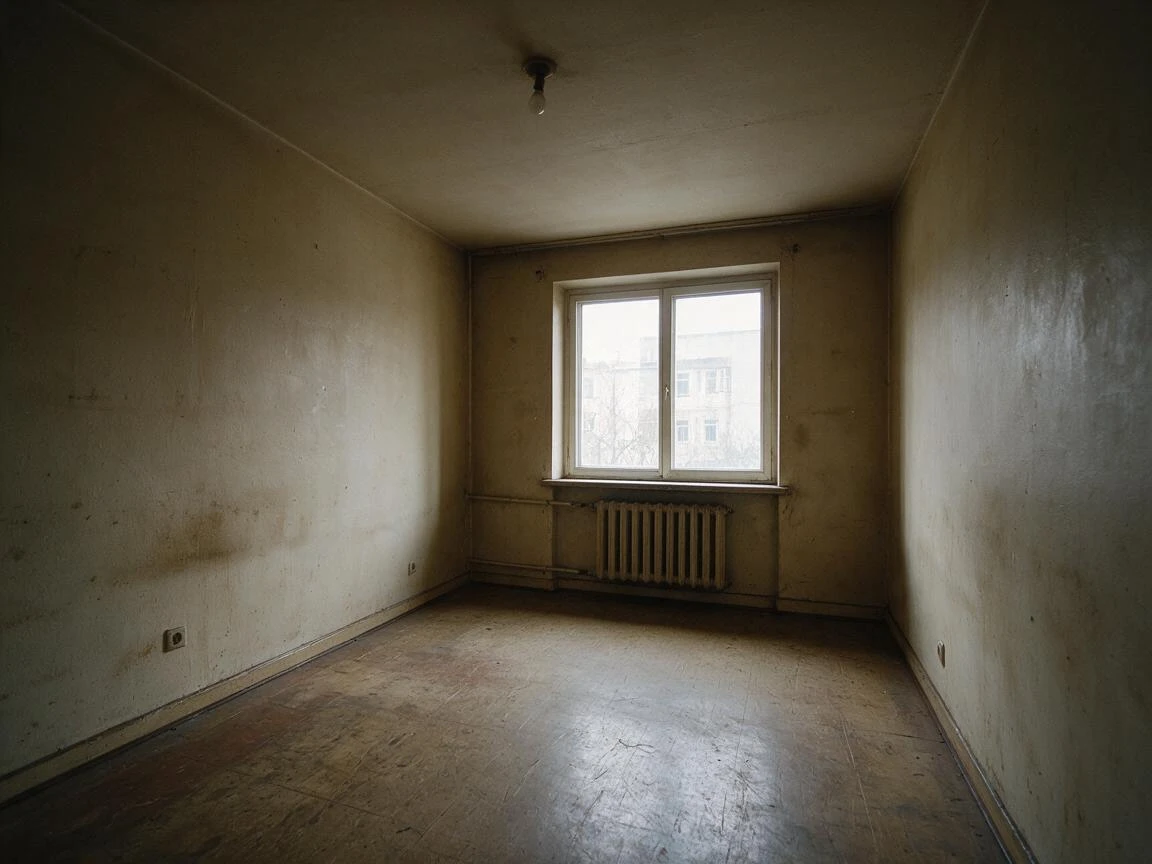
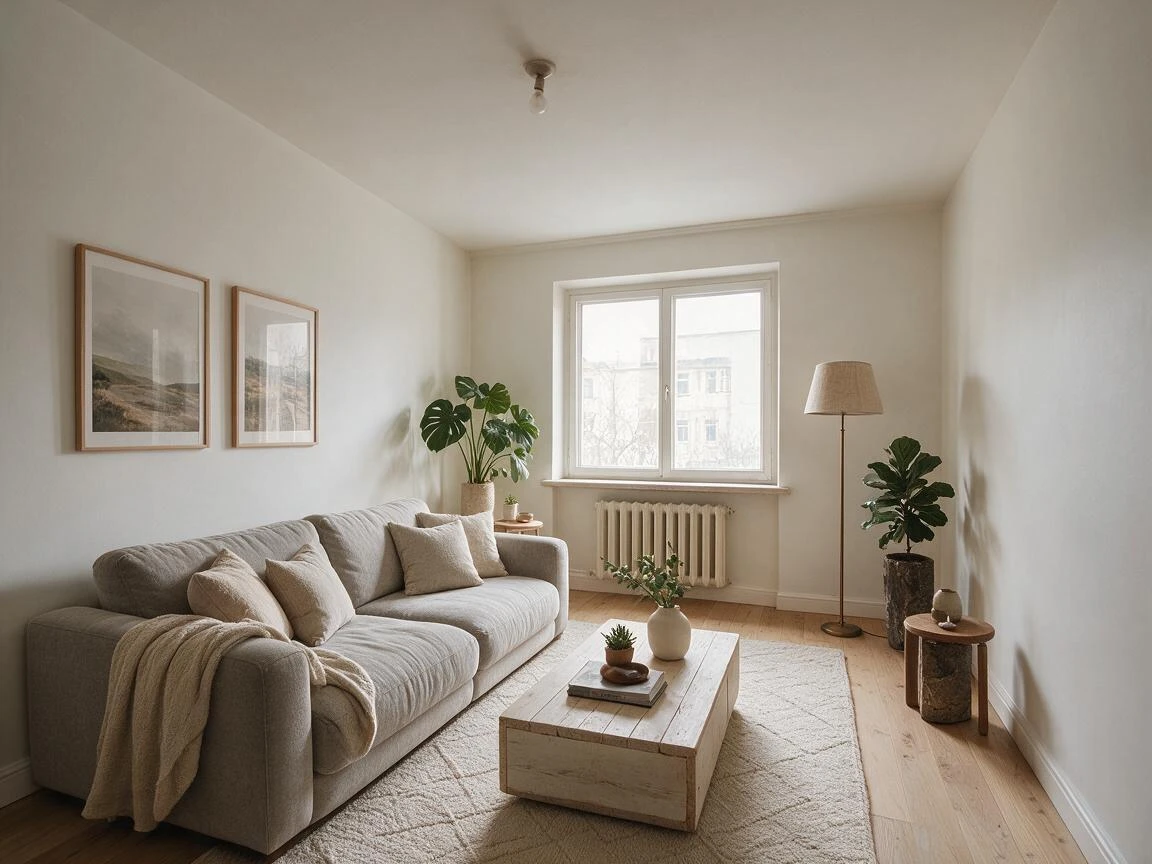
First, ambient: bright ceiling light or two, 4000K cool-neutral so the room reads as daylit rather than dinner-lit. Second, task and mid-level lamps at different heights — a floor lamp, a table lamp — so shadows break up and the eye finds depth. Third, accent light aimed at the walls: uplights and picture lights turn surfaces into secondary sources, which is the closest artificial trick to a window's glow.
Pick the bulb temperature on purpose
The cooler scheme above is one school; the designer default is warmer. ELLE Decor's designer roundup lands on 2700K warm-white LEDs — dimmable warm-glow bulbs if the budget allows — because lamp-heavy rooms read as cozy rather than clinical. The honest way to decide: rooms you sit in after dark want 2700–3000K; a fully windowless room that must photograph as if daylit can justify 3500–4000K. Test both and judge the photos, not the room — cameras and eyes disagree about white balance, which is exactly why these rooms misbehave on listings. Whichever temperature wins, add uplight: torchieres and wall-washing accent light brighten more per watt than downward fixtures, because they turn the walls and ceiling into the room's second lamp. Dimmers let one set of fixtures do both jobs.
Use mirrors as fake windows
A large mirror on the wall opposite the doorway bounces light from the adjacent room and doubles its brightness. Better still, a mirror that reflects an actual window reads, at certain angles, as a second window.
Palette: warm white everywhere, one color
Walls, ceiling, and trim in the same warm white erases the corners where darkness pools. Keep furniture within the light palette; a dark sofa in a sunless room absorbs the light budget entirely.
Furniture that spends the light budget
Beyond color, shape matters: low and leggy beats tall and solid, because light travels under and around pieces you can see through. Birmingham Design Studio's windowless-room guide recommends glass or acrylic tables and other transparent pieces so illumination passes the furniture unobstructed, plus matte paint on the walls — flat finishes scatter light more evenly than gloss without the glare. Skip heavy drapes entirely; there is no window to dress, and floor-length fabric only eats light. A matte ceiling one shade lighter than the walls keeps the fifth surface working too. Low-light plants — pothos, snake plant, peace lily — survive where a fiddle-leaf fig would sulk, and add the one thing lamps can't: a reason the room feels inhabited.
Renovate vs restage: what a windowless room is telling you
One thing in this room is construction and everything else is styling — sort them before spending. The genuinely structural fixes are cutting a new window opening, adding a skylight, or installing a sun tube: real money, permits, and the only interventions that add actual daylight. Lamps, paint, mirrors, and furniture are the restage half, and they are not consolation prizes — a fully layered scheme gets most of the way to livable for a fraction of a wall opening. For a listing, be equally precise about the photo side. California's AB 723 exempts the edits that change light, not contents — exposure, white balance, sharpening, color correction, cropping — but a rendered window where no window exists is an altered element that requires disclosure and the original photo. Stage the room bright with lamps that are really in it; never paint a window onto it. If the space is below grade, the same logic extends to the basement-specific fixes in making a basement room livable.
Be honest in photos
These rooms photograph badly because cameras see the missing window too. Light everything, shoot level — and list the room with the photo that flatters it least as a secondary frame, or stage it bright first: enhance the photo to lift exposure naturally, then upload the room and compare before it goes live.
FAQ
How do you brighten a north-facing room?
A north-facing room has real but weak daylight, so the job is amplifying it rather than replacing it: sheers or no drapes at all on the window it does have, mirrors opposite the glass to double the daylight's reach, and layered lamps on a warm 2700–3000K scheme for the hours the sun isn't helping. Keep walls, ceiling, and trim in one light color so every available lumen travels. Why lighting makes or breaks room photos covers how this reads on camera.
What colors brighten a windowless room?
Warm whites and near-neutrals across walls, ceiling, and trim — one continuous palette, so the eye never finds the corner where darkness pools. The ceiling works hardest one shade lighter than the walls. One saturated accent is fine if it earns its keep; the mistake is large dark surfaces, which is why which colors make rooms look bigger and this room obey the same rule.
Do mirrors really help a dark room?
Yes, measurably — a mirror opposite a light source (a window through the doorway, a bright lamp wall) doubles that source's visual reach, and one angled to catch a real window can read as a second window. It bounces light, not sunshine: mirrors multiply whatever luminance exists, which is why they come after layering the lamps, not instead of them. The full kit is above; the paint half of the job is one repaint test away.
Compare
Related questions
Related tool
