
How do you decorate a narrow hallway?
By Goodesign AI · Updated 2026-10-16
Keep the floor clear, run one consistent color from the rooms it connects, and decorate vertically: a runner, art in a single line, and sconces or a slim console instead of deep furniture. A mirror opposite the light source doubles both the brightness and the width.
A narrow hallway rewards restraint and punishes furniture. The winning strategy treats it as a gallery spine: clear floor, one visual system, decoration stacked vertically where width can't be spared.
Keep the floor almost bare
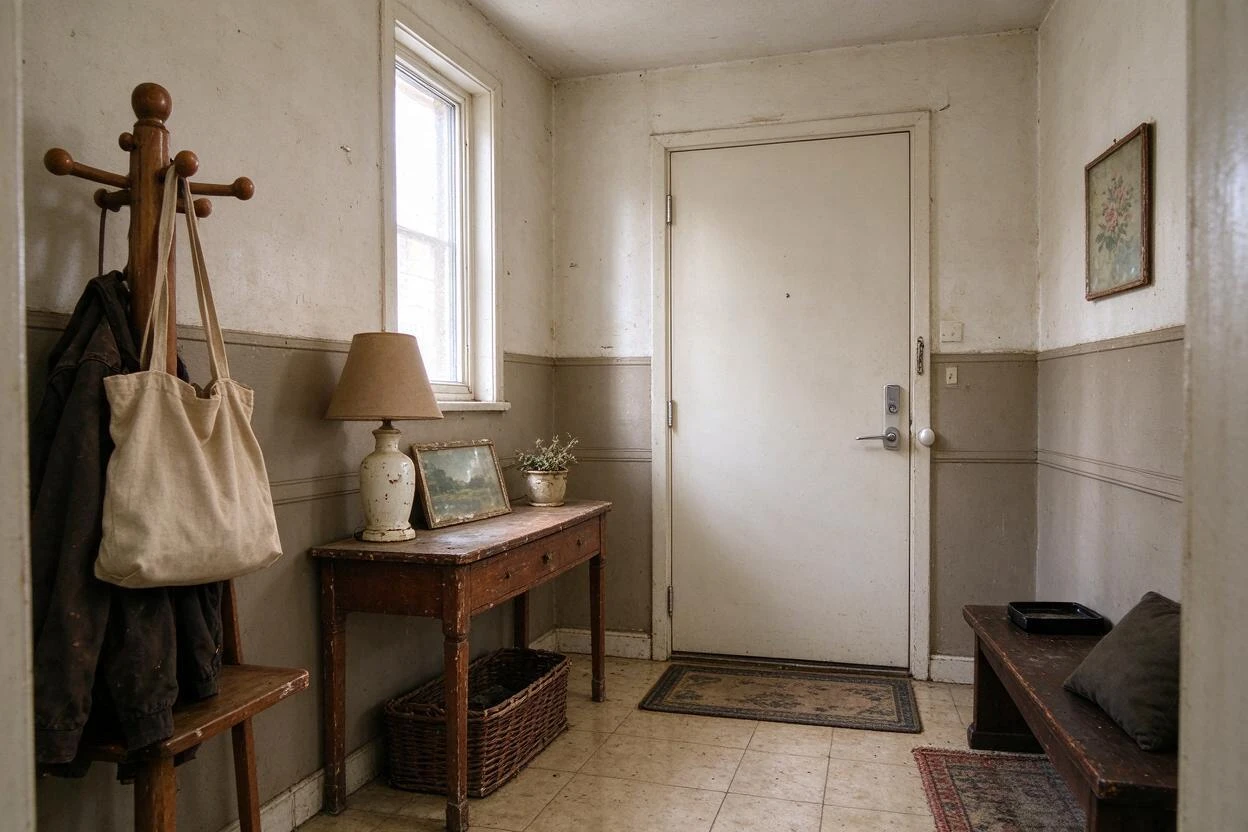
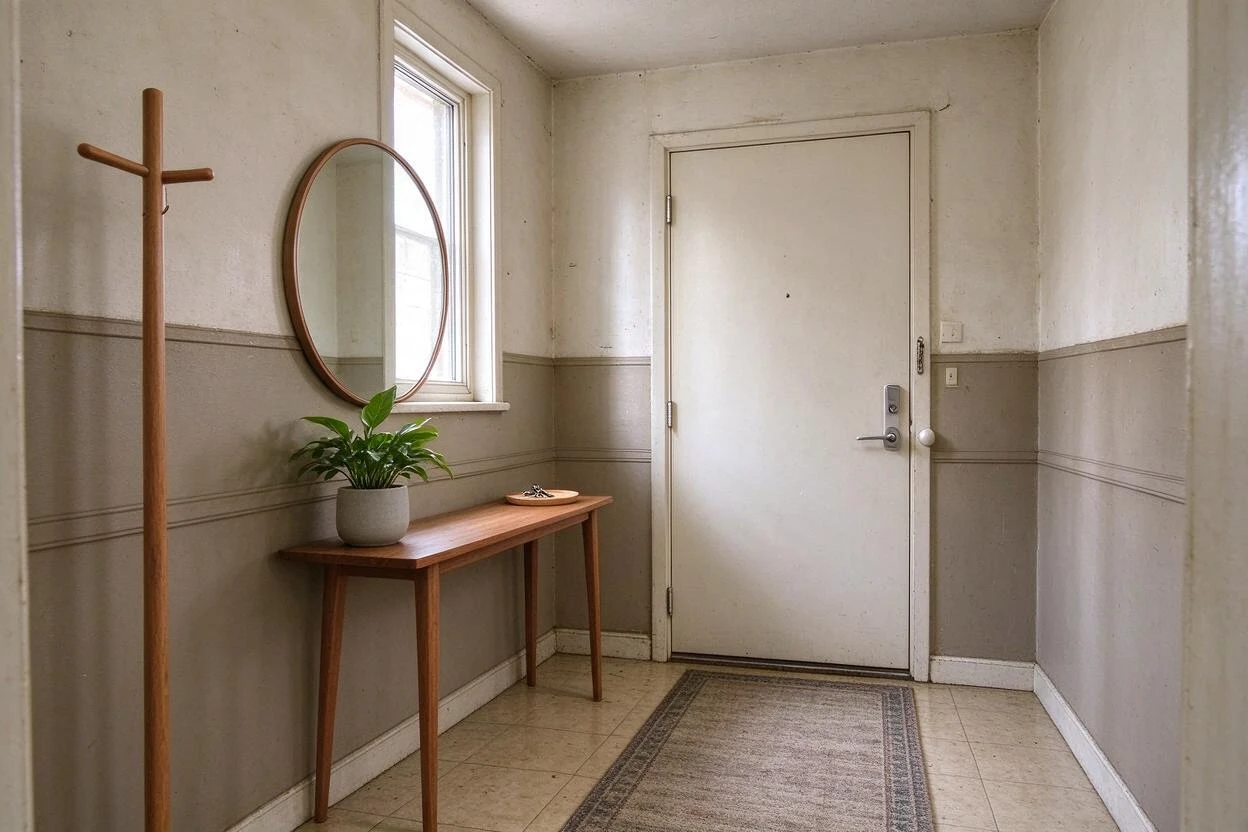
Nothing that protrudes past a slim console or a 40 cm-deep shelf. Every intrusion narrows the passage and snags shoulders; the hallway should never require the sideways shuffle. If storage matters, tall and shallow beats wide and deep — a full-height cabinet 35 cm deep swallows coats without stealing the corridor.
How wide is wide enough
Most homes land between two numbers. Around 36 inches (91 cm) is the width designers treat as comfortable for a main passage — two people can pass with a console between them — and 24 inches (61 cm) is the squeeze point below which the hallway stops functioning as a corridor and starts functioning as an obstacle. These are the same clearances designers use for living-room walkways (Emily Henderson's rules put a main path at 30–36 inches and an absolute minimum at 18–24), so measure yours once and let the number choose the furniture: over 90 cm, a slim console and a runner both fit; under 75 cm, wall-hung everything and a flat mirror only. The runner itself should leave an even strip of floor visible on both sides — a carpet wider than the passage reads narrower, not richer.
One color story, connected
Paint the hallway in the same family as the rooms it joins so each doorway reads as a continuation rather than a jump — hallways that clash with every room make the whole flat feel disjointed. Lighter than the adjacent rooms is the safe direction, because most hallways lose the window lottery.
Decorate the vertical plane
A runner defines the path and quiets footsteps; art in one horizontal line at eye level turns the walk into a small gallery; hooks and a mirror cluster at the entry do the practical work. The mirror is the cheat code — placed opposite or beside the light source, it doubles brightness and visually adds a metre of width.
Light the length
Sconces or a series of small ceiling lights every metre beat one central bulb, which leaves both ends in gloom; even light makes the passage read wider.
Renovate vs restage: when a hallway is a construction problem
A hallway's worst problems are rarely decoration. Width, the position of doors along it, and darkness with no window are structure — widening means moving walls, and light usually means borrowing it: glazed doors into the rooms it joins, a transom above them, internal glazing beside the staircase. Those are renovation answers with renovation price tags, and in a sale they're facts to describe honestly rather than photograph cleverly. Everything else on this page is restage — paint, runner, mirror, sconces — and that half is larger than it looks: a dark, narrow hall reads as a design choice once it's lit evenly and colored continuously, and reads as a defect when it isn't. A render settles the argument cheaply: repaint the same hallway photo in continuous color versus contrast trim, or stage the whole run virtually with the console in and out. The photo-side line matches California's AB 723 — lighting, sharpening, white balance, and cropping need no disclosure, but a wide-angle trick that makes a 60 cm corridor look passable is not an edit the exemption was meant to cover. Measure, disclose, and light what's real.
Rehearse the look before painting anything: test colors on your hallway walls from a photo — upload it and compare one-color-continuous against contrast trim, free.
FAQ
How wide should a hallway be?
The industry rule of thumb: 36 inches (91 cm) for a comfortable main passage, 24 inches (61 cm) as the functional minimum, and anything tighter is a squeeze you decorate around rather than furnish. Code requirements vary by jurisdiction and hallway type, so treat these as design targets — they're the same clearances used for living-room walkways. Measure at the narrowest point, including any radiator or door swing.
What colors make a hallway look bigger?
One continuous light color running through the hallway and into the rooms it joins — each doorway reads as more of the same space instead of a new room. Lighter than the adjacent rooms is the safe direction, because most hallways lose the window lottery. The mirror opposite the light source does the width work; color flow between rooms explains the through-line logic.
How do you light a hallway without windows?
Layer it like a windowless room: sconces or small ceiling lights on a circuit every metre or so instead of one central bulb, plus a picture light or two to turn the art into secondary sources. Warm 2700–3000K bulbs keep it residential; evenly bright beats dramatically dim. If the hall still reads flat, the honest structural fix is borrowed light — glazing a door — not a brighter bulb. For the full method, see the same three-layer approach used on windowless rooms.
Compare
Related questions
Related tool
