
How do you set up a productive home office?
By Goodesign AI · Updated 2026-10-16
Put the desk perpendicular to a window for natural light without screen glare, avoid facing a blank wall all day if video calls matter, and invest first in the chair, then light, then storage. Everything else — decor, rugs, plants — comes after the ergonomics work.
A productive home office is decided by three things before any decor enters: where the desk faces, what you sit on, and how the light behaves. Get those right and even a spare corner works; get them wrong and no amount of shelves will make the room workable.
Desk position: perpendicular to the window
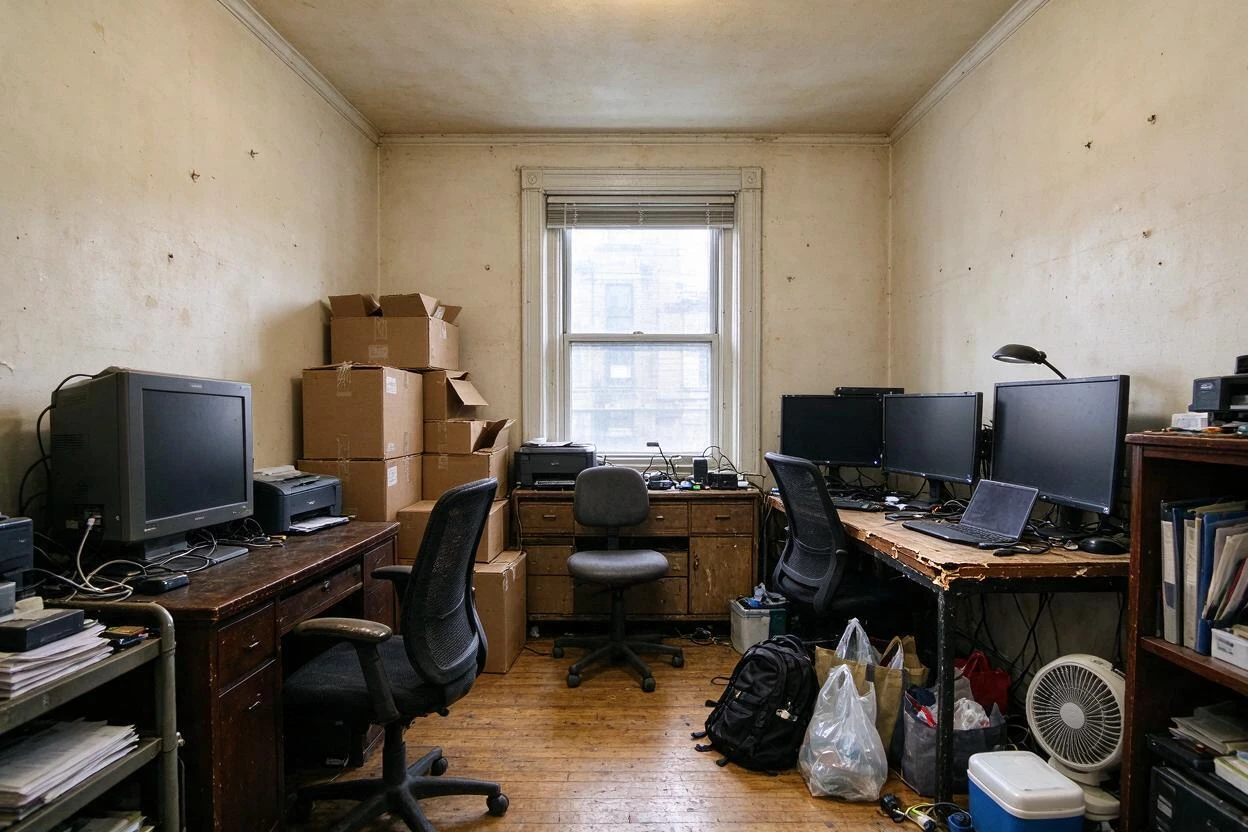
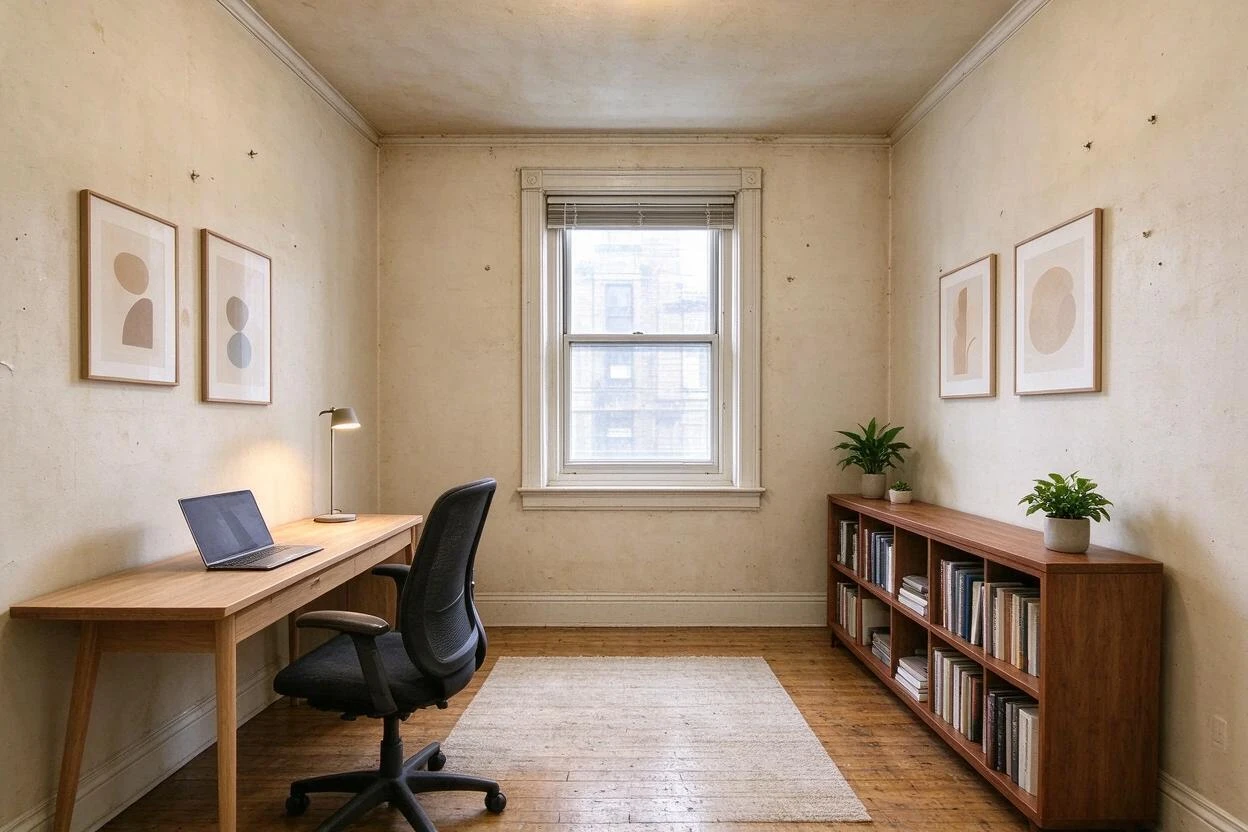
Side-on daylight lights the desk without hitting the screen, which kills both glare and the cave effect of a wall-facing desk. Facing the window means squinting into the sky on every call; backing onto it means you appear as a silhouette in meetings. If the room is shared, a fold-down or double-sided desk along a perpendicular wall keeps the rest of the space alive after hours.
Chair and screen: the numbers that matter
Eight hours a day on a dining chair ends in physio bills that exceed any desk's price. Chair first, then screen height, then keyboard. The ergonomic targets are plain: feet flat on the floor, top of the monitor at or slightly below eye level, screen about an arm's length away, hands at or slightly below elbow height (Mayo Clinic). A laptop stand and a footrest together cost less than one physio session and fix most of what an expensive chair can't on its own.
Light in two layers
Daylight does the day shift; a task lamp with a warm-white bulb carries the evening so the room doesn't demand the ceiling glare at 9 p.m. Put the lamp on the opposite side from your writing hand, or your own arm casts the shadow it was meant to remove. A dimmable ceiling circuit is the third layer: bright for cleaning and video calls, low for the last hour of the day.
Build for video calls, not just work
If the calendar fills with meetings, the wall behind the chair is part of the setup. A plain bookshelf or tidy corner reads better on camera than a bed or a laundry door; a small lamp at face height does more than any ring light. Join your own call once and look at what the camera sees — headroom, window glare, and the door people walk through all show up on screen, and all of it is fixable in an afternoon.
Storage and cables
One closed drawer beats three open shelves: papers, chargers, and the everyday drift of desk life need somewhere to disappear at 5 p.m. Route cables along the underside of the desk with adhesive clips — under $15 — and the room stops looking temporary. A closed box that fits under the desk doubles as a footrest and swallows the power strip with it.
Draw a boundary, physical or visual
In shared rooms, a rug under the desk zone, a shelf as a divider, or even a consistent wall color marks where work stops — the psychological commute matters more at home than in an office tower. The ritual does part of the work too: a lamp switched on at 9 and off at 5 gives the day a shape the room alone can't. Zoning an open-plan space covers the wider version of the same problem.
Plan the layout before moving anything: place the desk and chair virtually at true scale, or upload the room and test two desk positions side by side.
FAQ
Where should a desk face in a home office?
Perpendicular to the window. Side-on daylight lights the work surface without hitting the screen; facing the window causes glare and squinting; backing onto it puts your silhouette in every meeting. In a roomless apartment, take the brightest wall and set the desk at a right angle to it.
What should you buy first for a home office?
The chair, then the screen-height fix — a laptop stand or monitor riser — then the task lamp, in that order. Everything that makes the room look designed comes after the three things that let you sit in it for eight hours without paying for it physically.
How do you set up a home office in a small space?
A fold-down or narrow desk — 60 cm deep is enough — placed perpendicular to the window, with one drawer or lidded box to close the workday into. A rug or wall color that differs from the rest of the room marks the office boundary without building a wall, and the whole setup disappears into the room after hours.
Compare
Related questions
Related tool
