
How do you lay out a studio apartment?
By Goodesign AI · Updated 2026-10-16
Zone before you furnish: place the bed farthest from the entry, define zones with rugs and a bookshelf divider rather than walls, float a sofa to separate sleep from living, and keep one continuous floor and wall color so the room reads as one generous space with furniture, not four cramped rooms.
A studio is a layout problem before it's a decorating problem. The square footage is fixed; how it reads is not. One disciplined sequence turns a box into an apartment.
Zone on paper first
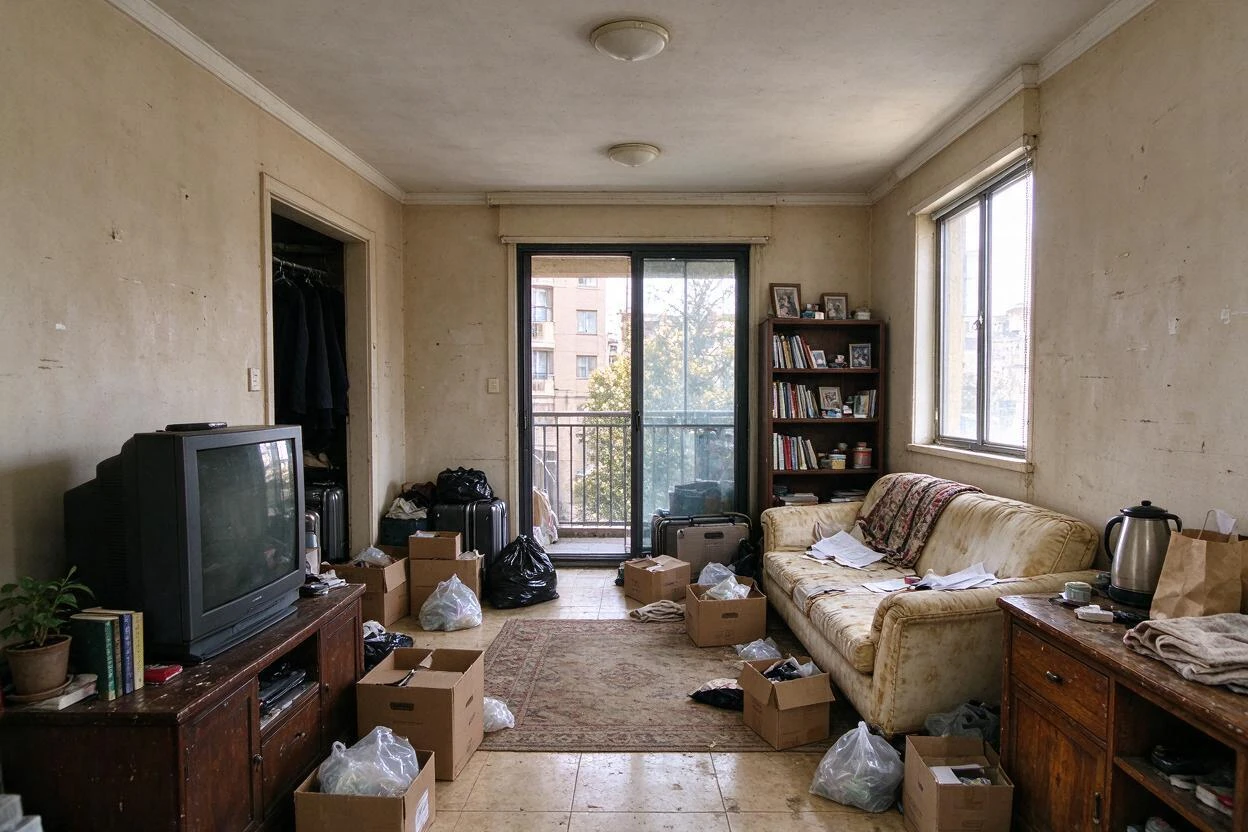
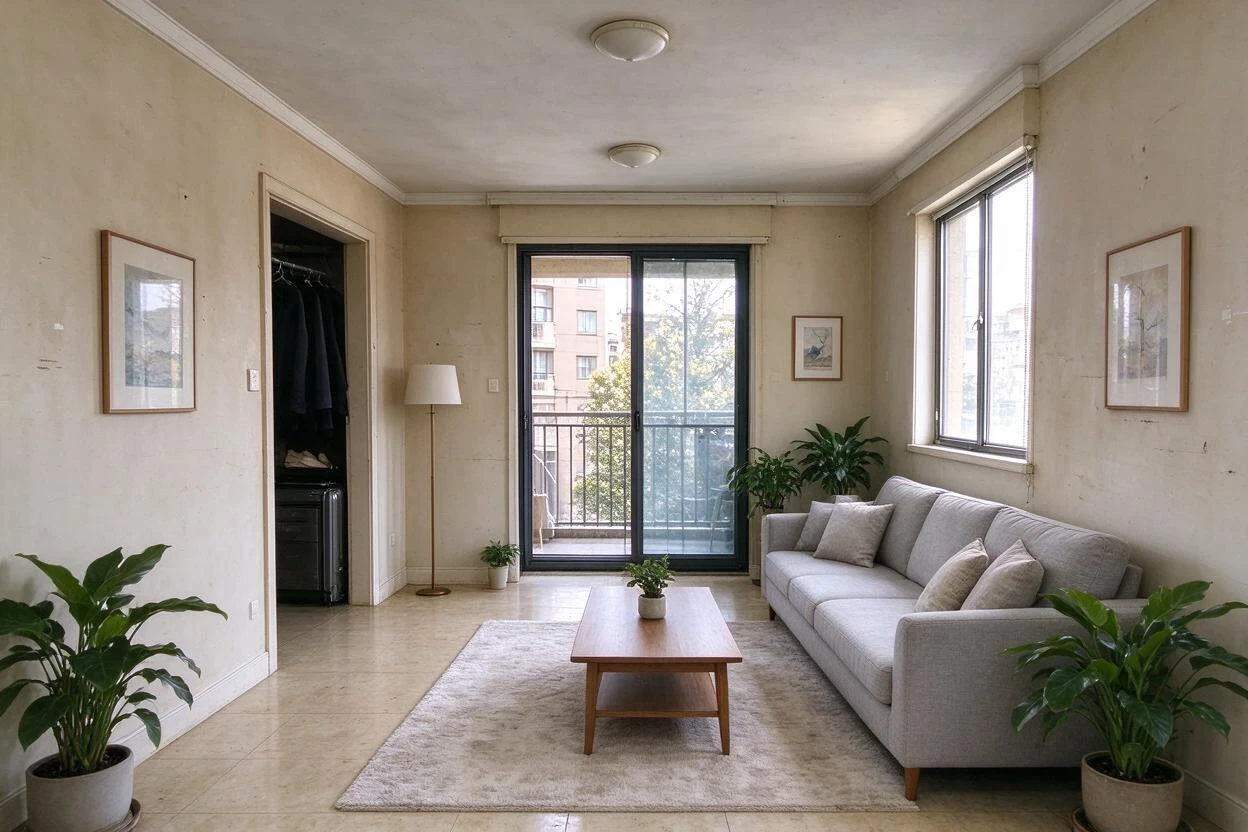
Sketch the room and mark four zones: sleep, sit, cook (already fixed by the kitchenette), and work. The bed goes farthest from the entry door — the spot a guest's eye reaches last — and against a solid wall if one exists. Everything else negotiates around that anchor.
Where the bed goes (and why)
Every workable studio answers one question first: where does the bed go? It's the largest object and the least movable once it's made, so it gets placed first and the rest of the plan forms around it. The rules:
- Farthest from the entry, so guests reach it last. The apartment should read as a living space with a sleeping corner, not a bedroom with a kitchenette attached.
- Headboard against a solid wall. You'll sleep better, and a bed with a wall behind it reads as settled rather than parked.
- Out of the kitchen's smell radius. A few feet of separation between bed and stove changes how the whole apartment feels by evening.
- Never across the natural path from door to kitchen or door to bathroom — the two routes every guest walks.
If the geometry forces the bed near the door, the sofa float below matters twice as much: it's what keeps the bed out of the doorway's sightline. For the bed zone itself, see how to arrange bedroom furniture.
Divide with furniture, not walls
Built partitions eat light and square footage. Instead: an open bookshelf perpendicular to the wall (storage on both faces, division without blocking light), a curtain on a ceiling track for the sleep nook, or the classic move — a sofa floating with its back to the bed, which creates a living room on one side and a bedroom on the other. Floating the sofa earns double duty in a studio like nowhere else.
Use rugs as zone borders
A large rug under the seating group and a different texture under the bed tell the eye where one room ends and the next begins — the cheapest architecture there is. Keep both rugs in the same color family.
Five studio layouts that work
Most studios resolve into one of five arrangements. Measure first; the room's width decides.
- The float — sofa perpendicular to the long wall, back to the bed. Living room in front, bedroom behind. Needs roughly 12 feet of width so both sides keep a walkway.
- The bookshelf spine — open shelving perpendicular to the wall, dividing sleep from living while storing both. Leave the top shelves open so daylight crosses the divide.
- The nook — bed tucked into the corner or alcove behind a ceiling-track curtain. The curtain closes at night and disappears by day, which suits studios that host guests.
- The vertical split — with ceilings over ten feet, a loft bed above the desk or wardrobe. The only layout that adds usable floor instead of dividing it.
- The perimeter — every piece against the walls, the center kept open. Right for narrow studios under about 10 feet wide, where one floating sofa would choke the walkway.
Sketch your two candidates on a photo of the real room before moving anything — if the plan doesn't survive the photo, it won't survive the sofa. The same zoning logic runs at larger scale in open-plan spaces.
One envelope, one palette
Resist the urge to give each zone its own wall color: continuity is what makes a studio feel like an apartment rather than a corridor with furniture. Paint everything one color, including trim, and let textiles carry variation.
Furniture that does double duty
The edit rule below becomes a shopping rule: count the jobs before the purchase.
- A drop-leaf table seats two at dinner, then folds to a desk against the wall.
- A storage ottoman is footrest, guest seat, and the place the winter coats go.
- A bed frame with drawers retires an entire dresser and its footprint.
- A daybed or sleeper sofa turns the living room into the guest room without renting a second room's worth of space.
- Nesting tables serve as nightstand, desk return, or dining surface — and stack away when nothing is needed.
- A murphy bed costs real money and usually installation, but it returns the entire bedroom floor every morning.
A $400 piece that deletes a $400 category is free. A beautiful single-purpose object in a studio is a sculpture you live around.
Edit with unusual severity
Every piece must work twice: ottoman with storage, dining table as desk, bed with drawers. In a studio, a single-purpose object is a luxury you notice daily.
Test zones before buying: add furniture and dividers on a photo of your actual studio — upload free and see two layouts side by side.
FAQ
Should the bed really go farthest from the door?
In most studios, yes — the entry view decides whether the space reads as an apartment or as a bedroom with a kitchen in it. If the only workable spot puts the bed near the door, screen it with a floating sofa or an open bookshelf rather than fighting the floor plan.
How do you make a studio apartment look bigger?
One wall color including trim, one continuous floor, zones marked by rugs instead of walls — sized correctly — and furniture with exposed legs that lets light travel underneath. Keep tall pieces off the window wall so daylight reaches deeper into the room.
How do you separate the bed from the living area without building a wall?
A floating sofa, an open bookshelf, or a ceiling-track curtain. All three divide the room without eating light, and the first two add storage on both faces while they're at it.
How much space do you need between zones?
Keep 30 to 36 inches of walkway between zones — the clearance two people need to pass each other. In a studio the walkway is also the hallway, so protect it before placing anything else.
Compare
Related questions
Related tool
