
How can you update a rental apartment without renovating it?
By Goodesign AI · Updated 2026-10-16
Stick to reversible moves: peel-and-stick wall treatments, freestanding furniture, plug-in lighting, and textiles that leave with you. Focus budget on the layers you touch daily — lighting, bedding, curtains — since they carry most of the perceived upgrade. The test for every purchase is simple: will the deposit survive it?
Renting changes the design question from "what should this room become" to "what can it become that moves out with me." Every idea below passes the deposit test: reversible, removable, and cheap enough to abandon.
Work the walls the reversible way
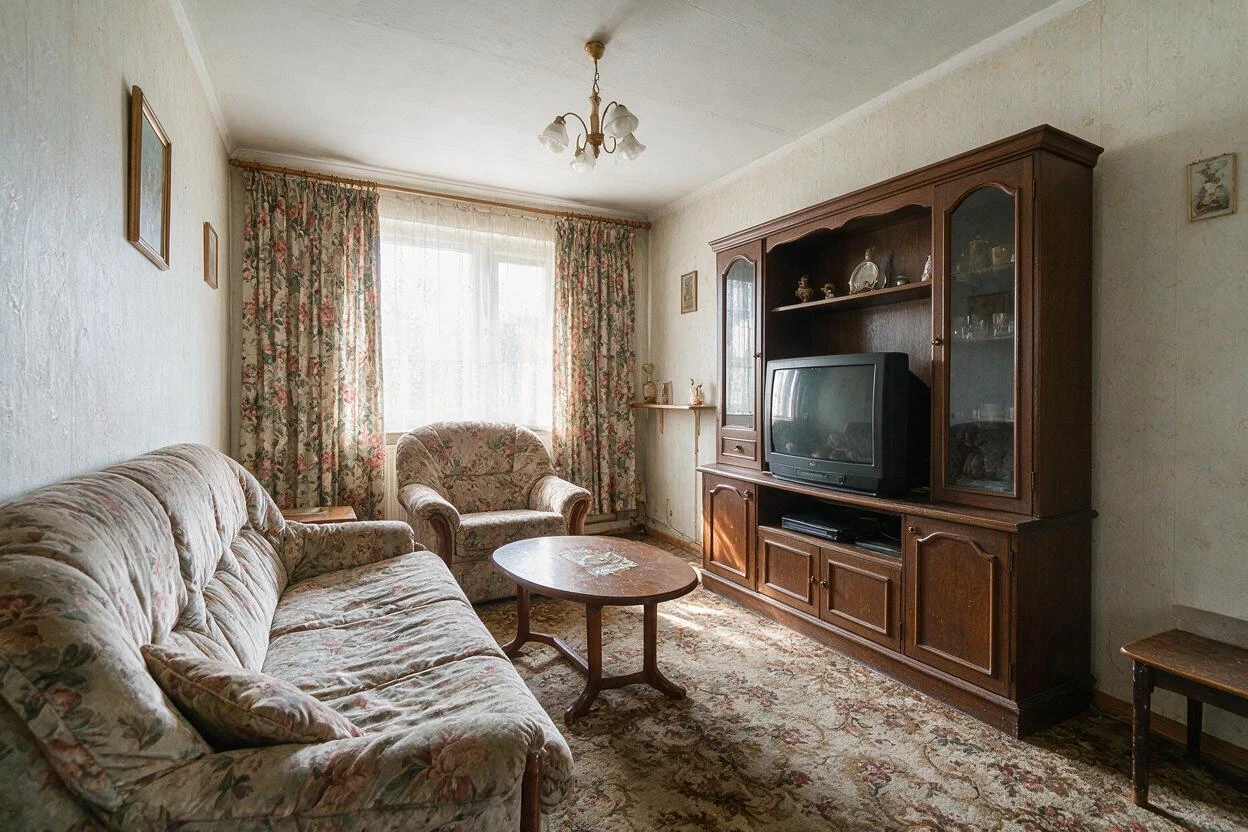
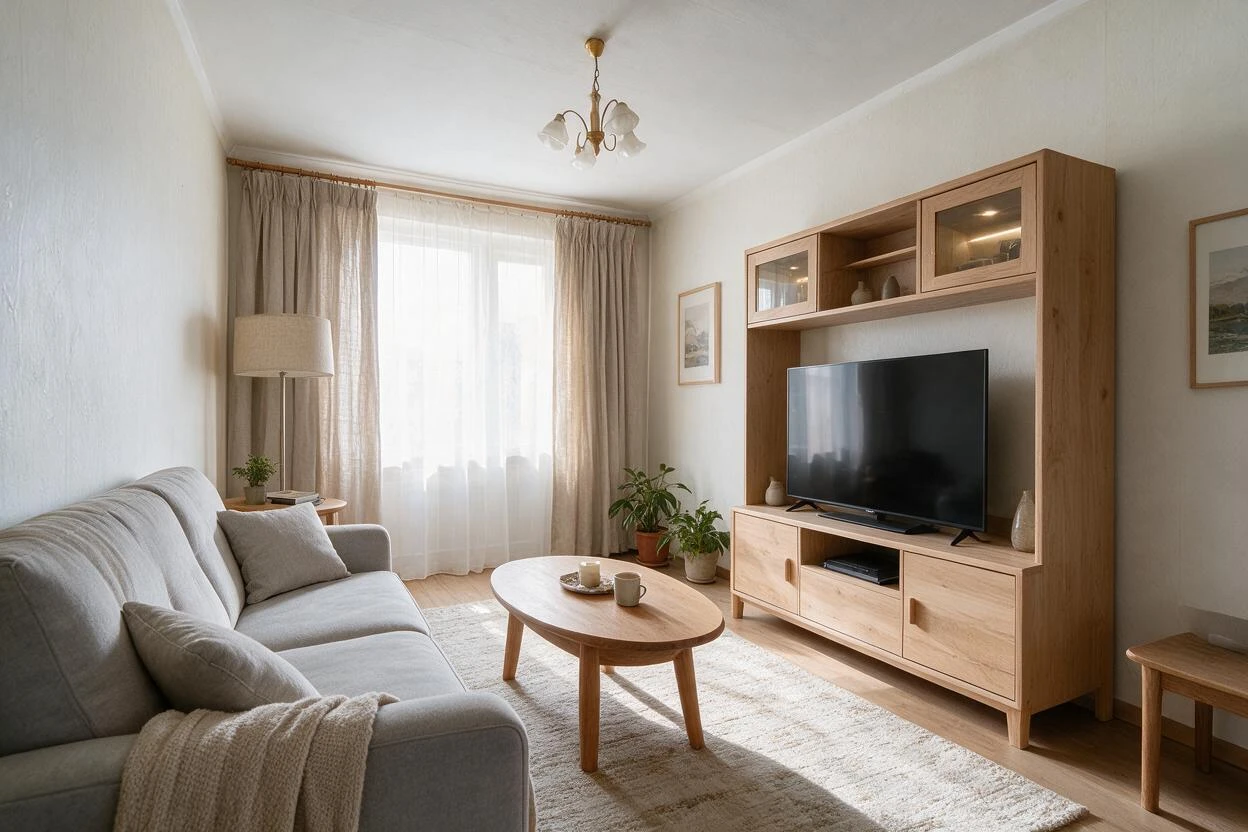
Paint usually needs permission, but peel-and-stick wallpaper, shiplap panels, and large-format tile decals don't — they mount on adhesive and peel clean when the lease ends. One accent wall behind the bed or sofa delivers most of the visual payoff for a tenth of the effort. If the existing paint is grim, wash it first; decade-old "beige" is often just dust. Test any adhesive product on the least visible wall for a week before committing — removal behavior varies wildly between brands, and the brand that peels in one clean sheet is worth ten dollars more.
Light like you own the place
Overhead fixtures in rentals are bleak by default. Swap the fixture and store the original in a closet — a five-minute change, reversed in five minutes at move-out. Then add plug-in sconces, floor lamps, and warm bulbs so no single source carries the room after dark. Every bulb in the flat goes warm-white on day one: about $20, and it upgrades every room at once.
Let textiles carry the style
A rug covers the worst floor (size it to the room so it doesn't read as an afterthought); curtains hide blind slats and soften echo; cushion and throw covers change a sofa's color without reupholstering anything. Textiles are also the cheapest way to test a palette before committing anywhere more permanent. Hang curtains high and wide — tension rods or a bracket into the trim above the window — and even a small room reads taller.
Furnish with freestanding pieces only
No built-ins, no mounted headboards, nothing screwed into tile. A freestanding shelf can fake a divider, a wardrobe can replace a missing closet, and a headboard can lean on the wall like a piece of furniture instead of hanging like architecture.
The two rooms worth extra effort
Kitchens and bathrooms drag rentals down hardest, and both accept reversible fixes. Swap cabinet pulls and keep the originals in a labeled bag, add a peel-and-stick backsplash panel behind the hob, trade the showerhead for a $30 pressure model, and hang a tension shelf in the shower. None of it touches a landlord's fixture; all of it changes how the room feels every single day.
The deposit test, made concrete
The legal backdrop is friendlier than most tenants assume. Landlords may deduct for damage beyond normal wear and tear — which Nolo defines as "the inevitable deterioration that occurs from everyday living" — but not for the fading and scuffing that come with ordinary use (Nolo). So the working rules are procedural, not decorative: photograph every wall at move-in and again at move-out, keep every original fixture in a box, fill screw holes rather than leaving them, and leave a written note of anything you changed. The deposit survives documentation, not luck.
Preview before you spend
Photograph the room as-is, then restyle it digitally to compare directions free: upload a photo and try a surface restyle to see the new wall treatment, rug, and lighting rendered before a single strip of wallpaper goes up.
FAQ
How do I update a rental without losing my deposit?
Stick to reversible changes and document everything: peel-and-stick wall treatments instead of paint, freestanding furniture, swapped fixtures with the originals stored safely, plus dated move-in and move-out photos of every wall. Deposit law in most places limits deductions to damage beyond normal wear and tear — documented normal wear comes back with the deposit.
Will peel-and-stick wallpaper damage walls?
Applied to a sound, painted surface and peeled slowly at a low angle, quality paper removes cleanly; the failures come from cheap adhesive, crumbling old paint, or one impatient pull. Test a single strip on the least visible wall and check the removal a week later before covering the room.
Can I paint a rental apartment?
Only with the landlord's written OK — paint is the classic case of an improvement that belongs to the property after you leave. If permission is granted, note the original color and keep the cans for the repaint at move-out. If not, peel-and-stick paper or a large fabric wall hanging carries the same visual weight and leaves with you.
Compare
Related questions
Related tool
