
What does upscaling a photo actually do?
By Goodesign AI · Updated 2026-10-16
Upscaling enlarges a photo while rebuilding the detail that normal stretching would blur: the AI predicts edges, textures, and fine lines at the larger size. It rescues small or compressed images — old listing photos, phone crops — but it invents detail, so heavily upscaled areas can look painted up close.
Upscaling enlarges a photo while rebuilding the detail that normal stretching would blur. Drag a small image to twice its size and the editor just spreads the existing pixels — soft edges, mushy text. An upscaler instead predicts what the missing pixels should contain: it sharpens edges, reconstructs textures, and redraws fine lines like window mullions and grain direction at the larger size.
When it earns its keep
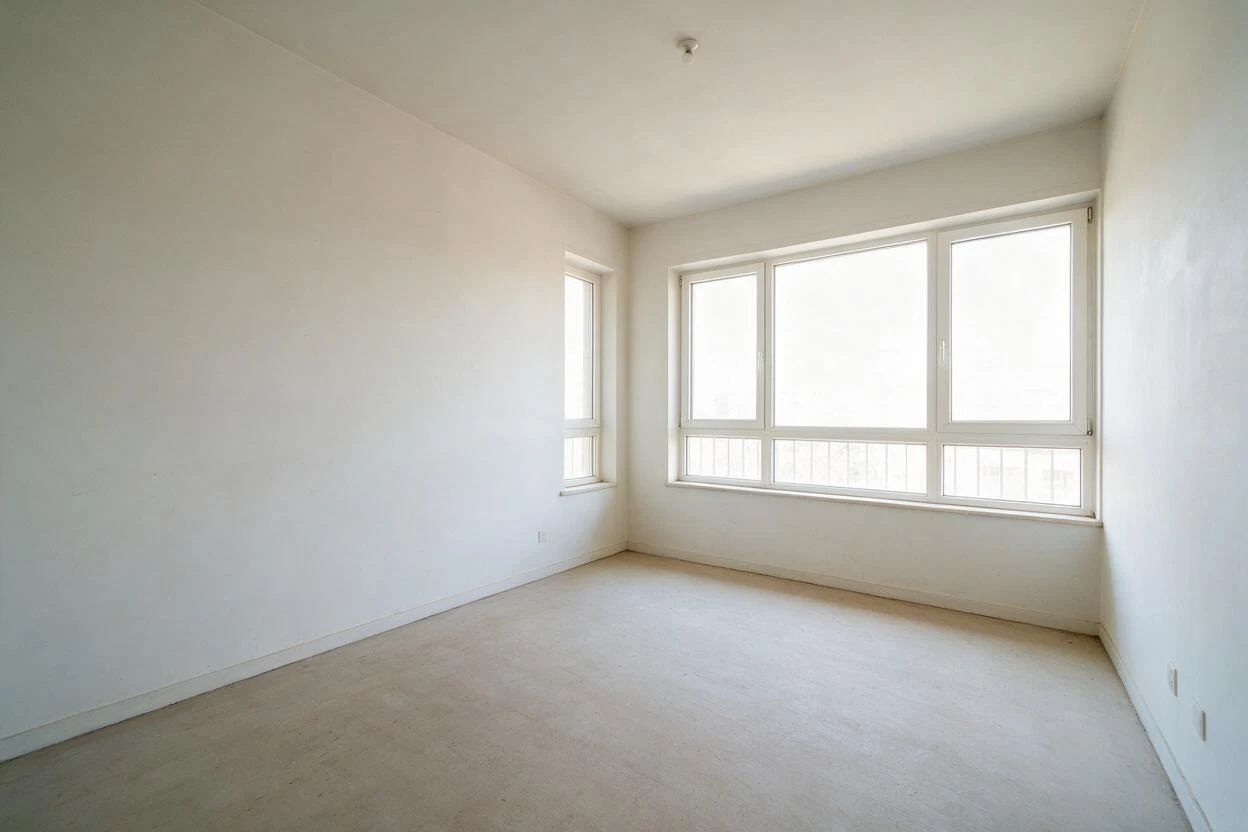

Three cases cover most uses. Old or compressed listing photos that are too small for today's full-screen portals. Crops — a wide shot turned into a usable close-up of one corner. And archival or print work, where a 1200-pixel original needs to survive at 300 DPI on paper.
A fourth case shows up constantly in real estate: inherited listings. You take over a listing mid-flight — previous agent gone, sellers moved out of state, and the only photo library is a set of 1200-pixel JPEGs that predate the full-screen era. Reshooting is impossible; upscaling is the only way those frames survive modern portal layouts. The pixel targets are in what resolution listing photos should be — upscale until the long edge clears roughly 3000 pixels and stop there.
What upscaling cannot fix
Invention has prerequisites, and they're worth stating plainly. Motion blur can't be un-blurred — the detail was smeared across pixels before the model ever saw it, so the upscaler redraws the smear as soft edges. Missed focus is the same story one step worse. And deep compression damage — the blocky artifacts of an image that has been saved and forwarded a dozen times — gets reconstructed rather than removed, sometimes with the blocks faintly visible inside the rebuilt texture. Upscaling repairs smallness; it does not repair badness. A sharp 1200-pixel frame upscales beautifully; a blurry 4000-pixel frame is still blurry at any size.
The honest limitation
Upscaling is educated invention. The model can't recover detail that was never captured; it generates plausible detail consistent with what's there. At 2x, the result usually looks natural. At 4x and beyond, faces get smoothed, textures repeat, and straight lines wander — zoom in and upscaled areas can look painted. Treat it as rescue, not resurrection: a slightly soft 2x upscale beats a brittle 4x guess.
Upscale it or reshoot it
The decision is simpler than it looks, because the two options answer different problems. Upscale when the photo is sharp but small — the detail exists and only the pixel count is wrong — or when the frame can't be retaken: sellers relocated, tenancy occupied, weather that won't repeat. Reshoot when the photo is soft, dark, or miscomposed, because enlargement amplifies defects as faithfully as it amplifies detail. The one borderline is the hero frame: even a good 2x upscale of a borderline hero loses to a ten-minute reshoot in better light, and heroes are the one frame where buyers look closest.
A useful tiebreaker: cost the reshoot honestly. If the property is an hour away and the reshoot means coordinating access for one frame, upscale the rescue and move on. If you'll be on-site tomorrow anyway, reshoot the weak frames and skip the edit entirely. The worst outcome is the invisible one — spending an hour of editing to make a mediocre frame mediocre at a larger size.
Worth knowing for listings: resizing and sharpening sit firmly on the permitted side of the new disclosure rules. California's AB 723 exempts the common finishing adjustments, and San Diego MLS's guidance for the law lists "sharpen or resize" as an enhancement that needs no disclosure. The upscaled photo is the same photo, honestly rendered at a bigger size — the caveat stays a quality caveat, not a compliance one.
How to get the best result
Start from the sharpest, least-compressed original you have; upscale before other edits; and compare the enlarged result at 100 percent against the original rather than at thumbnail size, where everything looks fine.
One order-of-operations note that saves rework: denoise before upscaling if grain is present, because the upscaler will happily rebuild the grain at higher resolution — the grain cleanup sequence runs cleanup first for exactly this reason. And if the upscaled output is destined for an AI design pass, the same legibility logic applies in what photo quality AI tools need: the model reads edges, and a clean 2x upscale gives it better edges than the original had.
Rescue a too-small photo in seconds: upscale your image and check the edges up close — upload it and see whether the enlargement holds at full-screen size.
FAQ
Does upscaling a photo reduce its quality?
It changes quality rather than reducing it: the enlargement invents plausible detail where real detail is missing. At 2x the result usually looks natural; at 4x and beyond, textures repeat and edges wander. The comparison that matters is against the alternative — a soft small photo or a crisp enlarged one — and the enlarged one wins.
How much can you upscale a photo before it looks fake?
Around 2x stays convincing for nearly any source; 4x is the practical ceiling, and only for sharp originals. Beyond that, upscaled areas read as painted when the buyer zooms — repeating textures, wavering straight lines, smoothed faces. Judge at 100 percent zoom, where thumbnails flatter everything.
Is AI upscaling allowed on real estate listings?
Yes — resizing is explicitly listed as a permitted, no-disclosure enhancement under the guidance written for California's AB 723. The upscaler changes how large the photo renders, not what the property is. The line stays where it always is: don't add, remove, or alter elements of the house itself.
What's the difference between resizing and upscaling?
Plain resizing spreads existing pixels — bigger image, softer everything. Upscaling predicts and rebuilds the detail the new pixels should contain, reconstructing edges and textures as it enlarges. Same direction, different mechanism, visibly different result at any size worth caring about.
Compare
Related questions
Related tool
