
How do you describe placement in an AI room design prompt?
By Goodesign AI · Updated 2026-10-28
Give every named piece an address — "reading chair by the window", "console opposite the sofa" — and use exact counts to close the scene. Plain positional words like by, opposite, against, and centered beat abstract layout talk every time.
"Two people at a table" is a coin flip. "A man on the left side of the table, a woman on the right" is a photograph. The same rule governs furniture in an AI room render: whatever you name but don't locate, the model places by its own taste — and its taste doesn't know that the outlet is on the left wall or that the morning sun comes from the window side.
Placement words are the cheapest upgrade to a room prompt because they cost almost nothing: a two-word tail on each anchor piece. The five-part pattern reserves a whole slot for them. This page is the word bank for that slot.
Three kinds of placement words
| Kind | Job | Examples |
|---|---|---|
| Positional | Pins one piece to one zone | "by the window", "in the corner", "against the left wall", "centered in the room" |
| Relational | Ties two pieces together | "opposite the sofa", "flanking the bed", "beside the fireplace", "under the window" |
| Scale | Sizes a piece against the room | "a large sectional filling the back wall", "a slim console along the entry wall" |
Use all three when the layout matters. Positional words fix where things go, relational words fix how they relate, and scale words stop the model from shipping a loveseat where you pictured a sectional. What you should not need are camera directions — the shot is fixed by your photo, so "in the foreground" and "lower left third" belong to photography prompts, not room redesigns.
Every anchor piece gets an address
The two-or-three anchor pieces from the base pattern each take a location, in the same order you named them. A home office reads:
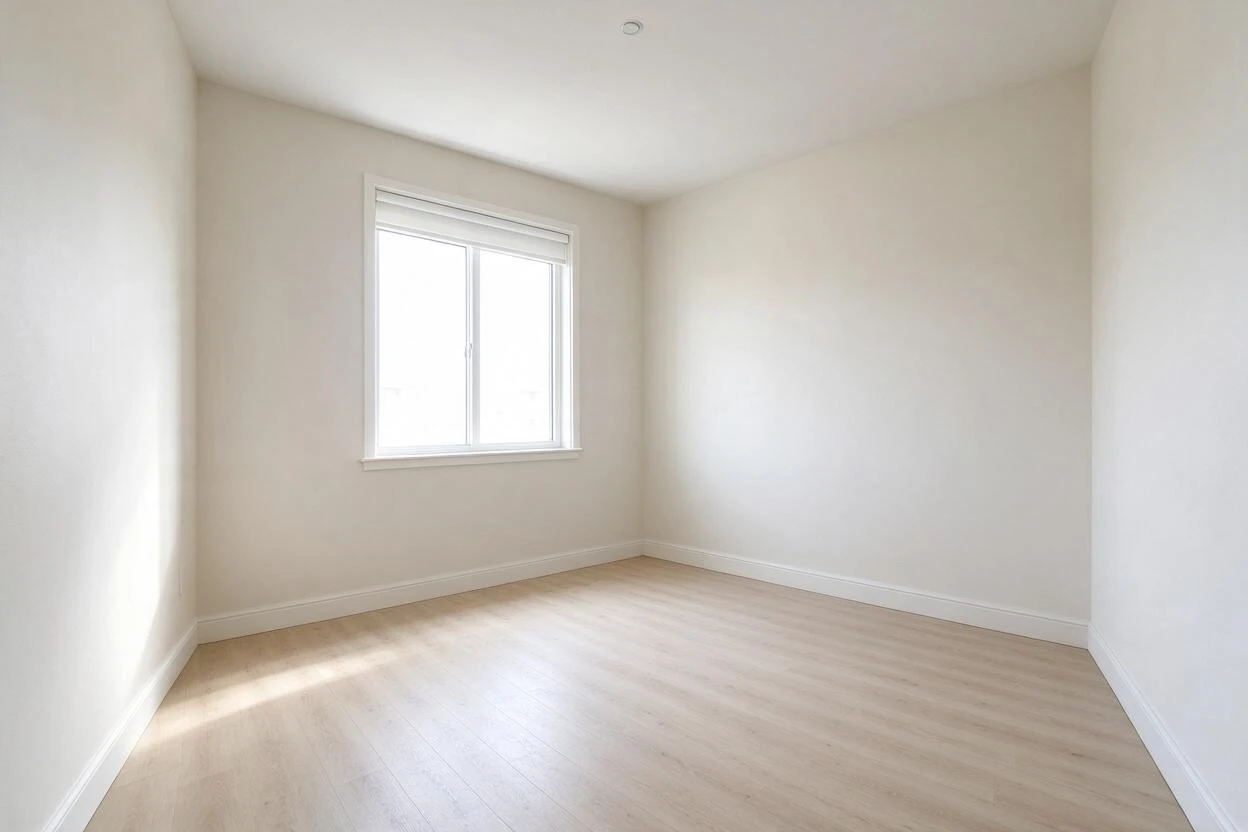
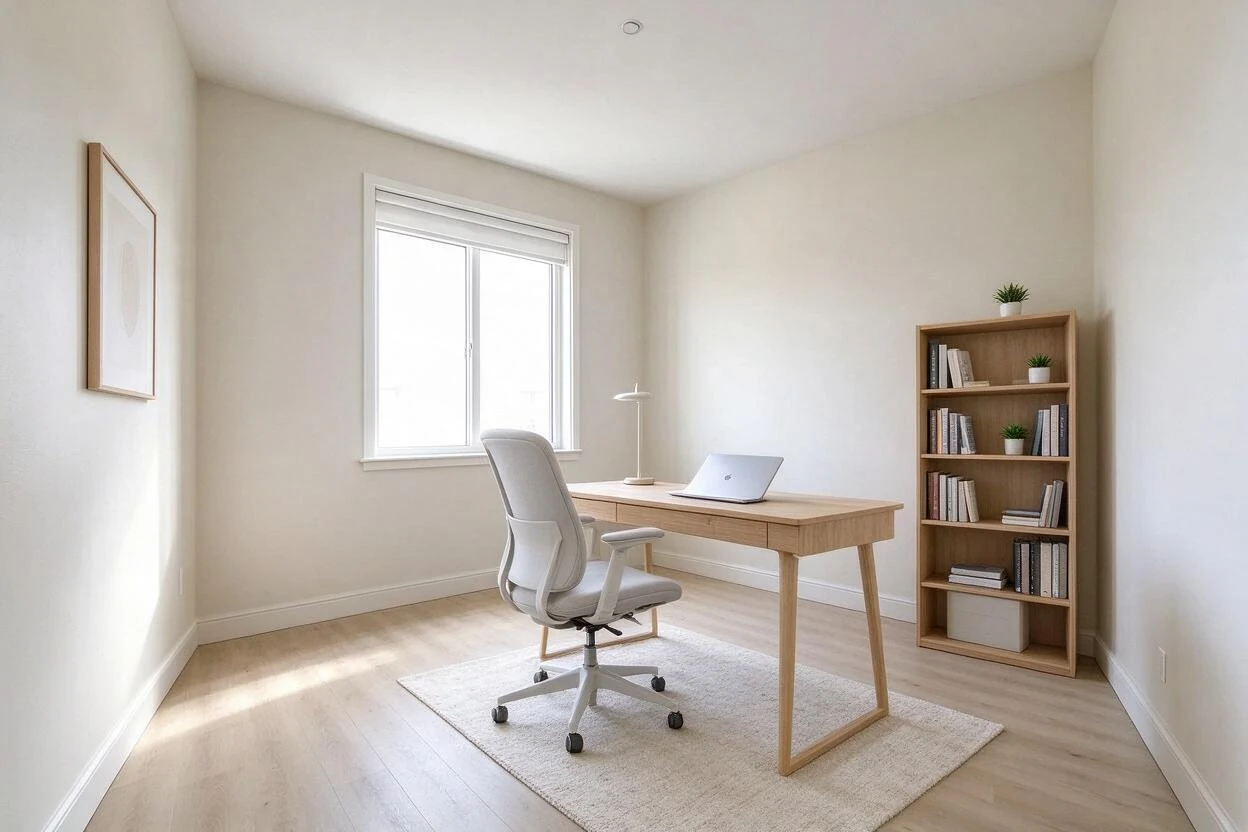
"Desk facing the window, ergonomic chair, bookshelves on the left wall" outperforms "desk, chair, bookshelves" for a reason that has nothing to grammar: each address deletes a decision the model would otherwise make from averages. Rooms staged this way come back organized; rooms staged from noun lists come back decorated.
Relational words earn extra keep when a piece only makes sense next to another: nightstands flanking the bed, a bench at the foot of it, art centered above the headboard. Say the pair, not just the piece.
Counts close the scene
Placement says where; counts say how much. The model treats "some plants" and "a few pillows" as suggestions and will surprise you with six of each. Exact numbers read as constraints:
- "exactly two nightstands, one on each side of the bed"
- "a single large landscape above the sofa — no gallery wall"
- "three bar stools at the island, no more"
The same trick closes the room against stray furniture. "And nothing else on the desk" stops the render from decorating your workspace with props you didn't ask for. Open scenes attract clutter; closed specs suppress it. That's the difference between a staged room that photographs well and one that needs a second pass to clean up — decluttering prompts work the same way in reverse.
Placement phrases you can copy
| Room | Copy-ready phrases |
|---|---|
| Living room | "sofa against the long wall, rug under the coffee table, armchair in the corner by the window" |
| Primary bedroom | "bed centered on the wall you see first, nightstands flanking it, bench at the foot" |
| Home office | "desk facing the window, chair between desk and bed, shelves on the wall behind the desk" |
| Dining room | "chandelier centered over the table, sideboard against the right wall" |
| Entryway | "console against the wall you face when entering, mirror above it, bench beside the door" |
| Backyard | "dining set on the patio, lounge chairs along the fence, string lights above the seating" |
Borrow the structure even when you swap the furniture: piece, then address, then the next piece. If a phrase fights what your photo shows — a "left wall" that isn't there — trust the photo and re-anchor to what the camera actually sees.
When placement fights the fixed parts
The room's real architecture always wins, so write placement against it, not through it: "console against the wall" assumes there's wall — if the photo shows a bank of windows there, ask for something that belongs in front of glass, or drop the piece. An entryway render that respects its own floor plan looks like this:
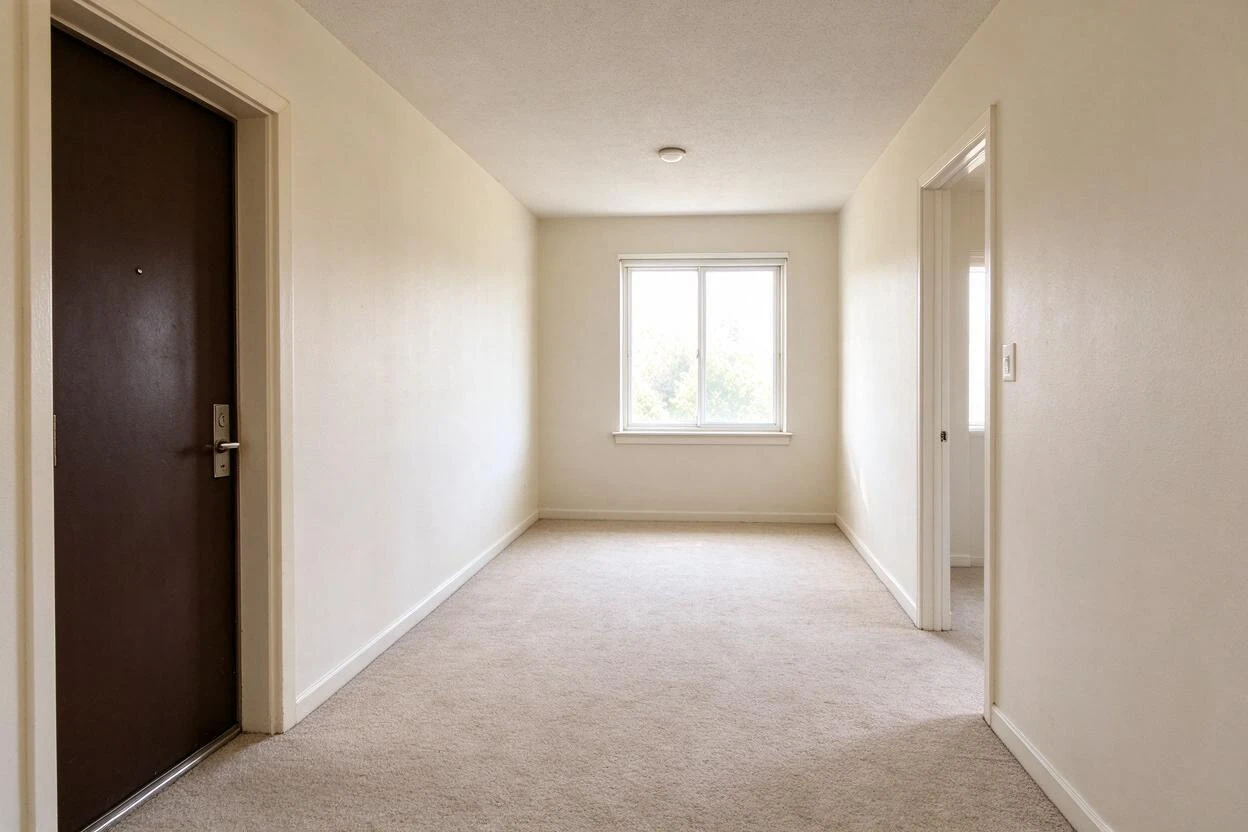
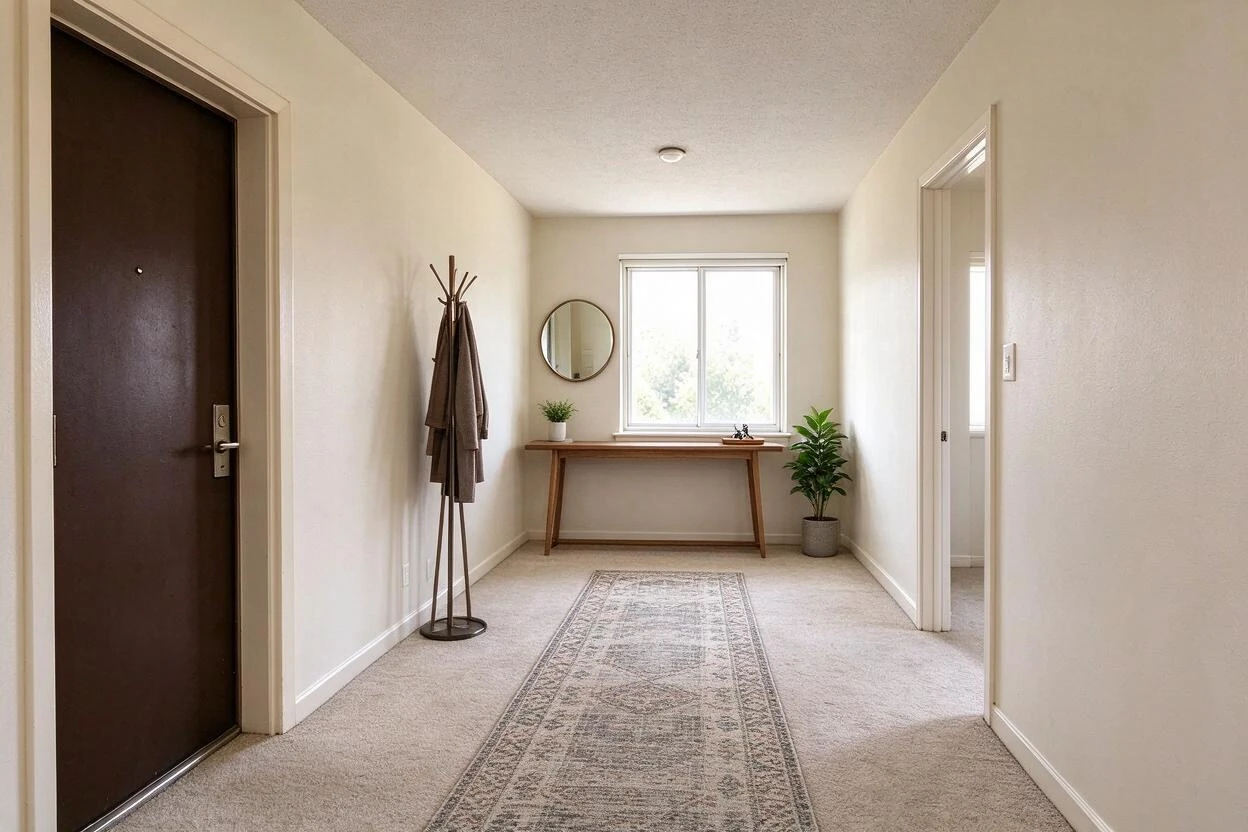
Pair placement with a keep list so the model doesn't relocate the architecture to honor your layout: "keep the wall color, windows, and floor" costs five words and saves a regeneration. And keep the one-change rule when placement goes wrong — move the chair in the next run, don't rewrite the whole brief.
Placement is habit, not theory: open the staging tool, upload a room free, and give every piece in your next prompt an address — the room will land where you pointed.
FAQ
Do I need placement words for every piece of furniture?
No — for the pieces you name. The model furnishes the rest around your anchors, which is usually what you want. Name-and-place only the items whose position would make you regenerate: the bed, the desk, the sofa, the dining set.
What if I don't know which wall the furniture should go on?
Then don't fake it. Name the piece, its style, and its finish, and let the model place it — vague beats wrong. If the result lands badly, that's your cue to add the address on the next run.
How do I stop the render from adding furniture I didn't ask for?
Use counts and a closer: "exactly two nightstands", "and nothing else on the desk". Combined with a keep list, this is the most reliable way to hold a room to its spec — the same discipline decluttering prompts use to clear a room.
Can I ask for furniture at a specific distance from the wall?
Only loosely. "Floating away from the walls" or "pulled up to the window" work as gestures; exact distances in centimeters don't survive generation. If the gap matters, place the piece against a fixed landmark instead — "bed under the window" beats "bed 40 centimeters from the window".
Compare
All comparisonsRelated questions
Related tool
Place the furniture in your own photo first