
What is decluttering in interior design (and does it really help)?
By Goodesign AI · Updated 2026-10-16
Decluttering means removing non-essential objects so a space's size, light, and architecture read clearly — and in listing photos it reliably helps. In photos it reliably helps — clutter hides square footage and distracts the eye, which is why staged and decluttered listings photograph better and often sell faster.
Decluttering is the practice of removing objects a room doesn't need — extra furniture, cables, piles of mail, the exercise bike — so the space itself becomes visible again. It's the cheapest design move that exists: it costs nothing but decisions. It's also the move every other improvement depends on — a new paint color reads cleaner, a restyle reads intentional, and a listing photo reads larger when the room underneath them is already cleared.
Why it works on the eye
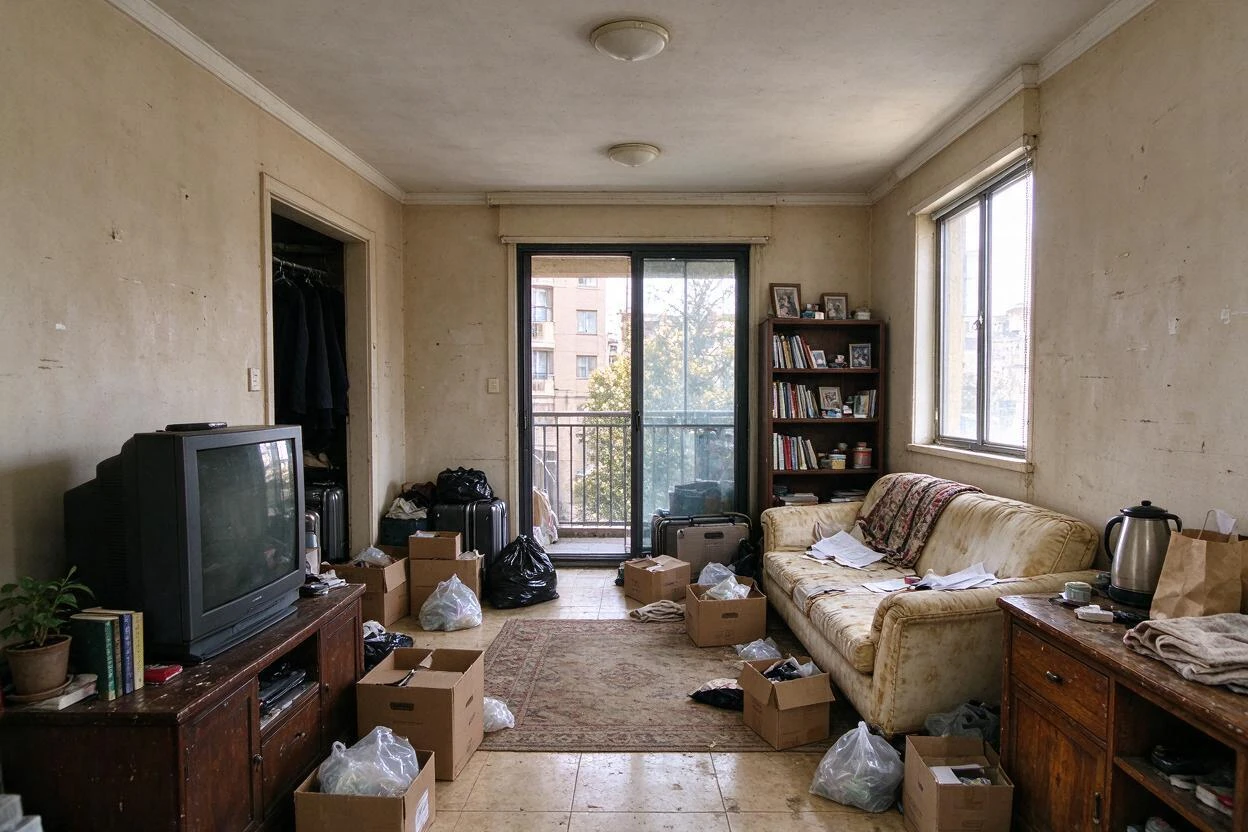
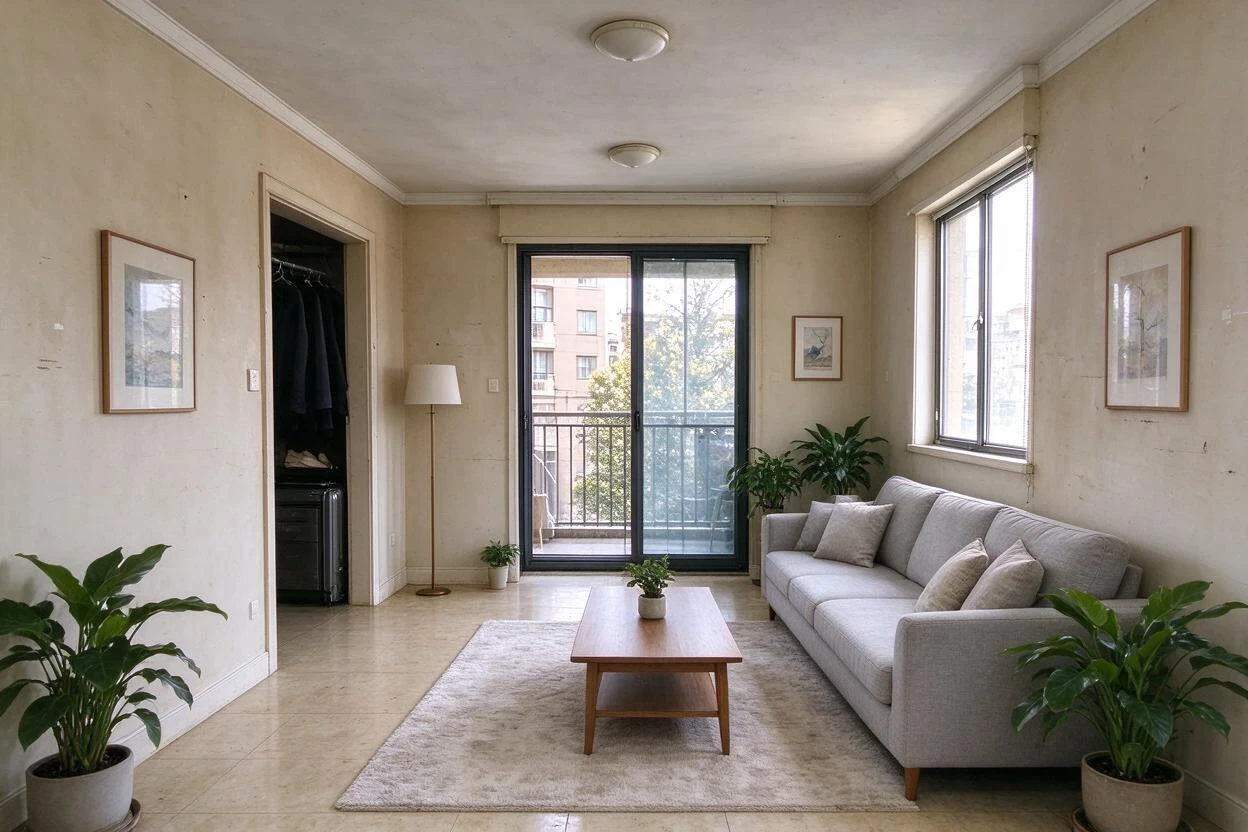
Every object in a room competes for attention. When surfaces are clear and floors are open, three things happen: the room reads larger (you can see its actual boundaries), light travels further (fewer objects casting shadows), and the eye rests on what matters — architecture, views, and the pieces you deliberately chose. None of this is decoration; it's subtraction, and subtraction is the part of design that never goes out of style.
Why it matters in photos especially
Cameras flatten depth, so physical clutter that reads as "lived-in" in person reads as chaos in a photo. Real estate photography lives or dies on this: buyers process listing images in seconds, and a cluttered room makes them work for information. Clean rooms let them imagine their own things, which is the entire psychological job of a listing photo.
The TV-standard problem
The bar buyers bring with them is higher than most sellers think. In the National Association of Realtors' 2025 Profile of Home Staging, 48% of buyers' agents said their buyers expect homes to look like ones staged on TV shows. A buyer who arrived expecting show-ready and meets a counter buried in mail doesn't think "lived-in" — they read the gap as a defect, discount accordingly, or just scroll past. Decluttering is the cheapest way to close that expectation gap before it costs you a showing, and it's the first item on every sensible open-house preparation list for exactly that reason.
A practical order of operations
Start with floors — anything sitting on the floor that isn't furniture leaves first. Then flat surfaces: counters, tables, shelves down to one or three objects. Then walls: remove half the art, keep the pieces with breathing room. Finally, edit furniture: if a piece blocks a walkway or a window, it goes. Working in this order means each pass makes the next one easier to judge — you can't see that the room has too much furniture until the floor and surfaces are already clear.
Named methods people actually finish
Any framework works if it forces a decision per object; these three cover most temperaments. The KonMari method works by category rather than by room — clothes, then books, then papers, then everything miscellaneous, with sentimental items deliberately last — so each decision builds momentum for the harder ones. The four-box method (keep, donate, trash, relocate) suits a one-room sprint: every object gets assigned a box, and nothing gets put back "for now." The 12-12-12 game — find twelve items to throw away, twelve to donate, twelve to return where they belong — is a maintenance habit rather than a project, and it's what keeps a decluttered room decluttered. They differ in sequence, not principle: decide once, instead of re-deciding every time you walk past the pile.
When you can't physically declutter
If a room is photographed as-is — a tenant in place, a move that already happened — digital decluttering solves it. Tools can lift furniture and clutter out of a photo and rebuild the floor and walls behind them, then optionally restage the cleared room in any style. The result reads the same to a scrolling buyer: visible floors, visible boundaries, visible square footage.
Try it on your own space: upload a room photo and compare the decluttered version against your original — the difference in perceived size is usually the most convincing argument.
FAQ
What does decluttering mean in interior design?
Removing what a room doesn't need — extra objects, oversize furniture, surface buildup — so its size, light, and architecture read clearly. It costs nothing but decisions, and it's the prerequisite both for daily comfort and for good listing photos.
Where do I start when decluttering a room?
Floors first, then flat surfaces, then walls, then furniture. The sequence matters: each cleared layer makes the next decision easier, and starting with furniture almost always wastes effort on pieces that would have looked fine in an emptier room.
Does decluttering really make a room look bigger?
Yes, and quickly. Visible floor and clear boundaries read directly as square footage, light travels further when fewer objects are in its way, and the eye stops tripping over competing subjects — which is why decluttered rooms photograph noticeably larger than the same rooms with everything back in place.
Compare
Related questions
Related tool
