
What is mid-century modern style?
By Goodesign AI · Updated 2026-10-16
Mid-century modern is the design language of roughly 1945–1969: clean lines, organic curves, tapered legs, warm woods, saturated accents on neutral fields. It reads as optimistic and unfussy, works in both small and open spaces, and has stayed popular because its pieces are compact, functional, and photogenic.
Mid-century modern — MCM to everyone who has browsed a furniture site — is the look of postwar optimism: functional, friendly, and quietly confident. It emerged in the 1940s–60s when designers set out to make good design affordable, and it has cycled back so many times since that it now functions as a permanent classic.
Where it came from

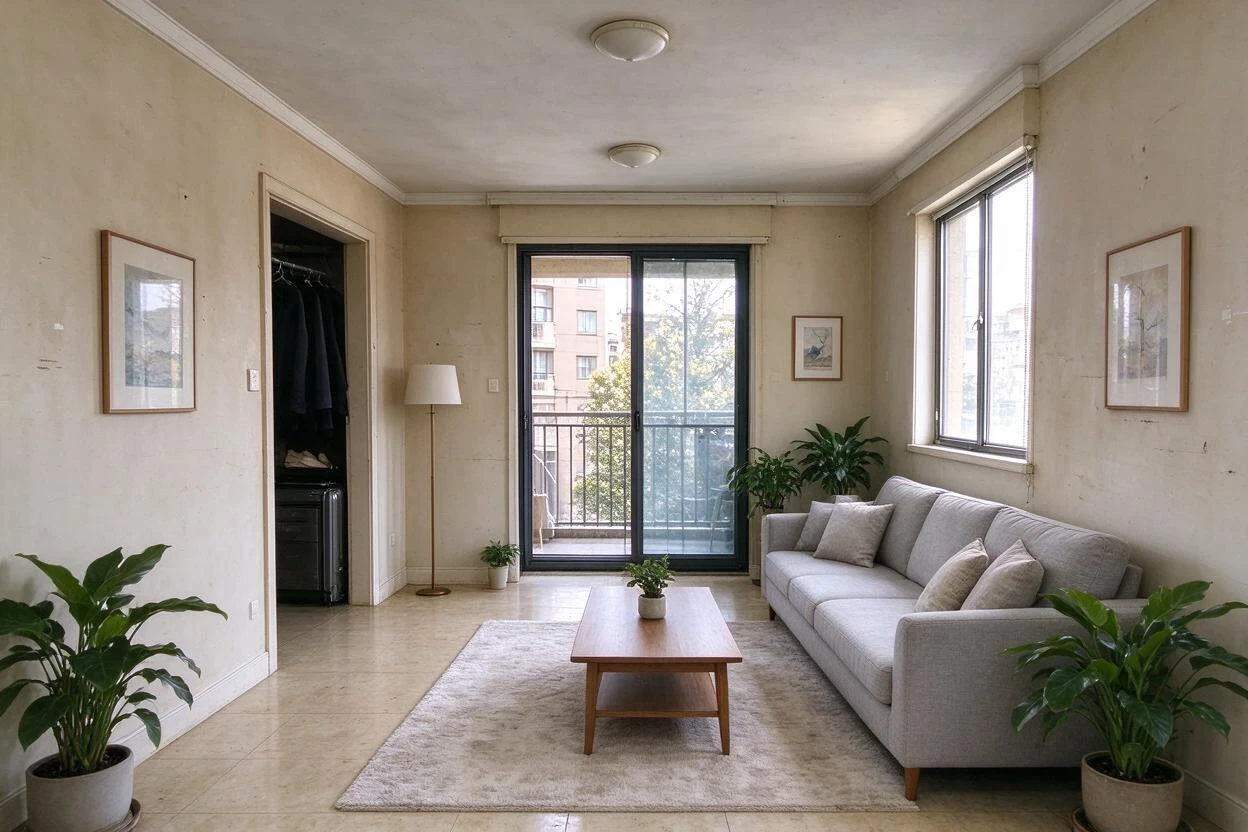
The style runs from roughly 1945 to 1970, per Wikipedia's overview of mid-century modern — the stretch between the end of World War II and the point its ideas had been absorbed into mainstream building. It is an American reflection of Europe's Bauhaus and International Style, carried over by designers who emigrated to the United States in the 1930s and 40s — Walter Gropius and Mies van der Rohe among them — and softened in transit: the American version is more organic in form and less formal than its European source. They brought a conviction that well-designed everyday environments could improve ordinary life, which is where the style's friendliness comes from. Scandinavian and Brazilian designers shaped much of the furniture vocabulary — the warm teak and walnut that American living rooms actually kept.
The recognizable recipe
Furniture sits on slim, tapered legs, giving rooms a floating, uncluttered floor line. Silhouettes mix straight lines with single organic curves — an egg chair, an oval table, a kidney-shaped pillow. Woods run warm (teak, walnut, oak), upholstery plays it neutral, and the color comes in controlled bursts: mustard, burnt orange, olive, teal on a field of cream or gray. Lighting is sculptural — sputnik chandeliers, dome pendants, tripod lamps. Everything looks engineered to be used, not admired.
Why it keeps working
The pieces are compact and legible, so the style suits apartments as well as open plans. Its neutral base plus accent structure adapts to whichever accent you prefer this decade. And it photographs beautifully — clean lines and warm wood render crisply, which is part of why it's a favorite direction for virtual redesigns.
How to try it without a theme park
The failure mode is converting the room into a 1962 museum set. Instead: one or two genuine silhouette pieces (a walnut sideboard, a curved lounge chair), tapered legs on the large items, one saturated accent color repeated three times across the room, and everything else kept quiet. Wood floor or large-format tile completes it.
What it pairs with
Warmer and more colorful than Scandinavian, more playful than japandi, less rustic than farmhouse — the sociable middle of modern design.
Why it photographs so well in listing photos
Clean lines are camera-friendly for a mechanical reason: nothing in the frame blocks the sightlines a wide-angle lens depends on. Tapered legs expose floor along every wall, so rooms read larger than their footprint. The furniture is compact by design, which leaves breathing room in a render of an otherwise empty room where bulkier silhouettes would crowd the shot. And the accent-on-neutral structure survives the listing grid: shrunk to a thumbnail, the eye catches one saturated color repeated three times long before it parses individual pieces.
Test the look on your own room: upload a photo and render the same space in MCM against your current style — free.
Want the full picture — palette, materials, and how the style comes together? See the Mid-century modern interior style guide, then preview it on your own photo.
FAQ
What years does mid-century modern cover?
Roughly 1945 to 1969 — some sources extend the window to 1970. Wikipedia notes the style has been in resurgence since the late 1990s and shows no sign of stopping. Pieces from the original decades are vintage; new pieces in the same vocabulary are revival. Most people, including most furniture catalogs, don't split that hair.
What colors are mid-century modern?
A cream, gray, or white base, warm walnut or teak, and saturated accents: mustard, burnt orange, olive, teal. It's essentially the 60-30-10 structure — neutral field, wood middle, one accent repeated. An all-neutral room skips the step that makes it mid-century.
What's the difference between mid-century modern and Scandinavian?
Both favor clean lines, visible legs, and function, but Scandinavian rooms stay pale and airy — white walls, blond wood, textiles carrying the color — while mid-century warms and saturates: walnut, mustard, sculptural lighting. Scandi is the quiet Nordic cousin; MCM is the one who tells stories at dinner. See what is Scandinavian style for the full contrast.
Compare
Related questions
Related tool
