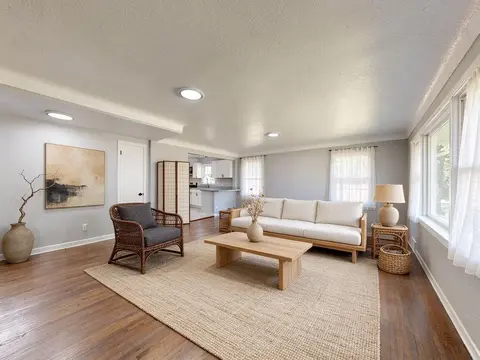
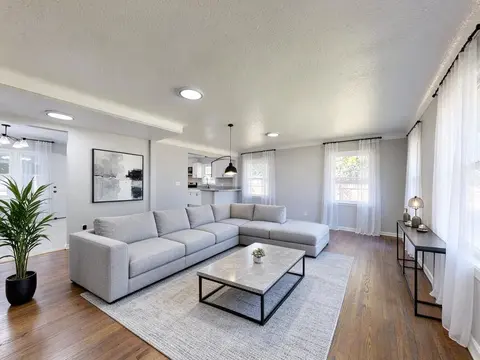
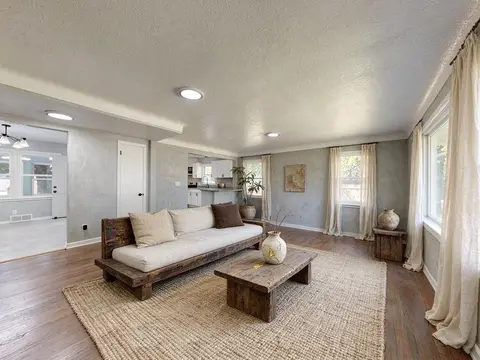
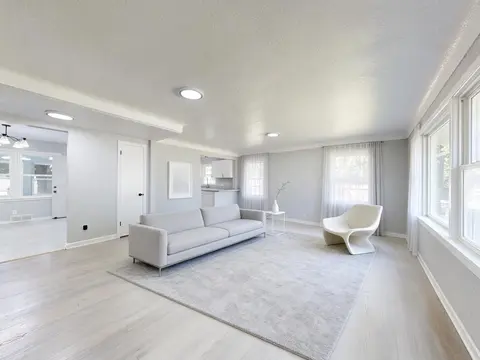
Modern Chinese interior style
新中式: ink tones, fine wood frames and centuries of restraint, updated.
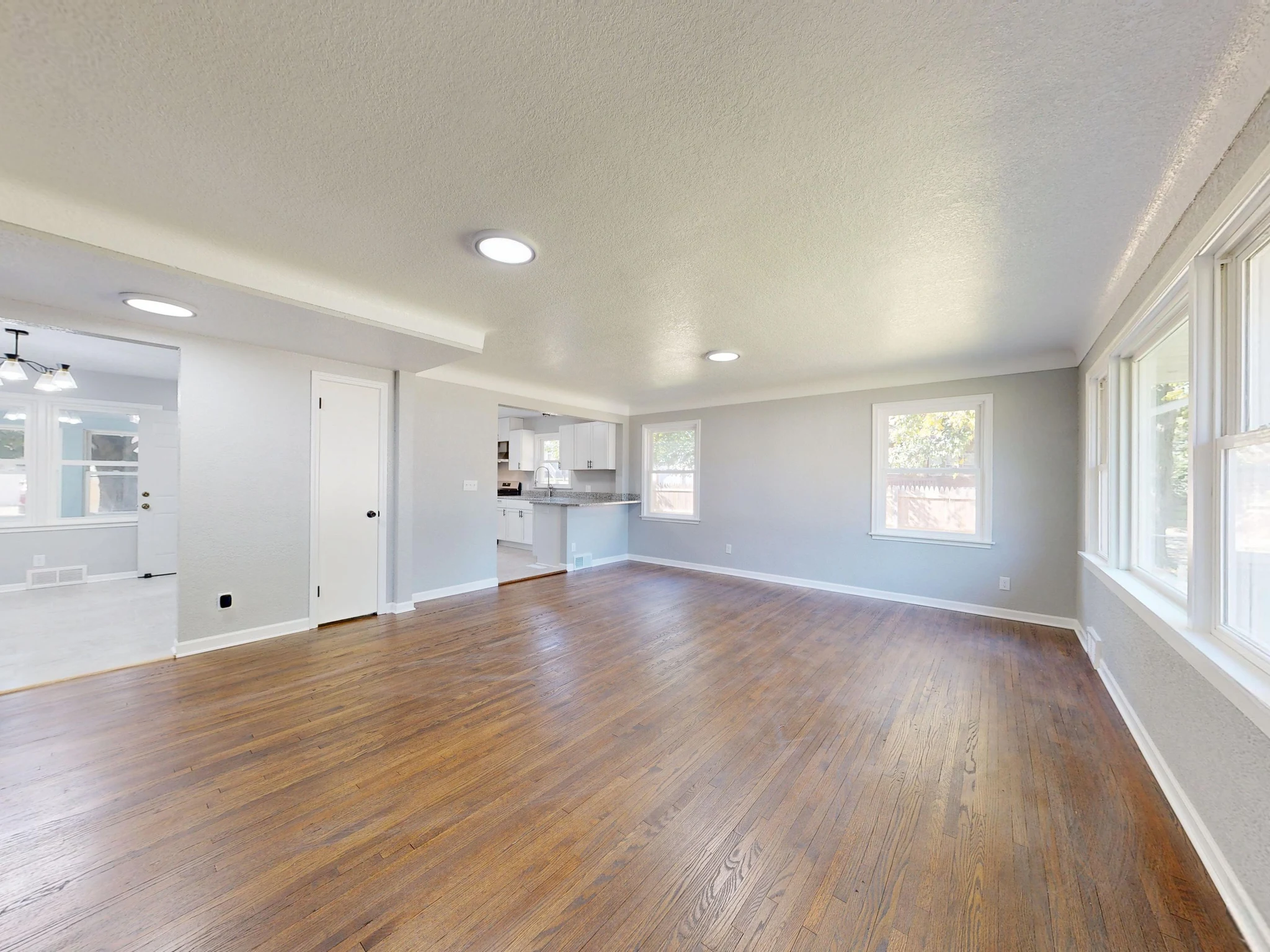
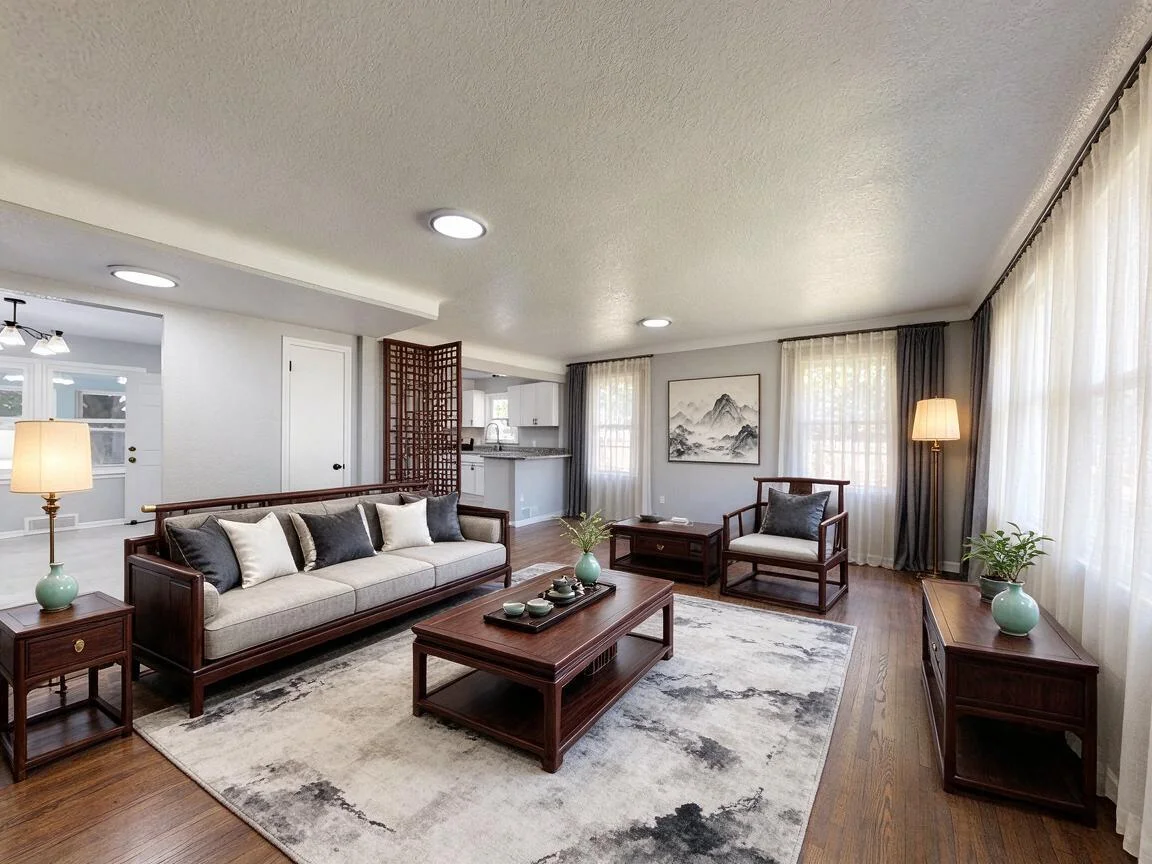
See it on your own walls
Modern Chinese style (新中式) carries classical Chinese furniture's bones into a contemporary room: slimmer ming-style frames, ink-and-earth palettes, round-moon openings and lattice references — restraint with a lineage, not a theme park.
The updated classics
Wood stays fine-grained and often darker — elm, walnut and blackened ash; silk and stone accents appear in small doses. Round-moon doorways, lattice screens and calligraphy mounts are used once, precisely, rather than everywhere.
Furniture and layout
A low ming-style chair or bench as the anchor, symmetric placement around a central axis, and generous empty space so the craft reads. Layouts honor the classical axis even in asymmetric modern plans.
How to get the look
- Choose one fine-wood anchor piece in a ming or quyi silhouette
- Use ink, clay and earth tones with one deep accent (indigo or oxblood)
- Apply lattice or round-moon motifs once, at one focal point
- Keep surfaces bare; display one ceramic or scroll properly
Modern Chinese vs Japandi
Both grow from east-asian restraint, but Japandi blends Japanese and Scandinavian warmth in pale woods, while modern Chinese keeps darker fine woods, classical silhouettes and ink-toned drama. Japandi whispers in oak; modern Chinese answers in walnut and ink.
Signature palette
#F2EEE6
#D8CDBA
#9C8468
#42493E
#26221E
Frequently asked questions
What is modern Chinese (新中式) style?
Classical Chinese furniture language updated for today: slimmer ming-style frames, ink-and-earth palettes, lattice and round-moon motifs used precisely, with generous empty space.
Can AI preview modern Chinese style in my room?
Yes. Upload one photo and you will see an AI-generated concept for your room. Results typically keep your walls, windows and layout recognizable; treat the image as inspiration.