
Can AI replace an interior designer?
By Goodesign AI · Updated 2026-10-26
Not the whole job, and not evenly. AI absorbed the visualization phase — concept boards, style variants, pre-budget renders — while measurement, joinery detailing, sourcing, trades coordination and liability stayed human. The profession's own data shows re-sorting rather than replacement: designer AI use tripled to 29 percent between 2023 and 2025.
The question gets asked at every industry panel and answered badly at most of them, because "replace" is the wrong unit of measurement. AI did not take a job. It took a phase of one, and left the rest of the work standing in a different shape. For a practice, the useful question is which phase — and what that does to the way everything else gets priced.
What AI has already absorbed
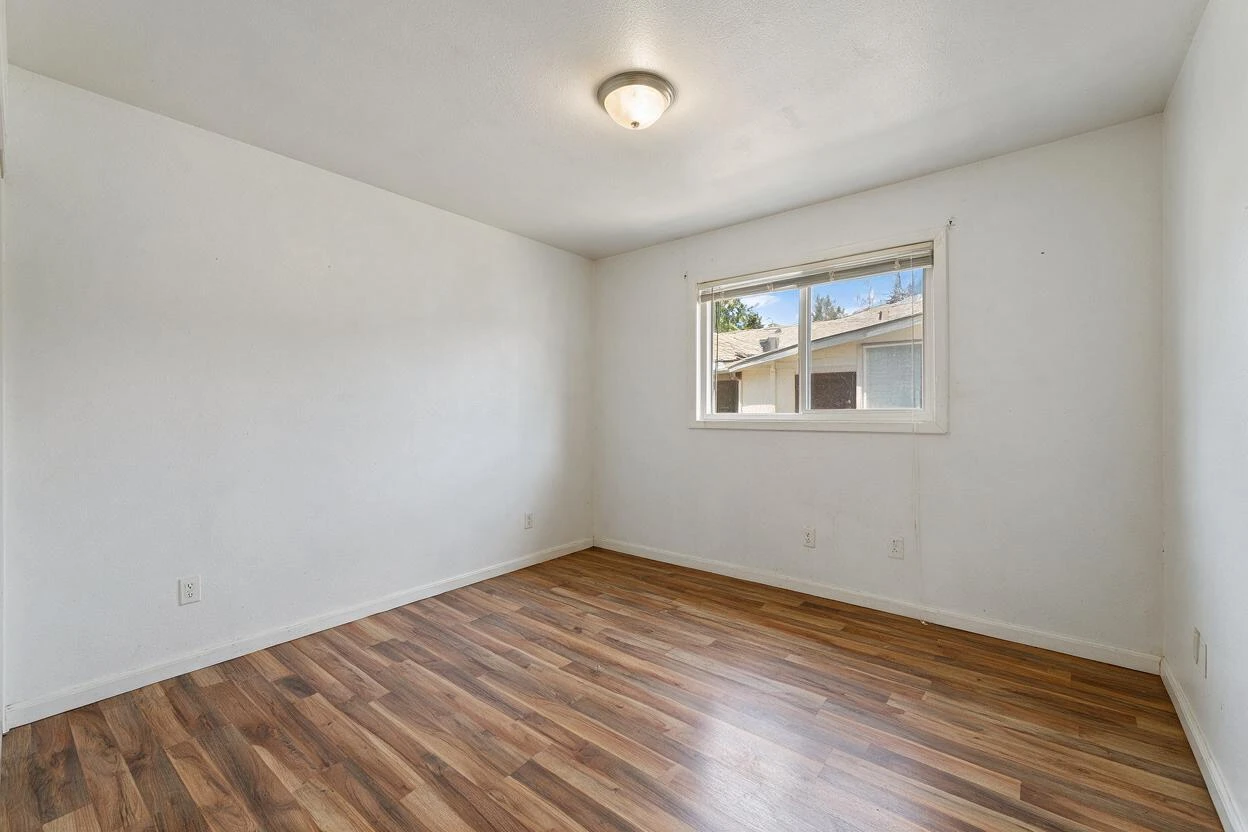
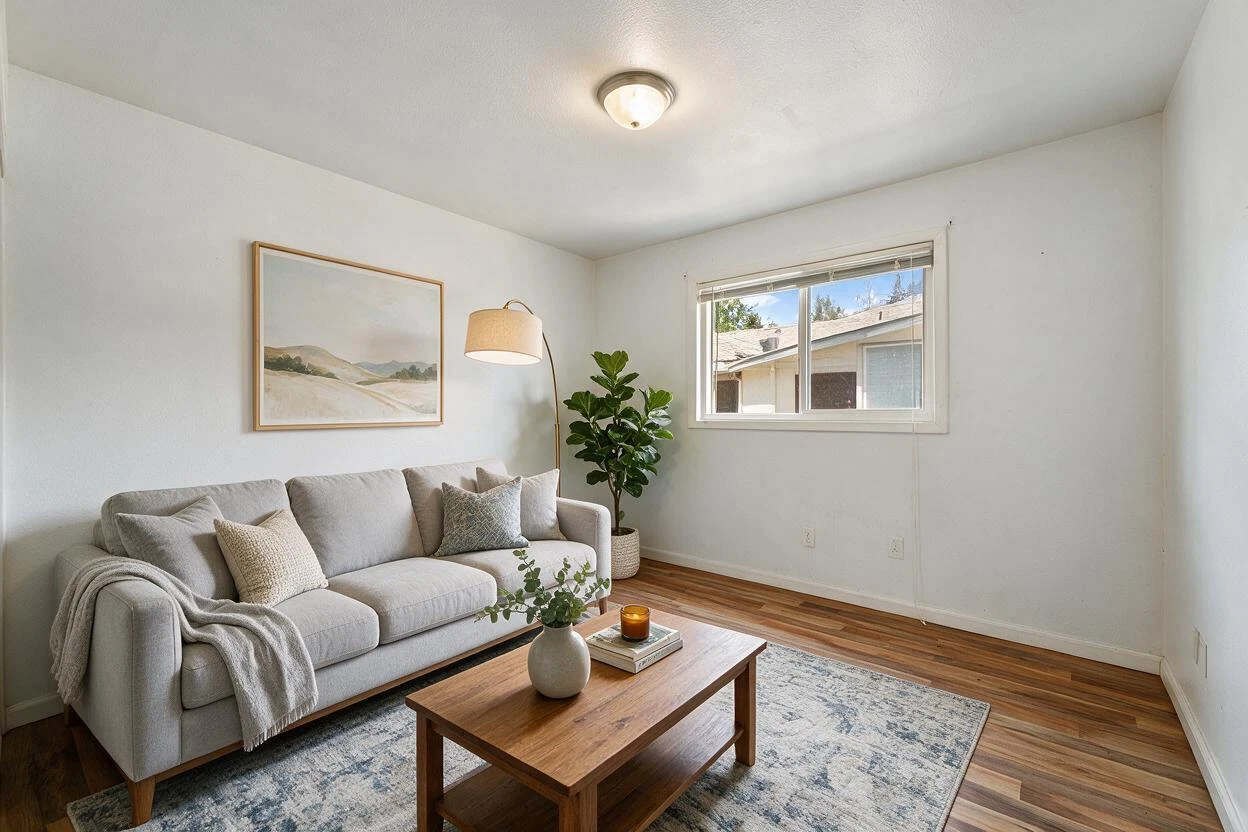
The visualization loop — render the room, test a palette, try a second layout, put three directions in front of the client — used to be the opening billable stage of nearly every engagement. It is now self-serve. AI redesign of furnished rooms happens in a browser tab, in minutes, for less than the coffee you would have served at the meeting.
The price gap explains why that phase left the market instead of merely getting cheaper inside it. NAR's 2025 staging survey put the median professional staging job at $1,500; NAR's own reporting on AI staging tools cites pricing from roughly $0.17 per image. Nothing with that ratio survives as a line item on an invoice. It becomes the free sample in front of the decision.
What it still cannot take
Measured drawings and elevations. Custom cabinetry and millwork details. Structural, electrical and plumbing knowledge. Sourcing real products at real lead times, including the substitution when the tile is discontinued mid-project. Negotiating with contractors on site. And the item almost nobody puts on a services page: liability. When a built-in wardrobe lands four centimeters off, someone has to own the correction. A render cannot own anything.
Taste sits in a subtler category. AI reproduces style directions it has already seen; it will not tell a client that the palette they loved in the render reads cold in their north-facing room, and it does not push back. The taste-matching workflow is how self-serve users approximate that judgment, and a skilled designer still does it live, in the room.
What the profession's own numbers show
The practitioners closest to the question have been voting with their workflows. A 1stDibs survey of interior designers, reported by WWD, found designers' use of AI tripled in 2025 to 29 percent, up from 9 percent in 2023, with another 20 percent planning to adopt, while roughly a quarter remain strongly opposed. That is not the profile of a profession being replaced. It is the profile of a profession separating into people who delegate visualization and people who refuse to.
Adoption concentrates at the front of the project: concept boards, style variants for a client meeting, renders of a real room before a budget is committed. What almost no designer delegates is everything after the picture — specifications, procurement, trades, sign-off. Practitioner accounts of how designers actually use AI read far differently from the replacement headlines: less robot-took-the-job, more the sketching got fast.
The role is splitting into three
The single hourly engagement is breaking apart, and the pieces no longer price alike.
Visual exploration is fast, cheap and increasingly client-side. It is where the tools are strongest and where a designer now competes with a browser tab.
Documentation and procurement is slower, more technical and largely invisible to clients until something goes wrong — drawings a contractor can build from, specifications, lead times, substitutions, schedules.
Build accountability is the part clients cannot buy anywhere else: someone on site who answers for the outcome, absorbs the mistakes and signs the drawings.
The first third is being compressed out of the fee. The second and third are being priced up, because they are the parts that cannot be self-served. A practice still selling all three by the hour is selling the cheapest third at the old rate and giving away the other two.
What that does to fees
Hourly visualization has effectively left the market, and the information premium went with it. Clients arrive with renders, comparisons and a decided direction — which removes the old margin on translating what they could not picture, and replaces it with questions about buildability.
The billable units move accordingly: fixed-scope decision packages, feasibility passes, specification reviews, oversight days, a defined number of site visits. None of these are new services. They were always inside the hourly block, unpriced and unexamined. Separating them does two things at once: it makes the value legible to a client who now assumes pictures are free, and it stops the practice absorbing unbilled risk.
When the client arrives with renders
The conversation changes character. Less "which style am I", more "will this build, and at what cost". Two things follow, and only one of them is comfortable.
The comfortable one: a client who has already decided arrives with fewer open questions, so paid hours go to the parts that genuinely need a professional rather than to exploration the client could have done alone.
The uncomfortable one: AI renders over-promise. They show a window where a wall is load-bearing, a floor level that needs raising, a lighting effect that requires a ceiling void the house does not have. Somebody has to break that news, and by then the client has fallen in love with the image. Naming that gap early — a short feasibility pass before the mood board is agreed — is now part of the job, and it should be billed as such.
What this is not
It is not a case for handing AI output to a contractor as a specification. Dimensions, services, tolerances and code compliance are not in the picture. It is also not a case for refusing the tools on principle: the survey above suggests refusal costs work rather than protecting craft, because clients arrive with a reference image either way.
The honest boundary is this. If a project ends at looks-good-in-a-picture — a restyle, a paint choice, a staged listing — AI alone is enough, and no amount of professional framing changes that. If it ends in drywall, wiring, custom joinery or a permit, the picture was never the deliverable.
Five moves that change a practice
- Price the decision, not the picture. Ship the render as the start of a conversation, and quote separately for what follows it.
- Put a feasibility gate before the mood board. Ten minutes of buildability review prevents the worst version of this conversation — the one after the client has committed emotionally.
- Publish the process. Clients who understand what a specification is will pay for one; clients who think design equals images will compare your fee with a subscription.
- Keep the render a communication device. Its job is agreement, not documentation. Anything that will be built needs drawings produced to be built from.
- Learn where the prompt stops and the spec starts. The practices thriving in that 29 percent are not the fastest prompters; they are the ones who can turn a client's chosen image into something a joiner can actually make.
FAQ
Does AI reduce billable hours for interior designers?
It reduces one kind of hour and increases another. Exploration compresses hard, because a client can do it alone. Documentation, coordination and site oversight expand, because projects still have to be built to a standard — and those hours were previously buried inside the same block. A practice that itemizes now bills more, not less, for the same project.
Should a studio charge for concept renders?
Yes, but charge for the judgment around them: the direction chosen, the two rejected, the reason. A render on its own is a commodity now; a defensible design decision is not. Studios that give renders away free teach clients that the thinking behind them is free too.
Will clients stop paying for design advice?
Clients never paid for advice alone. They paid to avoid the consequences of getting it wrong — a wall that has to be rebuilt, a sofa that will not fit through the door, a scheme that photographs well and lives badly. Those consequences have not changed, which is why the second and third parts of the role hold their price.
Which skills matter more now?
Reading a space and knowing what will actually work in it, detailing to a buildable standard, and holding a project's schedule and suppliers together. Prompt fluency helps, but it is a tool skill a client can also acquire in an afternoon; it does not differentiate a practice for long.
Can AI produce the drawings a contractor needs?
No. It can produce a persuasive image of what a room should look like, and that image is genuinely useful for reaching agreement. It cannot produce dimensions with tolerances, service routes, structural notes or a specification a builder can price from. That translation stays with the designer, and it is the part of the job least at risk.
Related questions
Related tool