
Does virtual staging mislead buyers?
By Goodesign AI · Updated 2026-10-16
Not when it's disclosed and the architecture is untouched: virtual staging shows how a room could look furnished, and walls, windows, and fixed features stay as built. The line is crossed when renders hide defects, alter permanent features, or go unlabeled in the listing.
The worry is understandable: if the sofa isn't real, what else isn't? In practice the ethics settle on three clear lines, and staying on the right side of them is simple.
Line one: label it
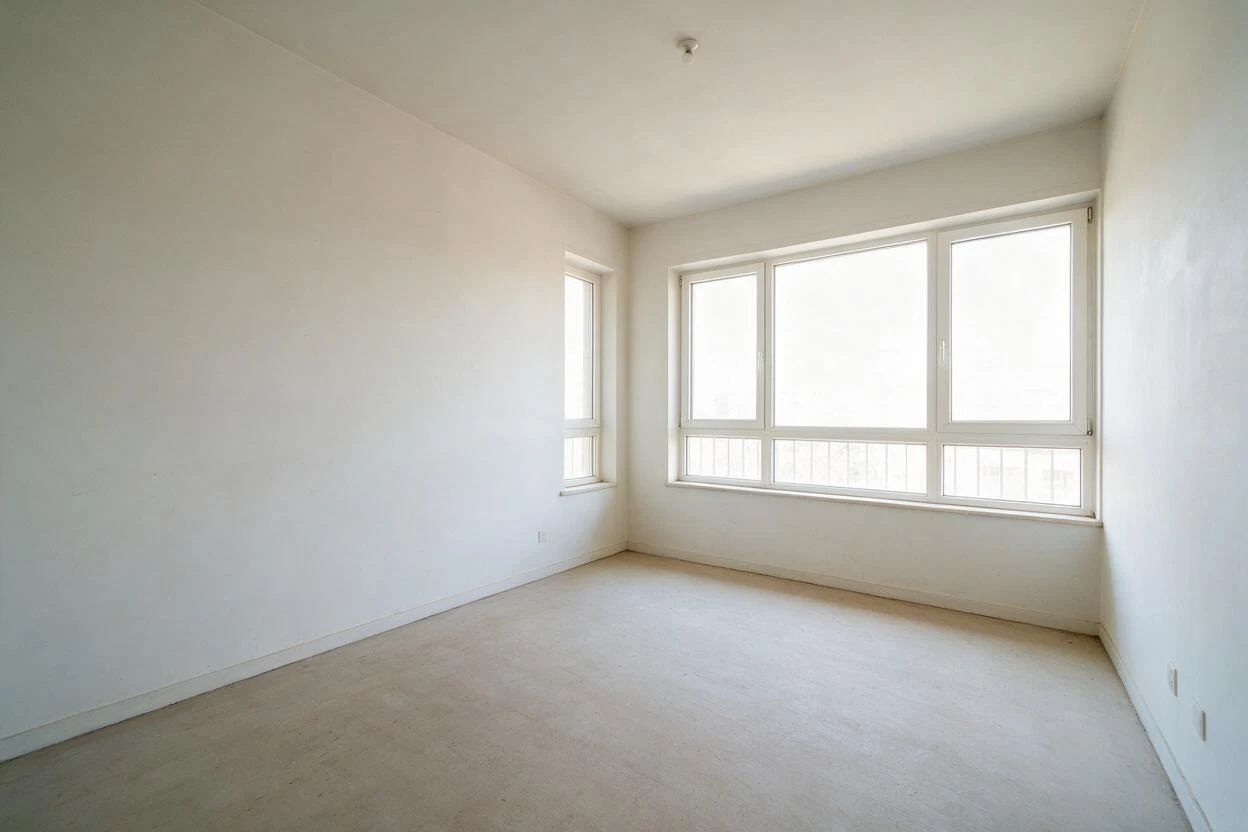

Industry norms and most MLS rules require a "virtually staged" marker on the image or in the listing text. This single habit dissolves most of the objection — buyers routinely see staged photos as a floor plan with mood lighting, not a claim about the furniture inventory. Nobody books a viewing because they want the specific gray sectional in the picture.
Label twice: on the image itself and in the caption, because thumbnails get cropped and captions get skimmed. Some MLSs accept either; a few now expect both, and California's AB 723 — in effect January 1, 2026 — requires altered or staged listing photos to carry a conspicuous disclosure, with the unedited original available to buyers through the listing or a link. The label costs a corner of pixels. The omission costs the listing's credibility and, under the new rules, actual fines.
Line two: never edit the building
Furniture, rugs, art, and plants are removable opinions. Walls, windows, ceiling height, views, and structural condition are facts. Rendering a window where none exists, erasing a power line, or digitally repairing cracked plaster is misrepresentation, and it's the kind that survives into lawsuits. The same logic covers climate: a day-to-dusk conversion that changes the hour of a photo is accepted practice; one that hides a storm-damaged roof is not.
Generative tools raised the stakes here, because they no longer struggle to invent architecture. Five years ago a fake window looked fake; today a model can render one with plausible mullions, curtains, and a view behind the glass. That capability moved the line from "could you?" to "may you?" — and the answer didn't move with the technology. A render that adds a window sells a room that doesn't exist, and the discrepancy surfaces at the first showing, in front of the one person deciding whether to trust everything else in the listing.
Line three: don't remove permanents
Digitally lifting out a tenant's clutter is fine — clutter leaves with the tenant. Erasing the oil tank in the yard or the neighboring building does not, because a buyer can't discover those on a second visit.
The test that keeps this line honest: could a buyer discover the truth on a second visit? Clutter and furniture answer themselves — they travel with people. Oil tanks, power lines, neighbors' structures, and that suspicious crack above the doorframe stay in the photo, because they stay with the house.
Why disclosed staging still helps everyone
Buyers process empty rooms poorly — no scale, no warmth, no story. A labeled render lets them judge the space's potential honestly while saving the trip for homes that fit. Surveys repeatedly show buyers don't mind the practice when told; they mind being fooled.
The data backs the practice. In NAR's 2025 Profile of Home Staging, 83 percent of buyers' agents said staging made it easier for buyers to envision the property as their future home, and 49 percent of sellers' agents said staging reduced time on market. Nearly all of that benefit survives disclosure — the buyer who knows the furniture is digital still gets scale, warmth, and a story from the frame.
What the 2025 NAR Data Actually Says
The expectation gap is real, and it predates AI. In the same report, about half of buyers' agents said buyers arrive expecting homes to look the way homes look on television staging shows — a standard physical staging built and AI now inherits. The median professional staging service ran $1,500; AI staging tools now start around $0.17 per image by NAR's own coverage. Cheaper imagery means more staged listings, which means the TV-grade baseline keeps rising.
That's the honest reading of the numbers: buyers aren't demanding furniture that conveys — they're demanding rooms they can picture themselves living in. Virtual staging answers that demand without pretending the sectional is included. The trap is assuming the same imagery that helps buyers visualize can quietly smooth over a defect. It can, technically, which is precisely why the disclosure rules exist.
The compliance anchors: Article 2, Article 12, and AB 723
Realtors carry written duties here, not just norms. Article 2 of the NAR Code of Ethics requires avoiding "exaggeration, misrepresentation, or concealment of pertinent facts relating to the property or the transaction" — a digitally widened driveway qualifies as all three. Article 12 requires presenting "a true picture" in advertising, marketing, and other representations. Disclosed furniture staging satisfies both; unlabeled renders that alter the property test both.
State law is catching up. California's AB 723 requires listing photos that add, remove, or change physical elements to be labeled as digitally altered or virtually staged, with the original photo accessible to buyers; routine exposure and color corrections stay exempt. As of January 2026, California remains the only state with a statute covering sale-listing images; other states haven't passed matching statutes yet, but MLS policies are drifting the same direction, and the safe workflow is identical everywhere: stage the furniture, label the image, keep the original.
Where it actually goes wrong
The failures that make the news are rarely careful renders with labels. They're the sloppy end: The American Genius flagged a Massachusetts listing where the staged renders used what the writer called "ambitious proportions and impossible furniture angles," leaving buyers unable to tell whether a built-in cabinet was real. Nobody in that transaction cared about the sofa — the problem was a render that blurred the line between decoration and structure. That's also what bad renders look like before they become ethics problems; the visual tells are worth learning so you never publish one by accident.
The pattern to avoid is contained in that example: renders that answer questions a buyer can only resolve in person — does this cabinet stay, is that window real — are the ones that generate disputes. Renders that answer "what would my reading corner look like here" generate offers.
The tooling enforces the honest version: stage rooms with furniture only, label per your MLS, and start free here.
FAQ
Is virtual staging legal?
Yes — no law prohibits furnishing a room digitally, and the real estate industry does it daily. Legal exposure starts when a render changes what the property is: erased defects, invented features, or missing disclosure. Keep the architecture untouched, label the image, and the practice sits comfortably inside MLS rules and, since January 2026, California's AB 723.
Will buyers be disappointed when they tour in person?
Less often than the internet claims, when the render is labeled and accurate. NAR's 2025 Profile found about half of buyers' agents say buyers arrive expecting TV-staged homes, so some calibration gap always exists — disclosure is what keeps it small. The disappointment that lingers comes from renders that hid a flaw, not from a different sofa than expected.
Do you have to disclose that photos are virtually staged?
Industry norms and most MLS rules say yes, and California's AB 723 makes it statute there as of January 1, 2026. The habit costs nothing: put "virtually staged" on the image or in the caption and keep the original photo available. Undisclosed staging is the only version that draws fines, penalties, and buyer distrust.
Compare
Related questions
Related tool
