
How accurate is AI interior design?
By Goodesign AI · Updated 2026-10-16
Accurate enough for decisions: on standard, well-photographed rooms, modern tools produce geometry, shadows, and perspective most viewers accept as real. Accuracy drops on odd angles, heavy clutter, mirrors, and fine detail — which is why renders should inform choices, not replace measuring.
"Accurate" means two different things here, and it's worth separating them.
Visual accuracy — does it look real
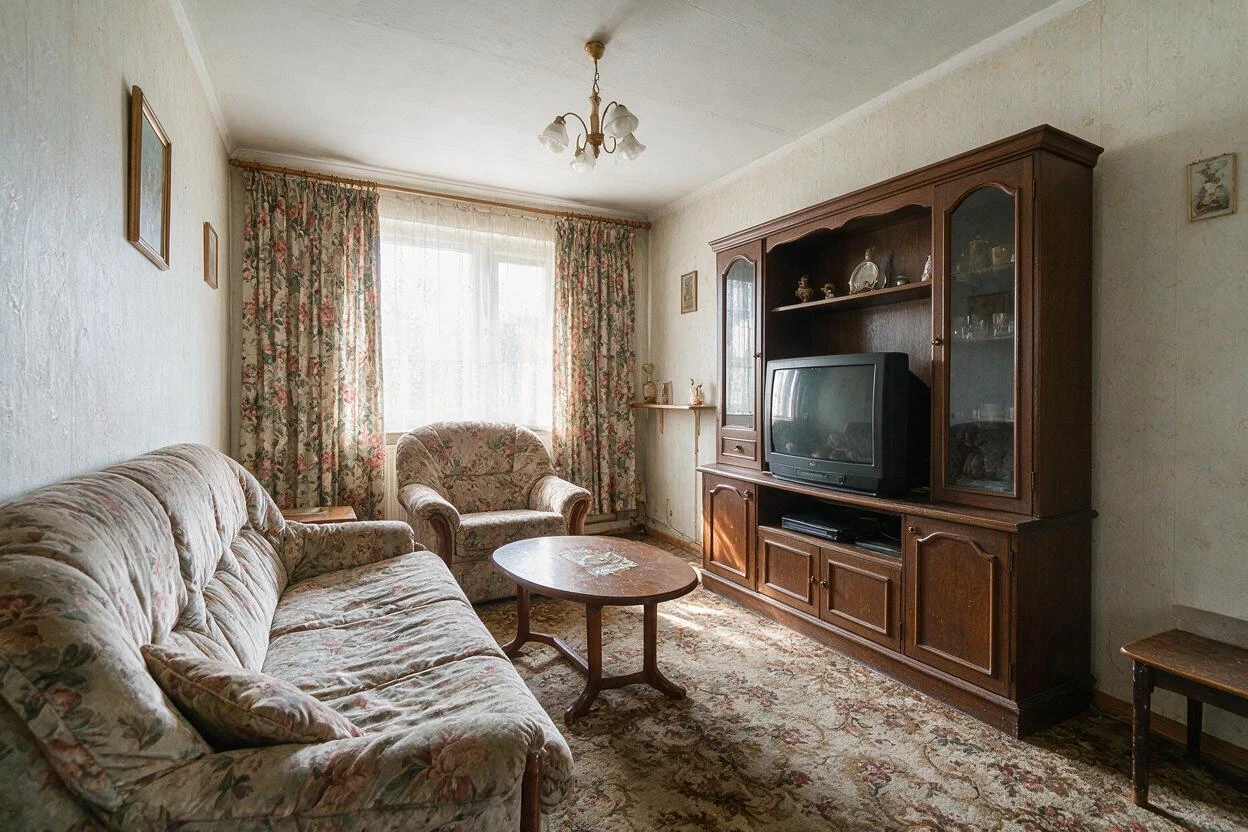
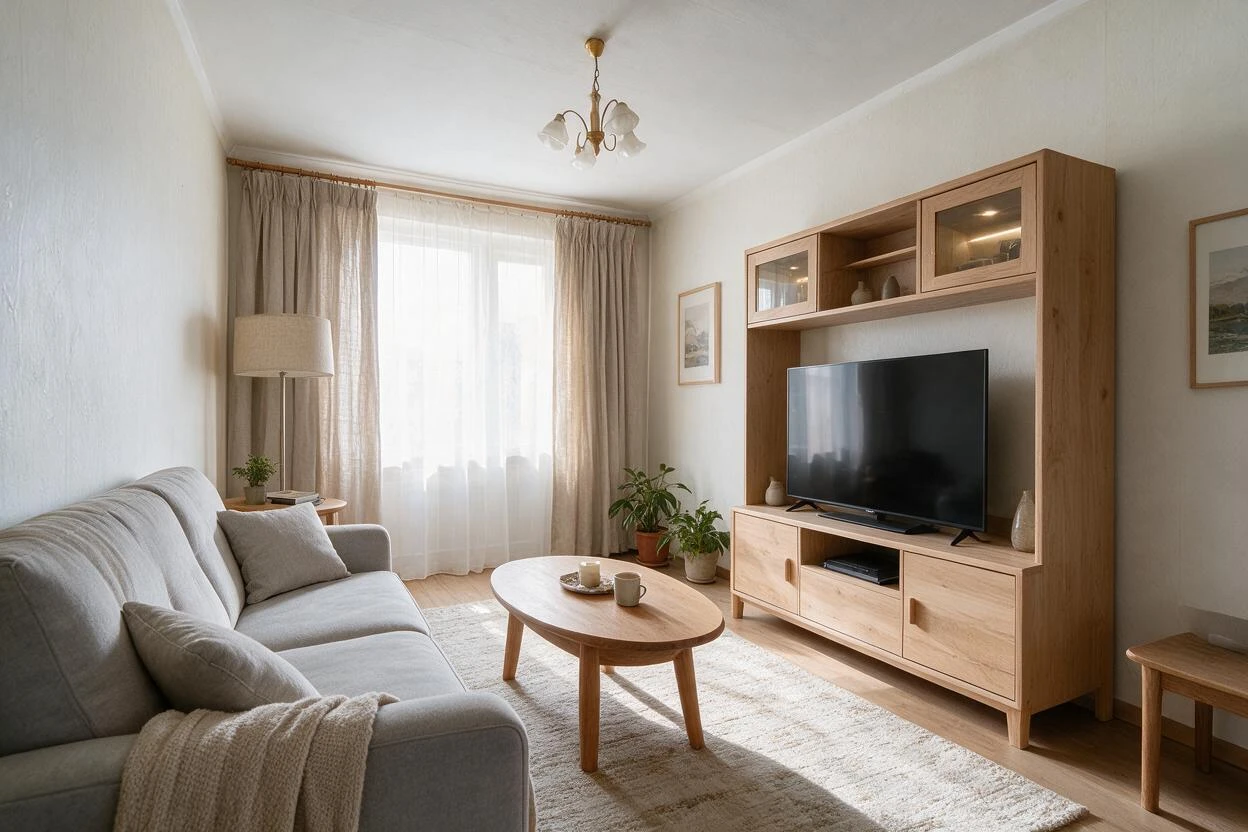
On ordinary rooms shot at chest height with decent light, current models render perspective, contact shadows, and light direction convincingly. Most viewers can't tell a good render from a staged photo, which is exactly why MLS platforms require disclosure. The failure modes are predictable: complex ceiling angles, mirrors (which double the scene and confuse depth), staircases, glass furniture, and patterned floors — the model may bend a rug that should stay straight or grow a plant through a shelf. Faces and fine text are also unreliable and best cropped out.
The predictable part is what makes this manageable: failures cluster at complexity, not at random. Straight walls, one dominant light source, and matte surfaces render cleanly almost every time; the model starts guessing the moment the scene doubles itself in a mirror or the geometry turns tricky. Reviews of bad AI staging finds the same tells recurring — floating furniture, warped frames, contradictory shadows — and all of them trace to inputs that withheld information or prompts that asked the model to improvise structure.
Design accuracy — will it work in my actual room
This is where honesty matters. The render gets proportions approximately right, but it doesn't know your sofa is 230 centimeters long or your doorway is 76 centimeters wide. A rendered layout can be a few centimeters optimistic on every piece at once. Use renders to choose style, color, and arrangement — then verify dimensions the old way before anything ships. A tape measure and the render together are unbeatable; either alone has a failure mode.
The practical translation: a render tells you a sectional fits along that wall in some size; the tape tells you which size. Treat the render as proposing a layout and the tape as ratifying it. That division holds for listings too — NAR's 2025 staging data found 83 percent of buyers' agents say staging helps buyers visualize a home, which is a claim about vision, not inventory. Renders earn their keep as vision; the room's actual dimensions stay the room's.
Where AI Gets It Right — and Where It Guesses
The pattern across tasks is consistent enough to tabulate. AI is strongest where the job is visual persuasion and weakest where the job is measurement — which maps neatly onto what to delegate and what to double-check:
| Task | How far to trust the render | Why |
|---|---|---|
| Style, palette, and mood | Trust it | Testing looks cheaply is the model's core strength |
| Layout and arrangement | Trust the logic, not the clearances | Proportions land close; walkways can drift a few centimeters per piece |
| Furniture dimensions | Verify with a tape | The model has never seen your room's measurements and doesn't claim to |
| Mirrors, glass, staircases | Be suspicious | Doubled scenes and reflections defeat depth cues |
| Fine detail — faces, text, patterns | Crop or reshoot | The least reliable surfaces in any render |
That's also the honest answer to where renders belong in a listing or a renovation: decision-grade imagery, not documentation. Label them, keep the architecture true, and measure anything that gets built or bought.
Accuracy is a property of the pair
The same tool produces an accurate render from one photo and a drifting one from another, so accuracy lives in the tool-plus-input pair, not the tool alone. A straight-on, chest-height, well-lit photo gives the model true verticals and honest color to anchor against; a dark hip-height snapshot forces it to improvise, and improvised geometry is where the classic tells appear. Most "this tool is inaccurate" verdicts are really "this photo starved the model" — the render troubleshooting guide walks the diagnosis.
How to get the accurate version of your room
Photograph straight-on from chest height, lights on, blinds open. Declutter the frame before shooting — the model spends less effort guessing. Then iterate: regenerate the weak corner rather than accepting the first draft wholesale. Photo quality and framing specifics take five minutes to fix and change everything downstream.
The fastest way to calibrate is to test against reality: upload a photo of a room you know intimately and judge the render against what you see daily — ten minutes of comparison tells you more than any spec sheet.
FAQ
Can AI measure my room?
No — it estimates proportions from the photo; it doesn't take measurements. That's why a render can get a layout visually right while running a few centimeters optimistic on clearances. Use renders to settle style and arrangement, and a tape measure to settle dimensions before anything is bought or built.
Is AI interior design accurate enough for listing photos?
Yes, for disclosed furniture staging — modern renders read as real to most viewers, and edit-in-place modes keep walls and windows true. The accuracy requirement for listings is stricter than for taste decisions: the room must match what a buyer walks into, so geometry drift disqualifies a frame even when it looks fine.
What kind of photo produces the most accurate render?
Straight-on, chest height, lights on, blinds open, clutter cleared. The model anchors on verticals and light direction, so every one of those choices removes a guess. A five-minute reshoot reliably outperforms another five regenerations on a weak original.
Will AI change my walls, windows, or floor?
Not in edit-in-place mode, which is what listing work requires. Upload one photo and the model furnishes inside the room you already have — same wall positions, same window shapes, same floor direction. Free-render modes that repaint everything are for inspiration, not for publishing.
Is it accurate enough to choose furniture sizes?
No. The model estimates proportions from pixels, not measurements, so a sofa can render perfectly while being 20 cm too long for the wall. Use renders to decide arrangement and style, then check every dimension on the product page against a tape measure.
Does uploading more photos improve accuracy?
Slightly, but not as much as one better photo. A straight-on, chest-height shot with lights on and corners visible gives the model its anchors; a dozen dark or tilted angles add nothing. Reshoot rather than pad the upload with weak frames.
Related questions
Related tool
