
Japandi Interior Design: The Complete Guide
By Goodesign AI —
Japandi has outlasted the trend cycle for a simple reason: it's not really a look, it's a set of restrictions. Fewer objects, quieter colors, natural materials, everything functional. Where most styles tell you what to add, Japandi tells you what to leave out — which is why it photographs beautifully, lives calmly, and survives contact with actual households better than most Instagram-native aesthetics. This guide covers where it comes from, the rules that make a room read as Japandi rather than merely sparse, and how to apply it room by room — ending with a 10-step checklist you can run in an afternoon.
What Japandi is
Japandi is the fusion of Japanese and Scandinavian design traditions — the name joins Japan and Scandi. Both traditions arrived at similar conclusions from opposite histories: Scandinavian design grew from a climate-and-craft culture that needed warm, bright, functional interiors through long dark winters; Japanese design grew from a philosophy of restraint where the room frames emptiness as deliberately as objects. Put together: the warmth and hygge comfort of the North with the discipline and negative space of the East.
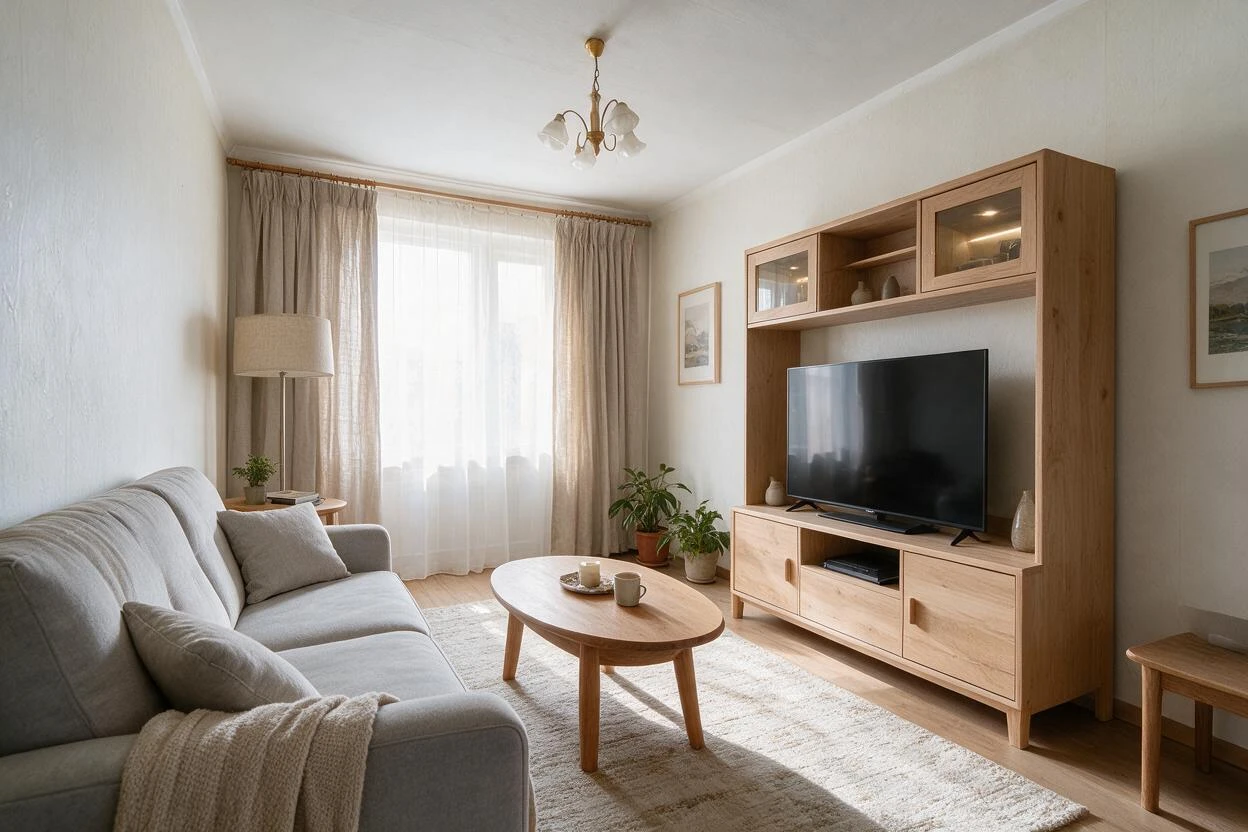
In practice, a Japandi room is recognisable by four things at once — low, light-wood furniture; a muted earth-tone palette; natural textures (paper, linen, clay, rattan); and visible emptiness that looks intentional rather than unfinished. If you want the short version to send someone, our quick answer on what Japandi style is covers the definition in one page.
Where it came from
The exchange is older than the hashtag. Danish designers in the 1950s studied Japanese joinery, lacquerwork, and the way traditional interiors used floor-level seating and screens; Danish designers with Japanese study trips (Finn Juhl is the usual citation) folded what they learned into Danish modernism. The contemporary Japandi wave — which accelerated around 2017 and went mainstream through the pandemic years — is less a discovery than a recombination with a new name. The historical detail matters practically: the two traditions genuinely share a grammar (craft, wood, function), which is why the fusion works instead of clashing.
The six principles that make a room Japandi
Empty space is a material. Leave surfaces unstyled and walls sparsely hung. The test: if removing an object doesn't make the room worse, it shouldn't be there.
Low horizontal lines. Furniture sits low — platform beds, floor-level side tables, low sofas. Horizontal emphasis slows the eye and calms the room the way a horizon does.
Natural, matte, honest materials. Light woods (oak, ash, beech), linen, cotton, paper, clay, rattan, stone. Nothing glossy, nothing pretending to be another material. Fake textures break a Japandi room faster than any color mistake.
A restrained, warm-muted palette. Greys, beiges, earth browns, muted greens — one accent color at most, drawn from nature (moss, clay, ink). Color saturation is the clearest boundary: almost nothing in a Japandi room is loud.
Craft over decoration. The objects that remain earn their place by making: a hand-thrown bowl, a woven basket, a chair with visible joinery. Decoration comes from material and form, not pattern.
Function decides. Every piece is used. Japandi has no room for the purely ornamental, which is what separates it from merely minimal rooms that feel like showrooms.
Palette and materials, specified
Walls: warm white, greige, or a soft clay tone. The Japanese side contributes deeper options — a charcoal feature wall is legitimate Japandi when the rest of the room stays light-wood and linen.
Wood: one dominant light-to-medium wood, one secondary tone maximum. The Scandi instinct is pale oak; the Japanese instinct adds darker walnut or blackened accents.
Textiles: linen and heavy cotton in undyed or nature-dyed tones. Rug in wool or jute. Bedding in layered neutrals — this is where the comfort lives, so texture contrast (smooth sheet, nubby throw) does the visual work pattern would do elsewhere.
Accents: black metal or blackened wood lines (the Japanese ink accent), paper lantern lighting, one or two ceramic pieces, a plant with sculptural form — a bonsai-adjacent tree or a single branch in a tall vase rather than a shelf of pothos. The single plant rule is worth keeping even if you love greenery everywhere: one sculptural living element does the same calming work that grouped plants do in biophilic rooms, with the volume turned down to match the style.
Room by room
Living room: low sofa in a neutral fabric, oak coffee table with one object on it, jute or wool rug, floor lamp with paper shade, wall art limited to one large quiet piece or none. The common mistake is furniture still too tall and too puffy — the profile should sit low with visible legs.
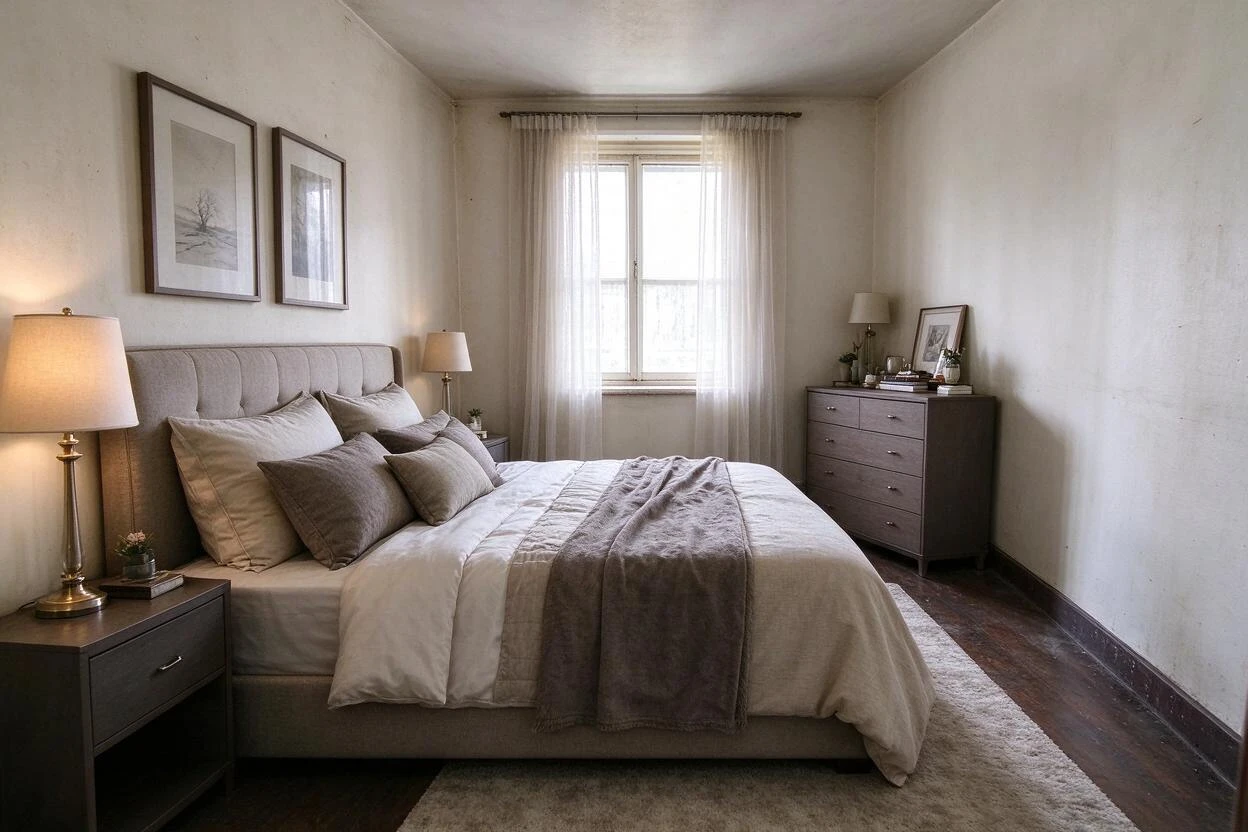
Bedroom: platform bed, layered neutral bedding, blackout in natural fabric, one paper or warm-bulb lamp, no desk, no piles. Japandi bedrooms are the style's best argument: the combination of low bed, soft textiles, and empty walls is close to a clinical recipe for a calm room.
Kitchen and dining: pale wood or matte-finish cabinets, open shelf limited to daily-use ceramics, a wood table with simple chairs, pendant in paper or matte metal. Decluttering is 80% of the transformation here — the style's surfaces demand clear counters.
Bathroom: stone and wood accessories, rolled natural-fiber towels, matte black fixtures if replacing. Mostly a subtraction job.
Home office: the newest Japandi showcase and an easy one — a low oak desk, one paper-shade task lamp, cable tray hidden, a single ceramic cup for pens. The style's function-first rule means a Japandi office is judged by whether you actually work in it, not by how empty it photographs.
Japandi in small spaces
Japandi is one of the few named styles that actively helps a small room, because three of its six principles are small-space mechanics with different names. Low furniture exposes more wall, which reads as more volume. Visible legs on sofas and tables let the floor run under every piece, doubling the light's reach. And the empty-space rule is exactly what a twelve-by-fourteen living room needs anyway: negative space you might call breathing room in a large loft is circulation in a small apartment. The layout side — where the sofa goes when there are only two possible walls — is a separate problem, covered in our small apartment layout ideas guide; Japandi supplies the restraint, and the floor plan supplies the rest.
Japandi vs Scandinavian vs wabi-sabi
The three get confused because they share a shelf: Scandinavian design is the lightest and most comfort-forward, Japanese design the most formal and disciplined, and Japandi sits between — warmer than pure Japanese, quieter than pure Scandi — while wabi-sabi is less a fourth style than a worldview of beauty in imperfection that Japandi borrows selectively. The feature-by-feature comparison is laid out in Japandi vs Scandinavian, and the fuller background on the Japanese side is in what is wabi-sabi interior design.
The 10-step Japandi checklist
Run top to bottom; steps 1-3 cost nothing and produce most of the result.
- Clear every surface. Remove everything from shelves, tables, and counters, then put back only the functional and the one beautiful thing. Nothing purchased yet — this is the majority of the transformation.
- Drop the sightlines. Lower what you can: art rehung with its center around 57 inches (145 cm), TV onto a low console, tall bookcases swapped for long low ones if you own them.
- Show the floor. Anything with legs to spare gets legs exposed — pull the sofa forward from the wall, remove skirts and dust ruffles, let light run under every piece.
- Pick your one wood and one accent tone. Look at what you own, name the dominant wood, and commit to it plus one darker or blackened accent. Everything else is textile.
- Swap the textiles. Cushion covers, throw, bedding in linen and heavy cotton — undyed, oat, clay, or ink. This is the only shopping most rooms need.
- Warm the light. 2700K bulbs everywhere, one paper shade on the lamp you use most, second light source in the corner you sit in after dark.
- Add the ink line. One black element — a thin-framed mirror, matte black lamp stem, blackened wood bowl — to sharpen all the softness around it.
- Place one sculptural plant. A single branching stem in a tall vase or one small tree; no pothos shelf, no fern cluster.
- Hide the machinery. Cables in a tray, router in a box, remotes in a drawer. Japandi's calm is half emptiness, half nothing-blinking.
- Photograph and audit. Shoot the room in daylight. If the photo reads busy, the fix is removal, not rearrangement — repeat step 1. If it reads cold, the fix is textile, not furniture. One restyle pass on the photo tells you which before you spend anything.
Common mistakes (and the specific fix)
Furniture too tall and too puffy. The signature tell of a failed Japandi attempt. Fix: lower what you can and accept that one tall bookcase dominates a room sized for low furniture.
Glossy or faked materials. A high-gloss "oak" laminate cabinet undoes six correct decisions around it. Fix: matte finish or keep it behind a curtain panel.
Cool white lighting. 4000K downlights turn warm linen gray and wood yellow-green. Fix: bulb swap before any furniture decision.
Too many plants. Clustered greenery reads boho, not Japandi. Fix: one plant, chosen for shape rather than fullness.
Emptiness with no craft. Bare walls plus mass-produced flatpack reads as un-lived-in, not calm — the discipline only works when the few objects show making. Fix: one real ceramic or wood piece over six accessories.
Treating it as white minimalism with bamboo. Japandi is warm-neutral, not white; the gray-beige-and-wood palette is the point. Fix: if the room reads clinical, add the oat and clay layers back through textiles.
Getting the look without replacing everything
Japandi is unusually cheap to adopt because its main tool is removal. The sequence that works:
Clear every surface, then put back only the functional and the one beautiful thing. Free, and it's most of the effect.
Swap lighting. Paper shades and warm bulbs over cool downlights. Modest cost, disproportionate impact.
Replace textiles — cushion covers, throw, bedding — in linen and heavy cotton neutrals.
Move furniture low. Even relocating existing pieces to lower positions (TV on a low console, art hung lower) shifts the room's horizontal emphasis.
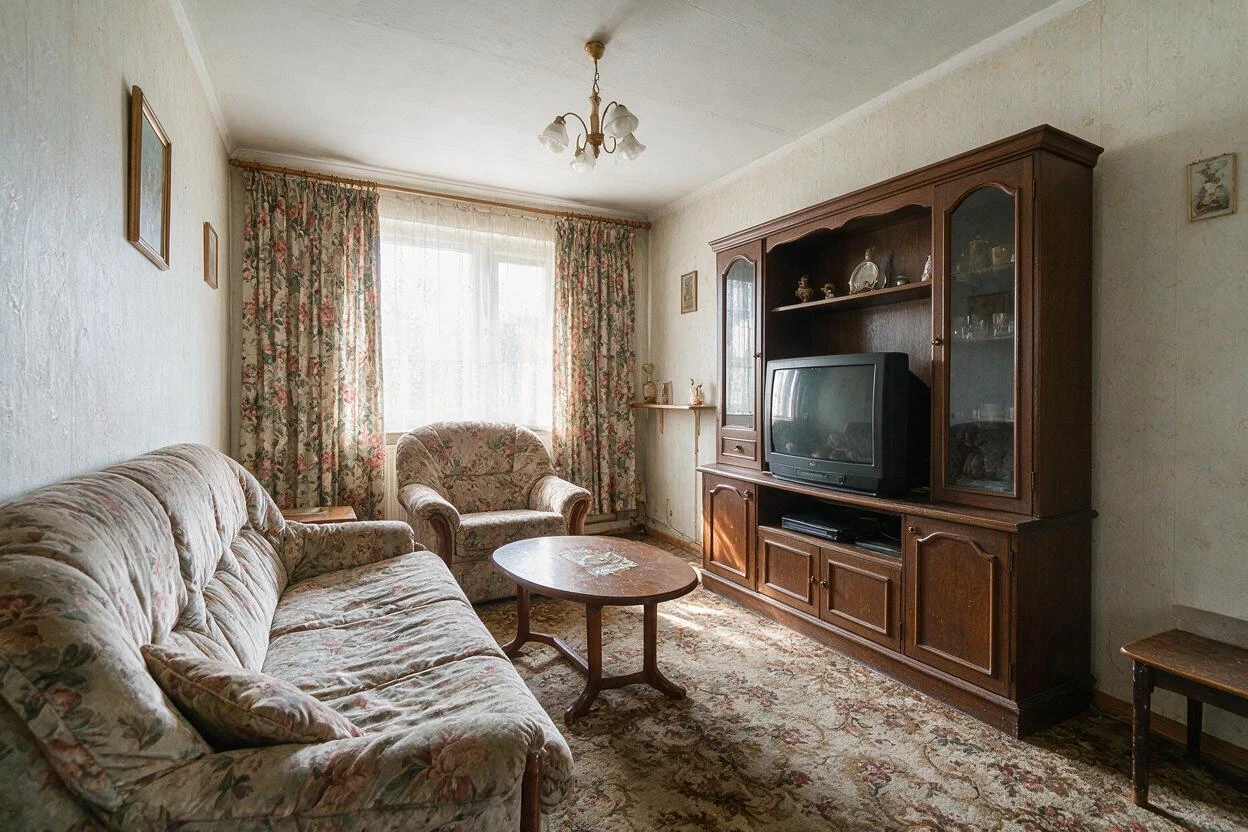
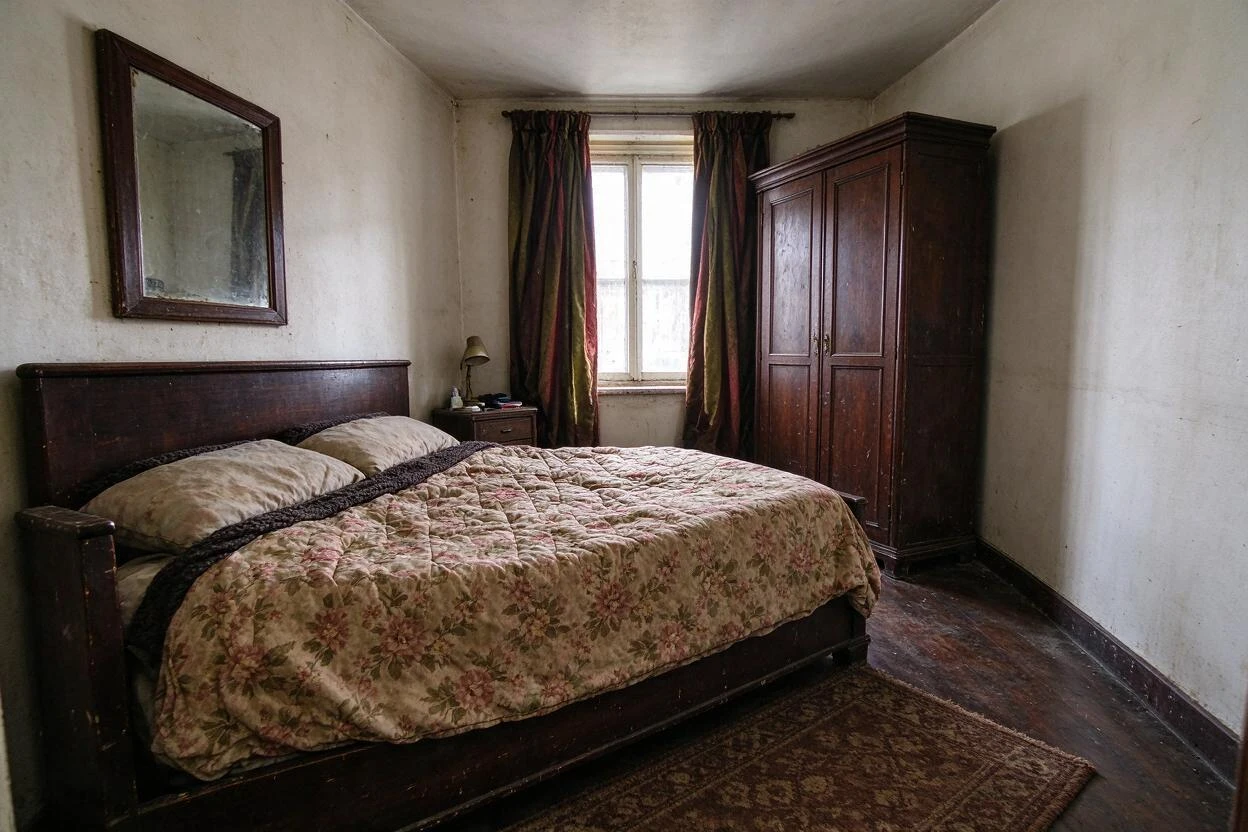
Restyle what you own before buying: the same room rendered with different wall tones, textile colors, and object arrangements — previewable in minutes with an AI surface restyle on a photo of your space — usually reveals you need three things, not thirty.
Buy the missing three well: one good wood piece, one paper light, one crafted object. Professionals preview the same way: in 1stDibs' 2025 survey of 468 design professionals, 29% had adopted AI tools — triple the share of two years earlier.
The budget version of the whole list: under $0 for steps 1-3, under $60 for bulbs and a paper shade, under $120 for two linen cushion covers and a throw. The remaining spend is optional furniture, and it should wait until the photo audit in step 10 says so.
FAQ
What exactly is Japandi style?
A fusion of Japanese and Scandinavian design: low light-wood furniture, muted earth palette, natural matte materials, and deliberate negative space. It reads as calm, warm minimalism with craft-quality objects.
Is Japandi still trendy in 2026?
Past its initial hype peak and settled into a durable staple — the same trajectory mid-century modern took. Because its rules are mostly subtraction, it also costs little to live with, which is why it persists in real homes rather than just mood boards.
What colors are used in Japandi interiors?
Warm whites and greiges on walls, light-to-medium woods, earth browns, muted greens and greys, with black used sparingly as a line accent. Saturation stays low across the board.
Is Japandi expensive?
Not by style standards. Its core moves — clearing surfaces, swapping textiles and lighting — are low-cost, and the craft-object emphasis means buying three good things instead of twenty cheap ones. The expensive version is optional.
What's the difference between Japandi and minimalism?
Minimalism is a broad approach defined by reduction; Japandi is a specific aesthetic with defined materials, colors, and forms. A Japandi room is minimal in clutter but warm in texture — it's minimalism with a particular accent rather than white-box emptiness.
Can Japandi work in a small apartment?
It is arguably the best-named style for one: low furniture raises the ceiling line, visible legs extend the floor, and the empty-space rule doubles as small-space circulation. Keep the palette warm rather than white so the room reads calm instead of clinical, and let the checklist's removal steps do the work that extra furniture would fight.
Compare
