
What is Japandi style?
By Goodesign AI · Updated 2026-10-16
Japandi is the hybrid of Japanese and Scandinavian design: warm minimalism built on natural materials, low-slung furniture, neutral palettes layered with earth tones, and visible craftsmanship. Function governs every object, and decoration stays intentional rather than accumulated. It suits people who find pure minimalism cold but maximalism chaotic.
Japandi combines Japanese design discipline with Scandinavian comfort. Both traditions arrived at similar answers from opposite directions — Japan through wabi-sabi restraint, Scandinavia through hygge warmth — and the blend has become one of the most requested directions of the last few years.
Where the name comes from
Japandi is a portmanteau — Japan plus Scandi — and the term itself surfaced around 2016, per Wikipedia's history of the style, though the two traditions had been circling each other for far longer. Design historians trace the mutual fascination to the mid-1800s, when Japan reopened to trade and Scandinavian designers began absorbing Japanese work (Architectural Digest). The appreciation ran in both directions: Danish furniture makers distilled Japanese joinery into chairs the whole world now recognizes, and Japanese rooms had long practiced the restraint Nordic homes were reaching for. What changed in the 2010s was the label and its reach: Instagram accounts and books like Laila Rietbergen's Japandi Living pushed the hybrid into the mainstream design lexicon in the early 2020s, and it has stayed there since. The name is young; the appetite it describes — calm, craft, fewer better things — is not.
The recipe
Start with a neutral base: warm whites, greige, sand. Layer earth tones — clay, moss, charcoal — rather than brights. Furniture sits low and horizontal: platform beds, floor-height sofas, wide coffee tables. Materials are natural and tactile: pale oak and walnut, paper and linen, ceramic, rattan, stone. Every piece looks handmade or at least hand-picked; mass-produced gloss breaks the spell.
What makes it different from plain minimalism
Minimalism edits down to the essential and can feel sterile. Japandi keeps the editing but adds warmth and imperfection: a hand-thrown vase with a visible thumbprint, a bench with visible joinery, linen that wrinkles. The room breathes, but it isn't empty.
What makes it different from pure Scandinavian
Scandinavian style trends lighter and airier — blond woods, white walls, pastel textiles. Japandi goes darker and earthier: walnut, deep greens, black accents, and a more formal sense of symmetry borrowed from Japanese rooms.
Practical rules for trying it
Clear surfaces first — Japandi fails in clutter. Choose one wood tone and stay within two shades of it. Bring in exactly one organic statement per surface (a branch, not a bouquet). Keep window treatments sheer or absent. And edit ruthlessly: if an object doesn't earn its place, it leaves.
Why Japandi stages so well in listing photos
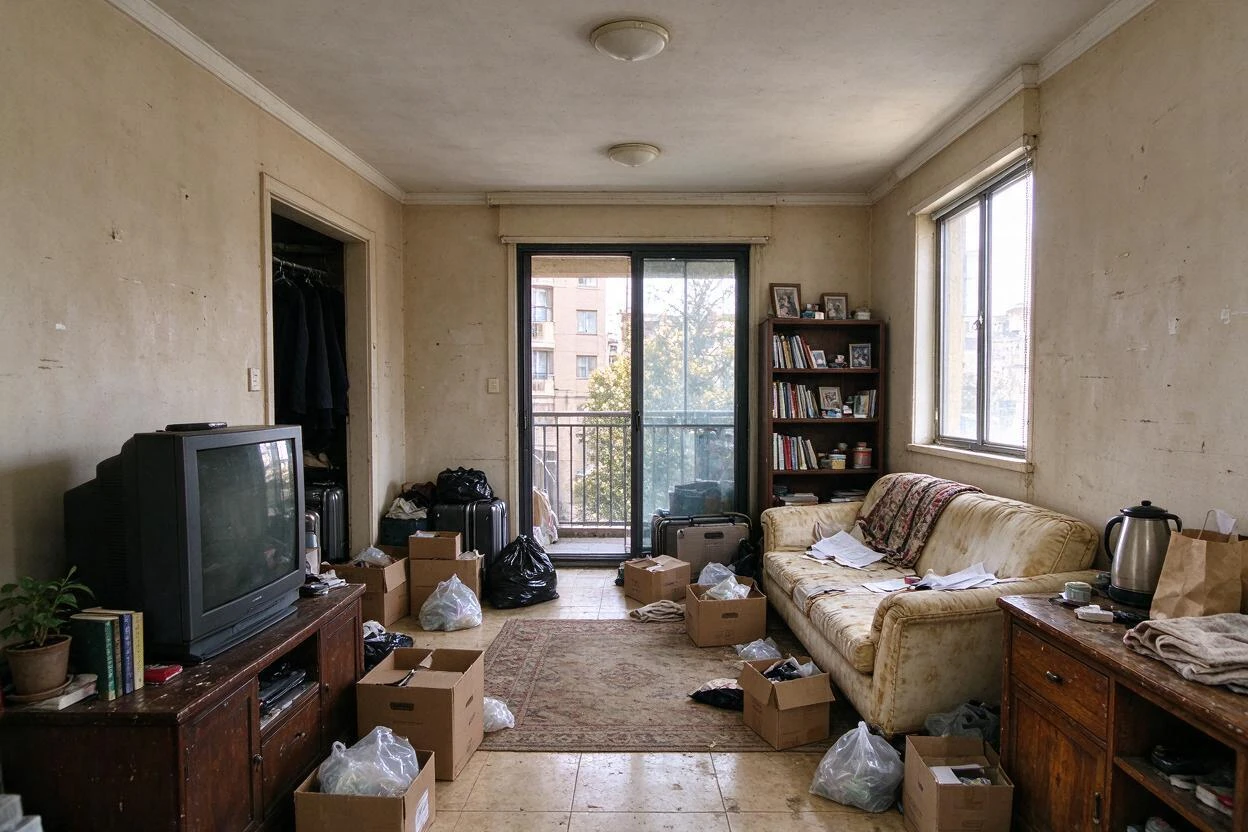
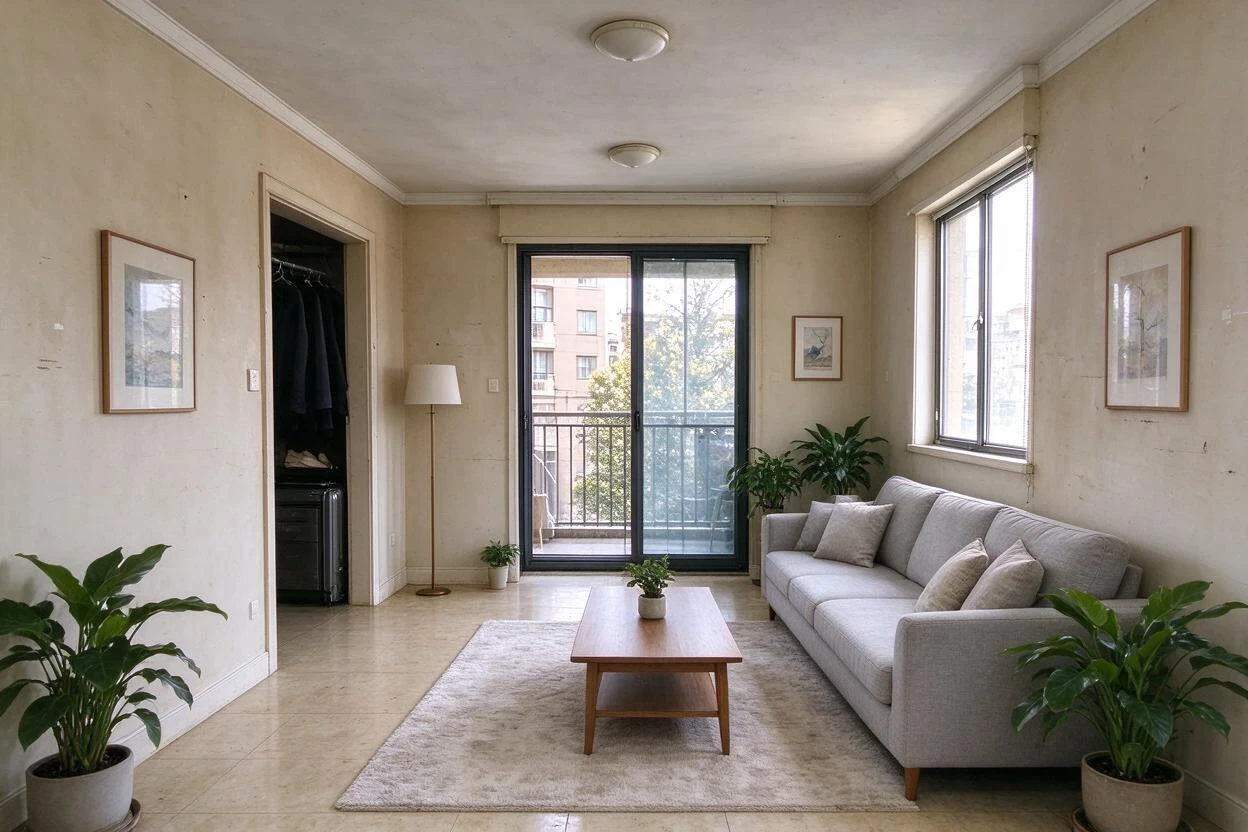
There's a reason this style keeps winning before-and-after renders. Low, horizontal furniture exposes floor area, so rooms read bigger than the square footage claims. Matte natural textures photograph warm where gloss photographs harsh. And the strict editing leaves negative space the camera can breathe in, instead of furniture the eye has to climb over. Even the imperfection helps: a wrinkled linen throw or a hand-thrown vase reads as lived-in rather than staged — the exact note buyers respond to. Japandi is also forgiving to shoot, because its earth palette survives the mixed, imperfect light of a real listing far better than high-contrast schemes do. Nothing in the frame fights the window light, so the room photographs bright even on an overcast day. And the look doesn't demand a renovation: swap the brightest textiles for linen, pull the furniture off the walls into lower groupings, clear every surface but one, and the photo moves most of the way there. That's why it stages so cheaply relative to how intentional it looks.
It translates unusually well to previews: render your room in Japandi on a real photo and compare it against your current layout — the low-furniture, natural-material shift is immediately visible.
Want the full picture — palette, materials, and how the style comes together? See the Japandi interior style guide, then preview it on your own photo.
Curious how japandi reads in a room like yours? Upload a photo and preview it free — or browse the japandi lookbook first.
FAQ
Is Japandi still popular?
Yes. The term went mainstream in the early 2020s and the style has held its ground since — Architectural Digest still publishes primers on it, and The Spruce's Japandi guide, updated in May 2026, treats it as current rather than nostalgic, describing it as gaining popularity on the strength of clean lines and sustainable materials. Its staying power is practical as much as aesthetic: calm, durable, and inexpensive to approximate.
What colors are used in Japandi style?
Warm whites, greige, and sand as the base; clay, moss, charcoal, and terracotta layered on top; black used sparingly as an accent. The palette stays muted and matte — brightness comes from wood grain and daylight, not from paint. One lead color plus one accent is the usual formula; more than that and the calm collapses. Glossy anything is the only real color mistake.
Is Japandi expensive to achieve?
No — the style rewards fewer, better pieces. Secondhand solid wood, linen, rattan, and handmade ceramics read as authentic precisely because they aren't glossy, which makes Japandi one of the few designer looks that thrives on a thrift-store budget. The expensive version buys convenience, not credibility.
What's the difference between Japandi and wabi-sabi?
Wabi-sabi is the Japanese philosophy of finding beauty in imperfection; see it on its own terms. Japandi borrows that philosophy and softens it with Scandinavian comfort — cleaner lines, lighter woods, more coziness. Where wabi-sabi alone turns rustic and austere, Japandi keeps the handcraft and adds the light. For the Nordic half of the comparison, see Japandi vs Scandinavian.
Compare
Related questions
Related tool
