
Virtual staging vs physical staging: which should you choose?
By Goodesign AI · Updated 2026-10-16
Physical staging wins for luxury listings and homes where buyers will walk through during the sale; virtual staging wins on cost, speed, and flexibility for most mid-market listings. Many sellers now mix the two: real furniture in the hero living area, renders everywhere else.
Both approaches solve the same problem — an empty or dated room photographs cold — but they cost, move, and fail differently. The right choice depends on price point, timeline, and how your buyers shop.
Where physical staging earns its price
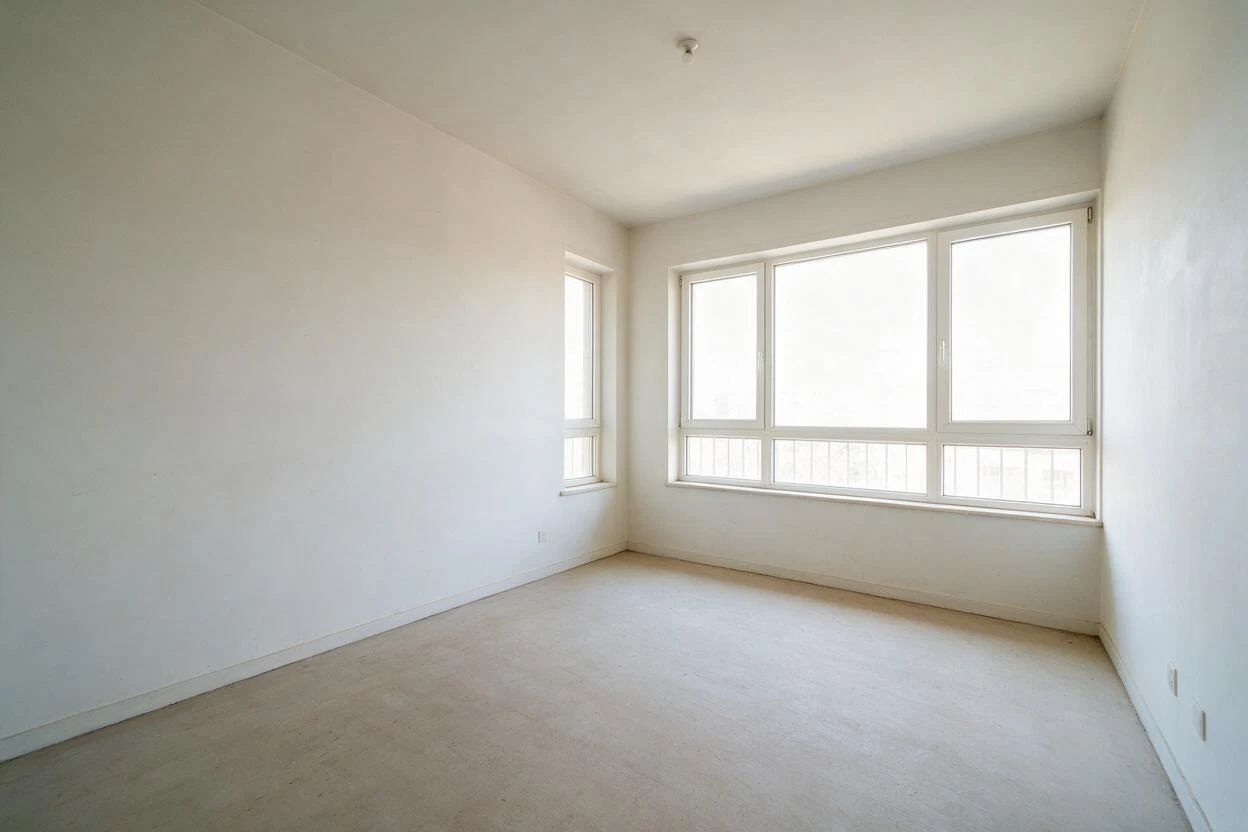
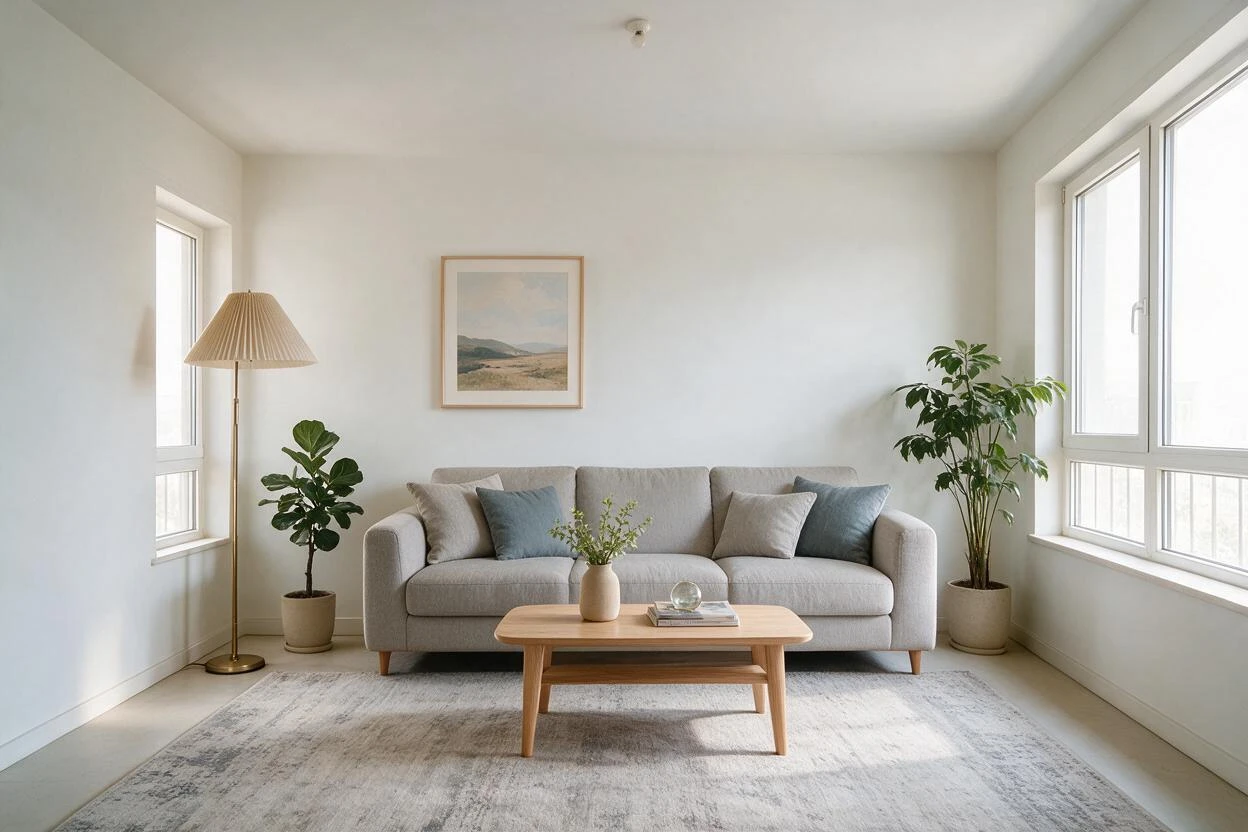
Real furniture has texture, shadow, and scale that renders still approach but don't equal. For luxury properties, show homes, and markets where open-house traffic matters, buyers expect tactile, magazine-grade interiors — and a stager's eye for proportion is worth the $2,000–5,000 a month it costs. If your listing competes at the top of its bracket, this is the branch to take.
Size that spend honestly before committing: NAR's 2025 Profile of Home Staging puts median staging spend at $1,500, while HomeGuide's survey (quoted secondhand by HomeLight) runs $1,500–4,000 for the first month and $500–1,500 for each month after. On a listing that sits for a season, furniture can outbill the photographer several times over.
Where virtual wins outright
Condos, townhomes, and mid-market family homes are judged almost entirely online before anyone books a viewing. A render costs a few dollars, arrives in minutes, and can be re-generated in a different style if the first read falls flat — something no furniture rental can do. For a typical three-bedroom listing, digital staging of every main room costs less than one month of one physically staged room.
The pricing collapse is recent. NAR reported in 2025 that AI virtual staging runs as low as $0.17 per image, against $30 per photo at a mainstream service like BoxBrownie and well north of that for premium design work. When the cheap option is also the fast option, most listings stop being a debate.
Side-by-side: cost, speed, and impact
| Physical staging | Human virtual staging | AI virtual staging | |
|---|---|---|---|
| Typical cost | $1,500–4,000 first month, then $500–1,500/month | $20–70 per photo (a few hundred dollars per listing) | $0–3 per render; free tiers exist |
| Turnaround | 1–3 weeks with install and removal | 24–72 hours, longer with revisions | 15–30 seconds |
| Style change | New rental, new labor, new invoice | New order, new fee | Regenerate; same or zero cost |
| Works best for | Luxury, show homes, open-house markets | Tricky rooms, premium mid-market listings | Everything else, and testing what reads |
| Main risk | Monthly burn on a slow listing | Inconsistent style across rooms | A cheap-looking render on a premium listing |
AI vs. human designer: what each dollar buys
Both sit in the "virtual" column, but they buy different things. A human designer buys judgment: consistent palettes across rooms, believable furniture in awkward floor plans, renders that survive scrutiny on a $2M listing. BoxBrownie's $30 per photo is the market's reference point.
AI buys iteration. At $0.17–3 a render, you can stage the living room three ways — Scandinavian, mid-century, warm minimal — and keep whichever reads best in the gallery. That experiment is unaffordable at human prices. The honest split: AI for volume and speed, a human for the one room that has to be flawless.
What the numbers say about results
NAR's 2025 survey: 83% of buyers' agents said staging helps buyers visualize the home, 49% of sellers' agents said it shortens time on market, and median staging spend came in at $1,500. RESA's 2025 Q1 report claims bigger numbers — homes staged by its members selling at 107% of list, an average of $56,000 over asking, after 12 days on market — but carry both qualifiers: those figures are self-reported by a staging trade association, from a sample of just 84 properties. Directionally interesting; not a benchmark to plan around.
What survives scrutiny is mechanism, not magic. Staged rooms photograph better. Better photos earn clicks. Clicks become showings, and showings become competition.
The hybrid most agents actually use
Spend the physical budget where buyers linger: the living area of a flagship listing. Render the bedrooms, office, and dining room instead. The one discipline this demands is consistency — keep the same palette, wood tones, and formality across real and rendered rooms, or the gallery reads disjointed.
Three questions to decide
What price bracket is the home in? How fast does it need to hit the market? And will your MLS disclosure rules make buyers wary of digital edits? Honest answers point to one branch in under a minute.
One datapoint for that third question: California's AB 723 took effect January 1, 2026 and requires digitally altered listing photos to be disclosed. Expect similar rules to spread. None of them ban virtual staging — they just require honesty about it.
Test the virtual route before committing a dollar: preview a staged render of your actual room, or upload a photo free and compare it against your staging quote. For the pricing behind the table above, see what virtual staging costs per photo; for the value question, read is virtual staging worth it.
FAQ
Is virtual staging cheaper than physical staging?
Dramatically. Physical staging typically runs $1,500–4,000 for the first month; a full virtual gallery costs $0–500 depending on whether AI or human designers make it. The gap widens every month a listing sits, because furniture bills monthly and renders don't.
Can you mix physical and virtual staging in one listing?
Yes — it's the standard play for flagship listings. Real furniture in the living area where buyers linger longest, renders for bedrooms, office, and dining. One rule: match palette, wood tones, and formality across real and rendered rooms so the gallery reads as one home.
Does virtual staging look fake to buyers?
Good renders don't; bad ones do. AI output is convincing on standard rectangular rooms and still struggles with complex angles and luxury finishes — which is precisely when to hire a human designer or roll in real furniture. Disclose it either way.
Do staged homes sell faster than empty ones?
49% of sellers' agents in NAR's 2025 survey said staging shortens time on market, and 83% of buyers' agents said it helps buyers visualize living there. Agent-reported, not experimental — but the effect on photos and clicks is real either way.
Which is better for a luxury listing?
Usually both, in different rooms. Physical furniture earns its cost where buyers linger — the living area, the primary suite — while renders cover the rooms no one walks into first. Note the limit: AI still handles ornate finishes and complex angles less convincingly, so put real pieces where the camera goes closest.
How fast can each option be ready before the photo shoot?
Virtual staging is measured in minutes: an AI render returns in about 15–30 seconds, and a six-photo gallery is an afternoon. Physical staging is measured in weeks — sourcing, delivery, install, then removal after the sale, with furniture billed monthly while it sits.
Can virtual staging replace a home stager's advice?
No. A stager fixes what a render cannot: decluttering, light, flow, and the small repairs that make a room photograph well. Virtual staging only changes what the camera sees after those decisions. Skip the stager and you get tidy pixels on top of a room that still shows badly.
Compare
Related questions
Related tool
