
What is the cheapest way to stage a home for sale?
By Goodesign AI · Updated 2026-10-16
Decluttering, deep cleaning, and rearranging what you own cost nothing and do most of the work — start there before spending a dollar on staging. After that, virtual staging is the cheapest way to show an empty or dated room furnished — typically a few percent of what physical staging charges for the same picture.
The cheapest staging is the kind you do with your hands, not your wallet. In order of return per dollar: declutter, clean, rearrange, light — and only then spend, on paint or virtual furniture, where each dollar still buys visible change.
Free first: subtract
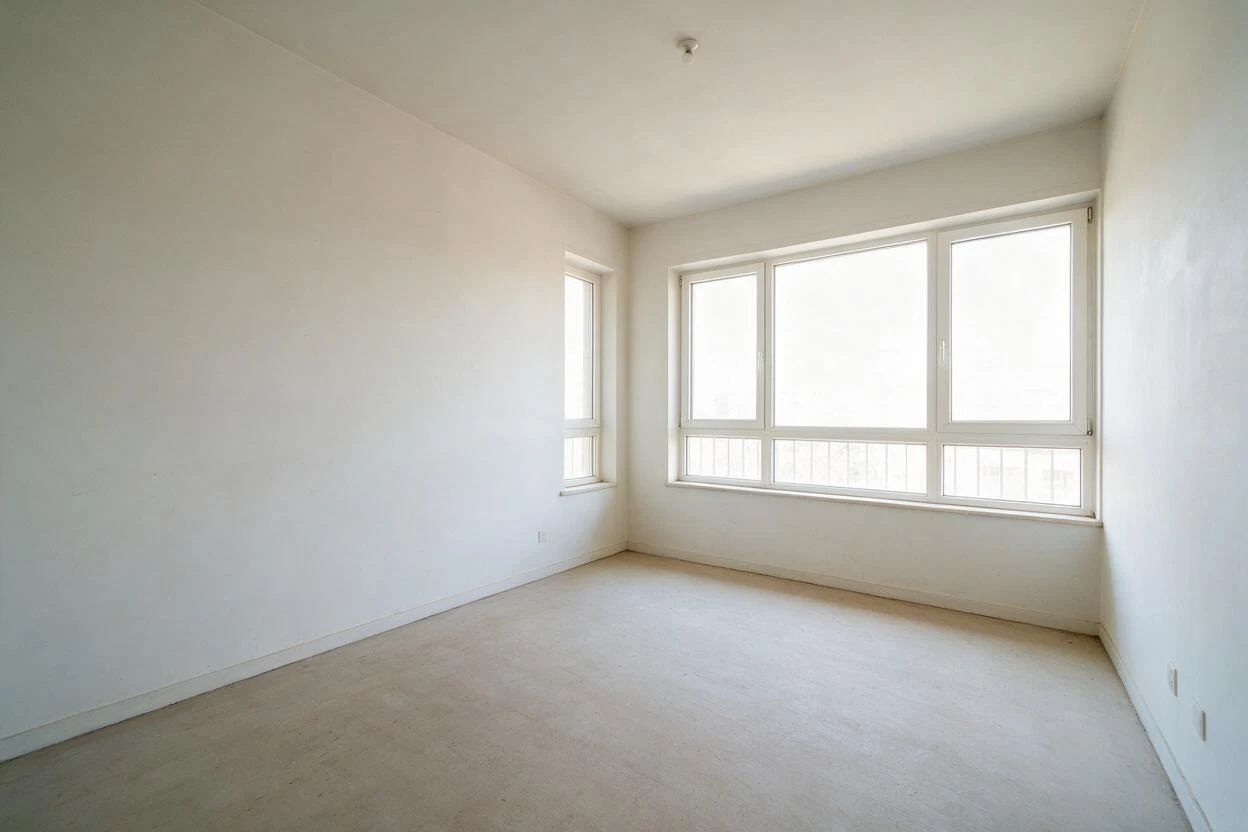
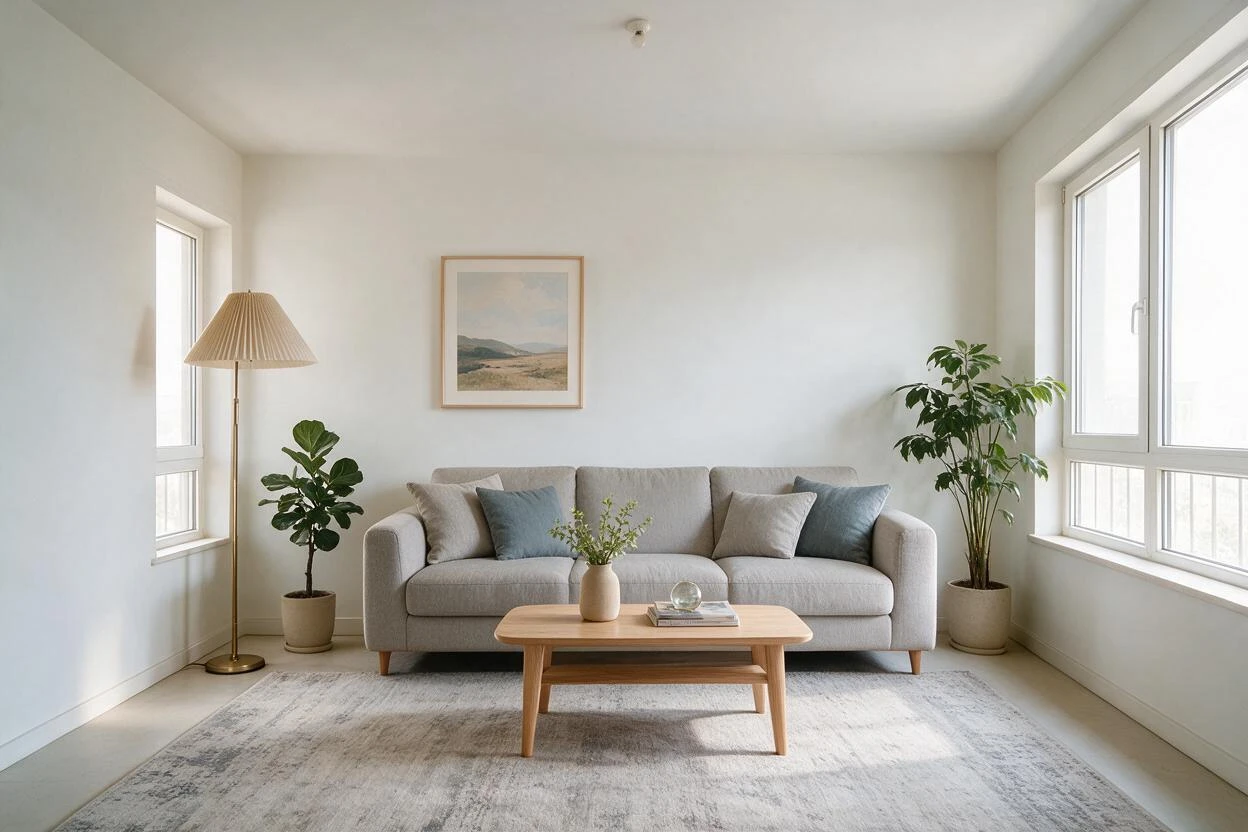
Remove a third of everything in each room — out-of-season clothes, personal photos, extra chairs, countertop appliances. Buyers read clear floors and bare surfaces as space, and space is what they're buying. This stage costs a weekend and some boxes.
Free second: rearrange
Pull furniture off the walls into conversational groups, angle the bed toward the door, and give every room one obvious purpose. A reading chair plus lamp in a dead corner earns more attention than the corner's emptiness did.
Cheap third: light and textiles
New warm bulbs in every fixture, curtains opened or removed, a neutral throw over the dated sofa, matching white towels in the bathrooms. Under $200 total, and it photographs like a renovation.
Where buyers' eyes go first
Spend against attention, not against square footage. In NAR's 2025 Profile of Home Staging, buyers' agents called the living room the most important room to stage (37%), followed by the primary bedroom (34%) and the kitchen (23%). The same survey found 83% of buyers' agents say staging makes it easier for buyers to picture the property as a future home, and 49% of sellers' agents reported shorter time on market for staged homes.
The budget translation: your free and cheap work belongs in the living room and primary bedroom before anywhere else. A spare bedroom can pass as an office; a tired living room persuades no one.
A $200 and a $500 staging plan
Both plans assume the free work above is done. The $500 plan differs in one respect: it finishes the primary bedroom — the second room buyers rank highest — with real linens and a lamp of its own.
| Line item | $200 plan | $500 plan |
|---|---|---|
| Warm-white bulbs for every fixture | $30 | $40 |
| Neutral throw and pillows for the sofa | $50 | $80 |
| Matching white towels, both bathrooms | $30 | $50 |
| Mirror for the entry or a dark wall | $40 | $80 |
| Crisp linens for the primary bed | — | $60 |
| Lamp for one dark corner | $30 | $70 |
| Two or three plants | $20 | $40 |
| Paint for touch-ups, not repaints | — | $80 |
Neither plan furnishes an empty room. That's a different problem with a different solution.
The paid tier: virtual furniture
For rooms that are empty or beyond styling, virtual staging shows them furnished for a fraction of physical staging's cost — typically $20 to $70 per photo versus $1,500 and up for a whole home's furniture rental. The listing photo does the same persuasive work; only the warehouse differs.
Where virtual staging fits in the budget
Physical staging works, which is why the median professional service charges $1,500, according to NAR's 2025 survey — and why most budgets route around it. Virtual staging buys the same persuasive listing photo for a fraction of that: NAR reports that AI virtual staging now starts as low as $0.17 per image, against $50 or more for a single traditionally staged image. Goodesign's first five renders are free, which covers the hero rooms of a typical listing at exactly $0.
Empty and dated rooms are the ideal case: there's nothing to rent, move, or insure, and the furniture only has to photograph well. For the full arithmetic, see what virtual staging costs, or how it compares with physical staging when real furniture is still worth it.
What not to spend on
Full repaints of already-neutral rooms, trendy decor, and renovations aimed at the next owner's taste. Spend where the camera looks first: hero rooms, entry, exterior.
Start free, then upgrade where it shows: clear your cluttered rooms in one pass, preview furniture layouts virtually, and upload a photo to see a staged version before you spend anything.
FAQ
Is staging worth it if the house is completely empty?
Yes — vacancy is where staging earns the most, and virtual staging makes it cheap. Empty rooms photograph smaller and colder than the same rooms furnished, which is why vacant listings sit. Rendering furniture onto a photo costs cents to dollars per image; renting real furniture for a whole home runs $1,500 and up for the same persuasive picture.
What can I do with a $500 staging budget?
Light, textiles, and the two rooms buyers rank first: living room and primary bedroom. Warm bulbs in every fixture, a neutral throw and pillows, matching white towels, one mirror in a dark spot, and proper linens on the primary bed. The table above splits it line by line.
Which rooms should I stage first?
Follow NAR's 2025 buyer-agent ranking: living room first (37% called it the most important room to stage), primary bedroom second (34%), kitchen third (23%). Stage in that order and stop when the weekend or the money runs out — the guest bedroom can wait.
Do buyers mind that furniture in listing photos is virtual?
Not when it's disclosed and the photo is honest about everything else. What buyers object to is deception about the things that don't move: floor plan, view, condition. Furnishings rendered onto the actual room read as information — where virtual staging crosses the line is about disclosure, not the furniture itself.
Related questions
Related tool
